



This past Freedom Month, South Africa was moved by scenes of graduation celebrations, where parents shared in the joy of their children’s success. In a powerful gesture of gratitude, many graduates draped their academic regalia over their parents — a symbolic recognition of the sacrifice and investment that made their degrees possible.
Yet, this celebratory spirit is often overshadowed by the looming question of “What comes next?” With graduate unemployment rising annually to its current 10.3%, the transition from the podium to the workforce is fraught with anxiety for graduates and their families.
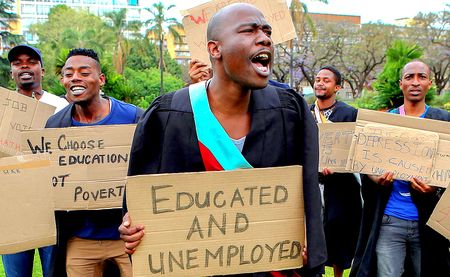
For many parents, qualifications represent a beacon of hope — the best possible chance for their children to break the cycle of poverty that still grips those with limited education. But for the graduates themselves, the weight of unemployment is about more than just empty pockets; it is about the erosion of the self. Without the rhythm of a workday, routine is replaced by a void that invites hopelessness.
Work is where we find our tribe; by missing out on the workplace, graduates lose a critical space to socialise and build a sense of belonging that the family structure alone cannot provide.
At a recent autumn graduation, Nelson Mandela University’s newly installed chancellor, Dr Naledi Pandor, challenged graduates to be “conscious and competent” leaders dedicated to building a just society where service delivery reaches the people. This call to action was echoed by honorary doctorate recipient Professor Gabeba Baderoon, who urged the audience to "imagine freedom" – even during the darkest moments when such a vision feels most impossible.
Pessimism is eclipsing the promise of our democracy as young people vanish from the workforce and training centres. We are left with a vulnerable youth population trapped in a cycle of unemployment and inactivity. The core of the crisis lies in an economy that simply cannot scale fast enough to meet the demands of a growing workforce.
This “precarious liberation”, as noted by the Ohio State University professor Franco Barchiesi, creates a desensitised citizenry, especially among the poor and unemployed women and young people. We are entering an era where more people are being added to the unemployed pool than those entering full-time employment, which necessitates questions about whether “work-centred citizenship” is coming to an end.
Broken nexus
When Barchiesi and others advocated for a basic income grant, they saw the shrinking numbers of work opportunities compared to the growing numbers of those seeking work. This broken nexus between citizenship and work leads to vulnerability, violence and permanent instability.
According to national data, Gauteng and the Western Cape are the only provinces where the employed population outnumbers the unemployed.
It has become a common sight: men and women lining suburban street corners from dawn until dusk, waiting for any scrap of manual labour. How do we cultivate “good citizenship” — the ability to participate in the economy, maintain a routine, and provide for a family — when an individual’s entire day is spent standing on a roadside begging for work? This gruelling endurance is a familiar hallmark of poverty in South Africa, where the act of waiting in a queue has become synonymous with the experience of the poor.
The 25,000 applicants who gathered at Cape Town’s Athlone Stadium for only 1,000 jobs echo similar scenes of mass queuing at industrial sites in Gauteng. These young South Africans queued for long hours in harsh weather conditions in their desperate drive for employment. Their persistent presence in these queues directly contradicts the narrative, often pushed by critics, that South Africa’s young people are passive recipients of the R350 grant with no desire to work.
Unemployment is a compounding crisis that extends far beyond the individual. For those who do find work, the “luck” of a salary is often immediately met with the responsibility of supporting an entire household. This reality, often referred to as “black tax”, creates deep tension within families and encourages a retreat into individualised living to protect one’s own stability.
The real meaning of freedom is dignity and the ability to choose one’s own routine, contribute to family and community, while enhancing one's own life chances. We hope that our graduates can become part of communities and families who already have people working, rather than being the “first” and “only” in their families, as this exacerbates mental health issues and the unending cycle of poverty. DM
Comments
Scroll down to load comments...