



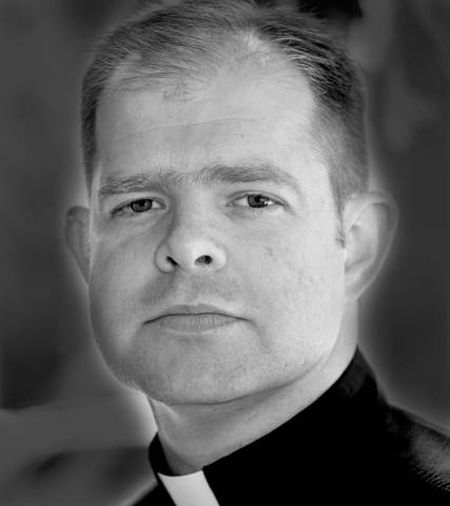
On 20 April 2026, Yom HaZikaron (Remembrance Day), Chief Rabbi Warren Goldstein addressed an audience of mainly young Jewish South Africans. Sadly, in a video going around on social media, he used this opportunity to criticise Pope Leo, who, in the past few weeks, not naming any particular armed conflict, has been calling for peace in war-torn areas of the world.
This is the day the State of Israel mourns its fallen soldiers. Goldstein, unfortunately, did not back a call for peace.
Goldstein said, speaking of Pope Leo: “His hands are dripping with blood because he makes no distinction between the barbarians of Hamas and the genocidal maniacs of Tehran and the noble and brave soldiers of the State of Israel.”
He went on to say that the pope, by failing to distinguish between good and evil, disqualifies himself from religious leadership.
Goldstein said the Israeli soldiers who had died were saints and martyrs. He claimed that they had not only defended Israel but civilisation itself. Goldstein’s words, seemingly sanctifying war and violence, are also absent of any foundational human and compassionate approach one might expect from a religious leader for the innocent victims, women and children, of Israel’s ongoing military actions in Gaza, the West Bank, Lebanon and across the Middle East.
Instead, he chose the language that warmongers have used through the centuries to justify war. Instead of joining the pope’s call for peace, he seemingly uncritically supported deadly violence.
His attack on Pope Leo XIV is theologically confused and inaccurate. To begin with, Pope Leo did not invent the phrase “your hands are full of blood”. He quoted a Jewish prophet, Isaiah (1:15), writing in the Hebrew Bible. These words from Jewish tradition have warned kings and leaders about the moral corruption of war for nearly three millennia.
It is sad that Goldstein chose to weaponise that very text against a pope who invoked it in the cause of peace, as was the intention of the prophet addressing the corrupt leaders of Jerusalem/Judah in his time. It represents a growing and troubling trend and willingness to manipulate people of faith for political gain, like other world leaders have chosen to do, with sacred texts.
Calling for peace, as Pope Leo has consistently done, is not the same as taking sides. The pope, like his predecessor, Pope Francis, has been unambiguous in condemning Hamas’s 7 October attacks. On the second anniversary of 7 October, Leo XIV said that their actions were an “intolerable act of terror” and that “we cannot accept groups that cause terrorism”. He condemned antiSemitism while simultaneously expressing anguish at the scale of civilian suffering in Gaza.
These two positions are not contradictory. They are the minimum requirements of consistent ethical and religious leadership. The pope also said: “We must reduce hatred, we must rediscover the ability to dialogue, to seek peaceful solutions.” Goldstein accused Leo of failing to distinguish between good and evil; the pope did just that, calling for peace.
Pope Leo, like Pope Francis before him, is not some radical outlier in Catholic tradition. Popes have consistently spoken out against violence and war, even at great personal and institutional risk.
In 1937, Pope Pius XI issued Mit Brennender Sorge – “With Burning Concern” – an encyclical smuggled into Germany and read from Catholic pulpits, criticising the deification of race and state that underpinned Nazi ideology. It was an act of moral courage in the face of a totalitarian regime.
Decades later, Pope John Paul II visited Auschwitz, prayed at the Western Wall and became the first pope to enter a synagogue – embodying a commitment to Jewish-Catholic reconciliation that Leo XIV had explicitly pledged to continue.
Pope Francis, for his part, called repeatedly for ceasefires and the protection of civilians throughout the Gaza conflict, never once denying the right of a state to defend itself but reminding leaders that this defence must be conducted in a proportional way. The call for peace is not a departure from papal tradition. It is at its very heart. Rabbi Goldstein, in his repeated critiques of the papacy, seems to leave out important facts.
While Goldstein is entitled to disagree with the pope’s approach, or even critique the Catholic Church, which is not above reproach, he should be cautious not to misrepresent it and, in so doing, risk becoming a purveyor of falsities.
To suggest that a call for peace makes one complicit in bloodshed must be denounced by any person of faith who values the truth. We, people of faith, from different traditions, must agree on the basics: the truth should not be manipulated by anyone because that strikes at the very heart of the common good, for all.
Goldstein also risks compromising Jewish-Catholic dialogue. For many decades, the Church and Jewish community have made progress in dialogue. This has not always been easy, but it has led to a growing mutual respect and cooperation for the common good.
We cannot, at this time, ruin the fruit of goodwill in Jewish-Catholic relations. We, again, affirm our commitment to dialogue among our religious communities that seeks to make the vision of peace and a better world a reality.
People of faith and all people of goodwill want a world where Christians, Jews, Muslims and people of all nations, creeds and tongues can live in equality, justice and peace, so that all human beings can flourish.
We cannot allow sentiments and reasoning that have prolonged conflicts throughout history to get the better of us. The idea that urging restraint and calling for peace is equivalent to siding with the enemy is unhelpful and does not help us forge a path to peace together. People from all backgrounds suffer when there is conflict and division. We need to find ways, together, to make peace our reality, not division and war.
Pope Leo is doing what religious leadership is supposed to do: speak uncomfortable truths to power, grieve for the innocent on all sides and refuse to let God's name be used as a justification for war. That is not a weakness; it is the oldest tradition in both our faiths.
It would be good if religious leaders, like Rabbi Goldstein, helped people of faith work alongside people of goodwill towards peace. He knows the suffering of the members of the Jewish community when, as the quote attributed to Edmund Burke reminds us, “evil triumphs when good men do nothing”. We should denounce suffering, seek dialogue and secure the path to peace. War, as Pope Francis said, is a defeat for humanity. DM
Comments
Scroll down to load comments...