



The appointment of African National Congress political leaders through the party’s policy of cadre deployment to all areas of the state – public service, state-owned entities, intelligence, the police and the defence force, and giving preference to ANC cadre-connected businesses to secure state black economic empowerment contracts has politicised all parts of the South African state.
Successful emerging markets and developed economies have prioritised taking the politics out of the state. They have made the public services, SOEs and public institutions and state procurement as professional, merit-based and competence-based as possible.
The politicisation of the state is one of the reasons that South Africa has experienced relative economic decline over the 30 years of ANC majority government, since the end of formal apartheid, while many peer emerging markets, such as South Korea, Saudi Arabia and Poland, have been so spectacularly successful over a similar time period.
The ANC’s deployment of its cadres to the state and giving preferential state BEE tenders to the ANC cadres, has fused the ANC and the state, making South Africa a party-state.
In some instances, ANC deployment committees even decide which private companies get contracts, mineral, land, or water rights from the state. This meant that the ANC’s toxic factional politics have infused the state, undermining its effectiveness, performance, and functioning.
Every high-performing state in successful emerging markets was driven by merit-based and competence-based appointments in the state and in state procurement contracts; as well as competency being the principal measurement of performance of officials in the state.
A corrupt state corrupts the private sector
If part of the state is corrupt, the private sector doing business with the state is expected to behave corruptly in order to get state contracts, whether to pay bribes to get public services on time or to appoint individuals from the governing ANC to the boards of the private sector companies.
The irony is the appointments of former ANC politicians to the boards of many private sector companies, often bring the ANC’s factional politics into these businesses, causing chaos in the board and executive rooms of these companies.
Successful emerging markets have tried to marshal all the talent, ideas, and energy of their countries into their governments, on merit, incorporating new talent, taking on board new ideas, and incorporating resources from the non-state and non-governing party. The ANC, like many other ruling African liberation movements, has largely marginalised non-ANC talent, energy, and ideas. This has deprived the South African government of fresh ideas, talent and resources, which are critical for economic growth.
Since it came to power in 1994, ANC leaders have downplayed the idea of merit in the state and public procurement. The ANC’s policy of cadre deployment, and cadre preferential BEE, has undermined the cardinal principle of merit, which has fuelled the industrialisation of almost all emerging markets and developed countries.
Competency has also not been the principal measurement of the performance of officials in the South African state. Yet, in successful emerging markets and developed countries, the principle of competence is the supreme measurement of performance, promotion, and incentives in the state. Political connections, being part of the ANC’s liberation “struggle”, colour and ideological considerations have often trumped competency.
Liberation experience does not
indicate technical expertise
So many ANC individuals get appointed or get state contracts based on their experience in the liberation struggle or in the ANC, to run highly technical and complex organisations, even if they may not have technical experience.
This is one of the main reasons for the decline of public service departments, SOEs, public and democratic oversight institutions, driving public service delivery failure and infrastructure collapse.
The state is critical in driving industrialisation, economic growth and social stability. However, it is not the state in itself, but how the state is staffed, functions and held accountable, that will determine whether the state can play a catalytic role in industrialisation, economic development and growth.
African liberation and independence movements strongly favour the state as the sole institution to deliver public services, development and employment. In South Africa, ANC leaders also wrongly ideologically believe the state is the sole driver of all development. Many ANC leaders are ideologically opposed to business and civil society delivering public services, development and creating employment. In fact, many ANC leaders have been rabidly anti-business and anti-civil society.
However, it is not the state per se that can play a catalytic role in development, but how the state is used. In fact, it is the intelligent use of the state that makes the difference. An “intelligent” state can only be built on merit and competence-based appointments, procurement contracts, and pragmatic developmental policies.
Japan, Taiwan, Singapore, South Korea, China and more recently Saudi Arabia and the United Arab Emirates are examples of the construction of intelligent states.
Partnerships
What is also often poorly understood is that an “intelligent state” operates in partnership – with the private sector and civil society, playing a coordinating role to steer economic development, economic growth, rule of law and social stability. There has been no effective partnership between the state and business in South Africa because the ANC has been largely anti-business, anti-civil society, and anti-entrepreneurship.
Successful emerging markets also prioritise entrepreneurship in both the private and public sectors. Successful emerging markets have emphasised entrepreneurship in the state, which can almost only be fostered by merit-based appointments in the state, and merit-based public procurement. Cadre deployment undermines entrepreneurship in the public sector; and non-merit-based public procurement undermines entrepreneurship in both the public and private sectors.
The ANC has been strongly anti-entrepreneurial, anti-private business, anti-private investment, with its leaders regularly attacking mainstream business as “white monopoly capital”. The ANC has, through BEE, created political capitalists to create their own “business” people, marginalising genuine black entrepreneurs not connected to the ANC or its leaders.
In the post-1994 era, political entrepreneurship has become the dominant form of entrepreneurship. In political entrepreneurship, individuals secure contracts from the state based on political connectedness to the ANC and its leaders. Political entrepreneurship destroys genuine entrepreneurship.
The rise of political entrepreneurship has also undermined entrepreneurship in the wider economy – the private sector, civil society and non-state public and professional institutions.
Reality-based strategies
Successful emerging markets all have adopted pragmatic, imaginative and reality-based economic strategies. Unlike failing African and developing countries, they have not adopted rigid ideological policies, whether Marxist-Leninist or extreme statist or extreme free-market economics or revenge or emotion-based or populist development policies. They have, in fact, combined the best of the state and the market.
The ANC, sadly, has often copied economic policies which had abjectly failed in countries such as Zimbabwe, Algeria or Tanzania, for example, in land reform, rather than look at the world’s most successful land reform strategy that took place in post-World War 2 Japan.
Many successful emerging markets have made fighting corruption a key part of their economic growth strategies. In South Africa, many ANC leaders have not taken seriously how corruption destroys economic growth, public service delivery and the rule of law. ANC leaders have often dismissed criticisms of party and government corruption by saying apartheid leaders were also corrupt, or Western governments also have corruption.
Many ANC voters have poorly understood the damaging effect of corruption on the country’s economy, increasing poverty and inequality and causing job losses. Corruption has undermined the credibility of ANC economic and other policies.
Critical infrastructure
Very few African countries have invested in critical infrastructure – transport, power, telecommunications – since the end of colonialism and apartheid. Rapidly developing economically productive infrastructure has lifted economic growth in the East Asian miracle economies, including Japan, Singapore and South Korea, and China, and more recently, India.
There has been little understanding among the ANC and many African governments, since the end of independence, of how catalytic economically productive physical infrastructure is for economic growth. At South Africa’s municipal level, the infrastructure collapse has been particularly acute.
Infrastructure has declined across the country, contributing to the de-industrialisation and the informalisation of South Africa’s economy. This has led to investment, capital and skills flight, which in turn has increased poverty, unemployment and social instability.
Failing state infrastructure in South Africa, including power, rail, roads, ports and municipal infrastructure, has collapsed many companies, small towns and once-thriving markets, communities, and public institutions, such as educational, cultural, heritage and sport institutions. Failing infrastructure has also impoverished many families, fragmenting community life and breaking social cohesion.
Manufacturing
Since the end of World War 2, developing countries that have transformed from deep backwardness to developed country status have learnt to manufacture products that the world needs.
Failing African governments have not built manufacturing industries, wrongly believing their raw material bounty will carry their economies. Even worse, almost all African countries did not add value to their raw mineral resources through processing, beneficiating, and creating a manufacturing value chain linked to these mineral resources. To develop manufacturing, a country’s governing regime must be in favour of private business, believe fully in the power of entrepreneurship and uphold the rule of law.
The ANC government did not focus on expanding the manufacturing base of the economy. The ANC did not prioritise creating new export manufacturing industries for the world. The ANC’s BEE strategy has not prioritised developing new black manufacturing industries in sectors that South Africa does not have, and which the world needs.
The ANC’s black economic empowerment (BEE) strategy has focused on getting ANC politicians to become “big black industrialists”, meaning securing shares in large white corporates.
Human capital
The ANC government, since 1994, has also neglected the development of human capital. Developing human capital is a critical pillar of development, economic growth and social stability. In the past 30 years, South Africa has been unable to build a globally competitive public education system. One of the mistakes that the government made soon after it came to power in 1994 was that it closed many of the technical and vocational training institutions, where citizens could learn artisan programmes such as becoming electricians, plumbers, welders and nurses.
Closing technical educational institutions in the technology era, where technology and technical skills are the engines of development, is truly astonishing. New training institutions, the Setas, have failed in similar ways to many government institutions: political appointees in council and executive committees, the capture of Setas procurement, skills training out of sync with the economy’s needs because Setas are not partnering with business, industry organisations and professional bodies.
Many of these technical and vocational institutions were based in rural areas and were the key economic hubs for many regional towns and regions. Closing them cut off the economic oxygen of many of these rural towns. The collapse of municipal services, infrastructure and rule of law because of corruption, incompetence and nonsensical policies, the collapse of many state schools, cultural and heritage institutions, and the neglect of national infrastructure running through these towns, whether rail, roads or small airports, has destroyed many of these towns.
South Africa built new universities in the post-1994 period. But universities have focused on social sciences, not industry-relevant courses, medicine, science, engineering or technology. This means that the new universities have, in the main, brought new graduates lacking the real-economy skills the South African economy and the world economy need.
Successful emerging markets have adopted pragmatic, practical and evidence-based economic policies that have been successful elsewhere. The ANC has adopted outdated ideological, populist and emotion-based economic policies. DM
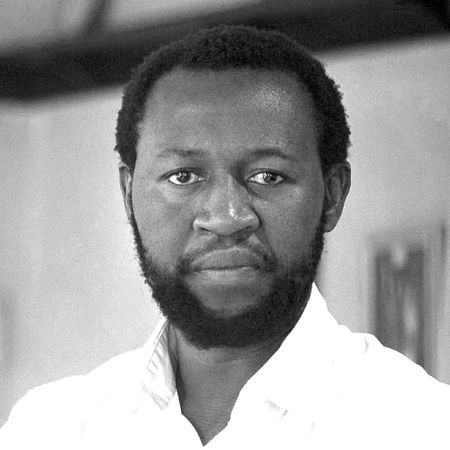
This is an edited extract of William Gumede’s public lecture, The Economic Decline of South Africa, given at the Lockdown University, London.
Comments
Scroll down to load comments...