



/file/dailymaverick/wp-content/uploads/2025/09/label-Opinion.jpg)
Safeguarding democratic integrity implies that democracy is threatened. I will identify the threats, describe what makes for functioning democracies, and compare that to what we have now, to expose the fissures.
Threats
In October 2022, at the A-WEB (the Association of World Election Bodies) conference held in Cape Town, 75 election management bodies acknowledged that democratic recession or backsliding was one of the greatest threats to liberal constitutional democracies globally. The die had been cast.
Of all manifestations of backsliding, the people’s disaffection, distrust and disillusionment with participation in elections is particularly destructive.
Others are:
- Impeding and annihilating civil society, non-government organisations and opposition;
- Obstructing, interfering, arresting and even murdering members of the media;
- Threatening and intimidating judges and packing the courts;
- Unconstitutional amendments to constitutions and changes in government; and
- Weakening and undermining institutions necessary for enabling and sustaining democracy and generally disregarding foundational principles of accountability, transparency, rule of law and legality.
Distrust in corrupt public representatives extends to contaminating democratic institutions. Election management bodies and electoral courts are targeted as co-conspirators, aiding and abetting the corrupt.
Wars
Wars and geopolitical tensions ratchet up the threats. Evidently, democracy is declining to unprecedented depths. Now, not only must election management bodies and electoral courts be concerned about democratic recession in their own nation-states and regions, but also in the world.
The loss of the lives of soldiers and victims of war is a betrayal of faith and trust bestowed upon elected representatives. Voters do not mandate elected representatives to expose them, their families and future generations to the hardships and the dangers of war.
Their mandate, express or implied, is always to engage in dialogue. Dialogue is not limited to reaching across the aisle, but also across oceans and airspaces in search of solutions to mutual and multilateral problems.
Free, fair and inclusive elections cannot be conducted without peace and nonviolence, sovereignty and mutual respect, multilateralism and economic interdependence and, above all, human rights. The failure of politics is this generation’s bequest to future generations.
Additionally, the inheritance of a scorched earth, global economic recession, possibly depression, destroyed oil refineries and rising debt tarnishes democracy itself. Many wonder: what’s the point of elections, if elected representatives default to war and conflict instead of words and communality?
Core elements of functioning democracies
How did democracy originate? Democracy evolved organically. People recognised the need to govern themselves collectively. Populations were growing and societies were becoming more sophisticated. It was practically impossible for everyone to attend gatherings with leaders to discuss social issues.
Many societies were organised around a person who led the community, and a council of the people with whom the leader would confer. This formation worked well when communities and spaces were small.
Five core features emerged from observing functioning democracies:
Consensus: Leaders needed information. Information was more reliable if it was volunteered rather than forced. And the benefit for the people was that a leader who had reliable information was more able to make sound decisions for all of society than one who had false or misleading information.
If some did not accept the decisions of the leader or the people, they would revolt or exit the community. Consensus was good enough if people did not revolt. Exiting was no problem for nomadic tribes.
Reliable information: What information was required and why? Leaders needed information about the crops and goods that people produced to be able to assess the amount of taxes that they should pay. Sharing information about the land size and soil quality would not only lead to an accurate measurement of taxes, but also invite advice and assistance if the yield did not match expectations. Taxation had to be set at such a level that it struck the right balance. Squeezing the goose too hard could kill it.
Efficient taxation: Why taxation? To pay for the upkeep of the leader and for developing the community. As populations grew and expanded economically and geographically, taxes were collected to also fund the representatives who travelled distances to represent people at council meetings.
Bureaucracies: Having functioning bureaucracies worked well for not only democracies; autocracies with stable bureaucracies also survived longer than those without. Irrespective of ideology, bureaucracies attentive to the livelihood rights and maximising the happiness and wellness of people naturally induced durability and stability in any system of government.
Political representation: Why political representation? Because practically, not everyone could attend the council or the forum at the same time. Not everyone could be allowed to speak for themselves. Political representation became institutionalised.
Representatives had to be trustworthy, credible and accountable. In some instances, representatives were not allowed to change mandates without reverting to their principals.
Destabilising democracy
Tested against this checklist of five features, it transpires that in recession, dialogue occurs during election season in the form of campaign promises. Mushrooming political parties means that political consensus is receding, but contestation is escalating. Voters’ trust is dissipating. Populist rhetoric, fake news and social media influencers are replacing reliable information.
Taxation becomes the art of evasion as corruption proliferates and trust in institutions plummets. Tax revenue spawns a class of elites at the expense of establishing functioning bureaucracies dedicated to delivering livelihood rights to the people.
Why elections?
Elections are opportunities to fix the fissures between what democracy has become and what it ought to be.
Even in authoritarian conditions, the mere fact that elections are held provides a barrier against the beasts of chaos, anarchy and lawlessness. Elections at least identify representatives with whom dialogue can be conducted.
Importantly, elections enable voters to assert their constitutional power to change political representatives. Voter inequality at multiple levels is trumped by all votes having equal weight.
Presidents’ and paupers’ votes each count as one. Therefore, while democracy is distorted to achieve evil ends, it is also sufficiently resilient to achieve good. DM
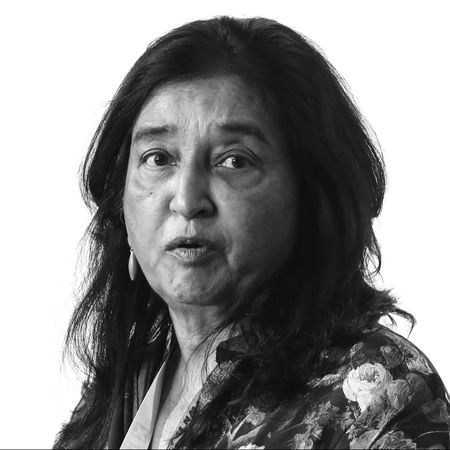
This article is extracted from Pillay’s presentation at a Zambian judges’ conference themed strengthening democracy and electoral governance in Zambia.