



/file/dailymaverick/wp-content/uploads/2025/09/label-Opinion.jpg)
When the conversation around the story of Afrikaans allows space for the role of women as the first “kombuistaalers”, then those labours of generations of women speakers of Kaaps would not have been in vain. They will finally be able to rest. A story which starts with a people must necessarily be returned to them.
It is spoken in many Cape Town communities. It is alive and well on the busy streets of Cape Town as intrepid entrepreneurs ply their trade. Listen for it on the bus and taxi and train as people make their way to work and school. Hear it on radio stations and television programmes.
In spite of centuries of attempts to reduce her social status, Kaaps has remained a proud matriarch of the Afrikaans family. She is no longer marked by inferiority. Today, Kaaps speakers across generations recognise her role as a transmitter of a vibrant culture and as a means to express being and belonging.
Kaaps is arguably the oldest variety of Afrikaans. Its origins can be traced back to the 15th century, with its origins in the trade jargon and Dutch pidgins used by the indigenous people of the Cape, Portuguese and Dutch sailors, and imported slaves from the Indonesian archipelago.
On 8 May 1925, Afrikaans replaced Dutch as an official language of the Union of South Africa. Beginning in 1875, this variety of Afrikaans was strategically engineered by a privileged minority speaker-group of self-proclaimed Afrikaners to become the golden standard of acceptable language use in spaces of government, education and business.
During the same period, speakers of non-standard Afrikaans in the Cape were seen as socially and linguistically inferior. By referring to this marginalised variety of Afrikaans as a “Hottentotstaal”, “Gamtaal” or “kombuistaal”, the term came to be associated with a racialised and stigmatised working class.
By the mid-19th century, kombuistaal (kitchen language) was used as a term of disdain in reference to the “creolised Dutch” which was spoken at the Cape. The earlier naming of Kaaps as a language of the kitchen provides a clue as to how the historically gendered space of the kitchen allowed the language to thrive.
When comparing the Cape colonial kitchen space to the modern kitchen space of Kaaps speakers, it is clear that both spaces operate through language to assert social power relations.
Asserted as socially inferior
In the Cape Colony from the late 17th century onward, the dominance of Dutch – and the later standard variety of Afrikaans – was asserted by framing the language which emanated from the kitchen as socially inferior.
For speakers from the socially dominant class, speech characterised by haphazard language mixing flouted notions of national language purity. Consequently, two distinct language practices co-existed on Cape Dutch homesteads.
The formal spaces of front living areas, reserved for the farmer and his family, were characterised by standard speech. In the kitchen space, language contact between the slaves, labourers and the farmer and his family distilled over time to produce a novel means of communication.
Tool of agency
While earlier versions of Kaaps developed primarily to facilitate communication between speakers of different languages, it was maintained by its speakers as a tool of agency to resist the language practice of the dominant privileged minority. In the households of the Cape colony, this assertion of agency was exercised primarily by women speakers – a consequence of the kitchen being their primary habitus as well as the conduit for instructions between the farmer and his family inside the house and the labourers outside on the farm.
So the kitchen of the Cape colonial home became the space where a distinct language practice was solidified and transferred between spaces and generations of speakers.
In the modern kitchen of Kaaps speakers, the evidence shows that a gendered division of labour persists long after the end of slavery. This means that, in terms of gendered social positioning, the role and activities assigned to women have, for the most part, remained the same.
The roles occupied by women who contributed to the language vitality of Kaaps reveal three primary domains of activity: the home, school and employment.
Cultural transmission
In the home, the primary activities of women revolved around house cleaning, cooking meals and child-raising. In all these domestic activities, language facilitated the execution of these duties while serving as a vehicle for cultural transmission.
For example, in teaching children to cook and bake, another participant described how step-by-step instructions were given along with a visual demonstration of how to follow them. This visual method of instruction meant that children needed to be physically present with their mother, and in effect, become co-producers of knowledge in this intimate space of the kitchen.
The roles imposed on women speakers of Kaaps impacted on their future chances of escaping the cycle of menial and servile labour. A main factor for this condition was lack of access to education – either because of never having the opportunity to attend school or because they would be the first choice for parents to leave school to assist with domestic activities.
By being limited to working at home, women became proficient mainly in a skill set of child and home care which, in turn, allowed only for employment as child and home carers outside the home. Clothing and textile factories offered women with limited education a “modern” alternative to domestic work.
The 1955 Coloured Labour Preference Area Policy (CLPAP) restricted employment in low-income jobs in Cape Town to the mainly “Coloured” majority labour force of the Cape. This alternative allowed women speakers of Kaaps to transfer their language practice from the kitchen space to the factory floor during the daily shifts in the production line. And, as younger women found their way from the domestic spaces to the textile factory space, language transmission across generations of women speakers of Kaaps was facilitated.
New ways
The movement between spaces of the kitchen and factory by women speakers of Kaaps points to notions of agency and aspiration. While these spaces were, in many ways, exploitative and constrained, they did allow women access to spaces outside the home in which they could create new ways of being in their respective personal space and spaces of employment.
Inherent to these processes was the role which language played in the transmission of cultural knowledge. Thus, Kaaps became a tool of agency which allowed women to shift between spaces which, in turn, facilitated the movement of the language they spoke.
It has become clear that the role of women speakers of Kaaps, preserving the language maintenance and vitality of this historically stigmatised variety of Afrikaans, has shown how the language became a means of self-determination for those who laboured in domestic spaces.
As the social and material conditions for women speakers of Kaaps have remained relatively unchanged over the past century, it has been this stability of gendered social positioning and gendered spaces which has contributed to the maintenance of the language.
Providing an alternative account to the traditional story of Afrikaans empowers the speakers of Kaaps and empowers the language. A story which starts with a people must necessarily be returned to them.
When the conversation around the story of Afrikaans allows space for the role of women as the first “kombuistaalers”, then those labours of generations of women speakers of Kaaps would not have been in vain. They will finally be able to rest. DM
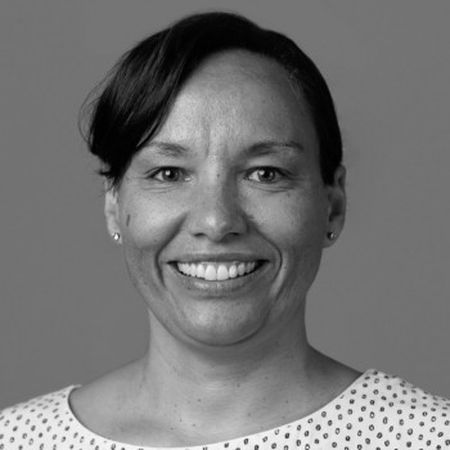
Lizanne Thornton is a PhD candidate at the University of Texas at Austin, specialising in the field of Second-Language Acquisition. She completed her master’s research in the field of sociolinguistics at the University of Cape Town and retains her interest in the philology of Afrikaaps.