



/file/dailymaverick/wp-content/uploads/2025/09/label-Opinion.jpg)
I was sitting in the audience at Africa Media Perspectives 2026 when the conversation drifted, almost inevitably, toward the old doctrine that journalism must remain neutral.
Neutral. It is a word that sounds clean in a newsroom and hollow in a graveyard.
The panel was about reporting from conflict. Gaza was the immediate reference point. But as I listened, the conversation kept widening until it felt as if the entire moral geography of our profession was laid out before us. Gaza, yes. But also Ukraine. Iran. Sudan. Ethiopia. The quiet places where reporters work with little protection and even less recognition.
And as I listened, I could not help but think of South Africa. Because we know something about neutrality in this country.
We know what it meant when newspapers described apartheid as a “situation”. We know what it meant when brutality was reduced to the sterile language of policy. We know what it meant when journalists told themselves they were merely observers while an entire people were being legislated into silence.
History has a way of exposing the cowardice hidden inside respectable words.
In the SA of the past, neutrality often meant refusing to name injustice plainly. It meant balancing the voice of the oppressed with the voice of the oppressor, as though both carried equal moral weight. It meant insisting that journalism must not “take sides”, even when one side possessed the guns, the laws, the prisons and the machinery of the state.
Journalism has always taken sides
But the truth is that journalism has always taken sides. Sometimes it stands with power. Sometimes it stands with the powerless. But it never stands nowhere.
That was the quiet realisation echoing through the Paarl Town Hall as I listened to journalists speak about reporting from war zones. Their stories were not theoretical. They were stories of reporters navigating bombardment, surveillance, political pressure and the constant risk that telling the truth might bring consequences.
And suddenly neutrality looked less like professionalism and more like privilege. Because the people who speak most confidently about neutrality are rarely the ones who must live with its consequences.
In Gaza, a reporter may decide that telling the truth could get them killed. In Iran today, journalists operate in a climate where information itself can become a crime. The war unfolding there now is not only a military confrontation but also an information war, where narratives travel faster than missiles and truth itself becomes contested terrain.
The distance between newsroom debates and lived reality becomes painfully clear. And then there are the quieter battles, the ones that rarely make international headlines.
I found myself thinking about my friend Tesfalem Waldyes, the founder of Ethiopia Insider. A journalist whose career has been marked by repeated arrests, intimidation and surveillance simply for practising independent journalism.
In 2025, he was detained again, accused of spreading “false information”, and held even after a court ordered his release on bail. He was placed in a detention block known as Siberia, a place notorious for its freezing, unforgiving temperatures.
Imprisoned for telling the truth
Imagine that for a moment: a journalist, held not for crime but for telling the truth, enduring a prison so cold it earned its name from a faraway land.
A journalist doing his work.
A court saying he may go home.
And the state simply refusing.
There is nothing theoretical about neutrality in such circumstances.
For journalists like Tesfalem and many others across Ethiopia, neutrality is not a philosophical debate. It is a daily negotiation with fear. It is the knowledge that every story carries risk. It is the quiet calculation between telling the truth and protecting your family.
And yet they continue. Not because they are reckless, but because they understand something essential about journalism that the comfortable corners of the industry sometimes forget: silence is never neutral.
Silence always serves someone. Listening to the conversation at Africa Media Perspectives, another thought kept returning to me. The younger generation of news consumers, the ones who inhabit TikTok feeds and algorithmic timelines, are not necessarily rejecting journalism. What they are rejecting is the performance of false neutrality.
They do not want reporters who pretend to have no moral compass. They want reporters who are honest about what they see.
This does not mean abandoning facts or surrendering to propaganda. Quite the opposite. The deeper the crisis, the greater the need for disciplined, rigorous reporting.
But facts alone are not enough when institutions have lost public trust. What audiences are searching for now is something older than objectivity and deeper than neutrality: integrity.
Integrity
Integrity means telling the story even when it is inconvenient to powerful audiences. It means resisting the temptation to flatten complex histories into convenient narratives. It means acknowledging that every conflict has roots that stretch backward through time.
Take Iran. The headlines today focus on missiles, geopolitics and retaliation. But beneath the spectacle of war are millions of ordinary lives moving through uncertainty: parents explaining the sound of explosions to their children, students wondering whether their universities will reopen, journalists navigating a labyrinth of censorship and fear.
If journalism does not capture those human dimensions, it becomes little more than military theatre. And if journalism refuses to confront the moral questions that surround violence, it risks becoming a stenographer for power.
South Africans should understand this instinctively. Our own history teaches us that journalism can either illuminate injustice or obscure it. During apartheid, some newsrooms chose comfort and proximity to power. Others chose courage and paid the price.
We remember the names of those who refused silence. Because in the end neutrality did not dismantle apartheid. Courage did. Truth did. Reporting that insisted on describing the world as it actually was, did.
Which brings me back to the uneasy question hanging in the air at the conference. What is journalism for? If its purpose is merely to transmit statements from powerful institutions, then neutrality might suffice. But if journalism exists to reveal reality – to expose what power would prefer hidden – then neutrality alone is inadequate.
A reporter cannot be neutral about facts.
A reporter cannot be neutral about suffering.
A reporter cannot be neutral about truth.
What a journalist can be is fair. Careful. Accurate. Relentlessly committed to evidence. But fairness is not the same thing as pretending that every version of reality deserves equal legitimacy.
Fear of bias
The danger today is not that journalists feel too much. It is that institutions fear appearing “biased” more than they fear being silent in the face of injustice. And silence, history shows us, is rarely innocent.
As I left the venue that evening, the town was settling into its familiar twilight. Paarl Mountain stood as it always has, indifferent to the arguments of journalists and politicians alike.
But I kept thinking about the invisible thread connecting reporters across continents.
A reporter in Gaza uploading footage before the signal disappears. A journalist in Tehran navigating censorship and surveillance. An Ethiopian editor wondering whether tonight will bring another knock at the door. And here in SA, where our own past reminds us what happens when truth is delayed too long.
Journalism, at its best, is an act of faith.
Faith that the truth still matters.
Faith that telling it still matters.
Faith that somewhere, someone will listen.
Neutrality may offer comfort to institutions. But for journalists who stand close enough to history to feel its heat, comfort was never the job description. DM
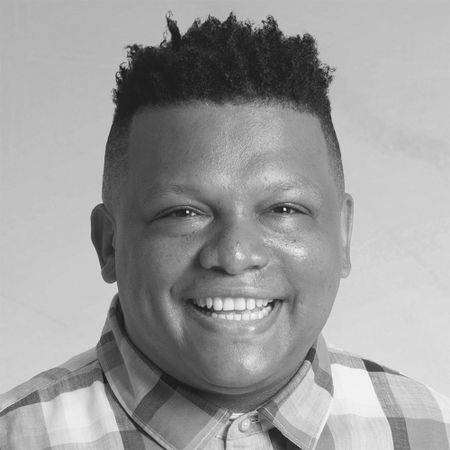
Ivor Price, the co-founder of Food For Mzansi Group and Africa Media Perspectives, is a journalist and commentator who first published at age 14. He holds a Master’s degree in Journalism and Innovation from the University of Lancashire.