



As the world marked World Health Day on 7 April, South Africa was at a critical crossroads. Universal health coverage (UHC), the idea that everyone should have access to quality healthcare without financial hardship, is a goal few would dispute. It is necessary, urgent and fundamentally about dignity.
But in South Africa, UHC risks becoming something else — an aspiration we speak about endlessly, while the system meant to deliver it continues to falter in real time.
For most South Africans, reliance on the public health system is defined by long queues, staff shortages and poorly maintained facilities. Access to healthcare remains uneven, and the quality of care is inconsistent. These are not new problems, but they are becoming more acute. That is where the conversation needs to change.
For more than a decade, national policy has centred on the proposed National Health Insurance (NHI) as the pathway to UHC. Yet, even the government acknowledges that full implementation lies years away, and only if the legislation survives the multiple challenges currently before the courts.
In the meantime, South Africa’s healthcare needs are growing. Patients are navigating a system under pressure today, not in some distant future. The real risk is that NHI becomes a placeholder for reform, a promise that delays fixing what is already broken.
There is a growing recognition, including in policy and parliamentary discussions, that South Africa’s healthcare crisis is not primarily about funding models, but about how the system functions. At its core, the challenge is one of implementation.
Recent findings by the Auditor-General reinforce this reality. The health sector is under sustained financial and operational pressure, with medico-legal claims alone running into the billions.
Weak record-keeping continues to undermine the state’s ability to defend these claims, leading to avoidable costs that further erode already constrained budgets.
This translates directly into delayed services, unfilled posts, deteriorating infrastructure and reduced access to care.
Across the public health sector, the same patterns emerge: weak financial management, poor project execution, fragmented information systems, and a lack of consequence for failure.
In some cases, infrastructure projects are delayed by years, while millions are spent on interventions that remain unused or incomplete.
The result is a system that struggles not because it lacks policy direction, but because it cannot consistently deliver.
The NHI Act, in its current form, will not resolve these underlying failures. If anything, further centralising governance and funding within an already strained system risks compounding them.
Structural challenges
There are also deeper structural challenges that no financing reform alone can fix. These include human resource constraints where trained healthcare workers cannot be absorbed into the system, a reactive model of care that prioritises treatment over prevention and a growing trust deficit between patients, providers and institutions.
South Africa’s healthcare challenges are often framed as a divide between public and private sectors. In reality, the strain is systemic.
The public sector carries the bulk of the disease burden under increasingly constrained conditions, while the private sector faces rising costs that place care out of reach for many. Across both, the outcome is the same — access to affordable, quality healthcare remains inconsistent. The solution is not to sideline one in favour of the other, but to better utilise the strengths of both.
Crucially, there are reforms available now, within the existing regulatory system, that can expand access and improve affordability immediately.
Enabling collective tariff negotiations would allow medical schemes and willing healthcare providers to agree on fair, transparent pricing, reducing cost escalation and bringing greater predictability to the system.
The National Department of Health reviewing and modernising prescribed minimum benefits provided by schemes would ensure that mandatory cover reflects today’s burden of disease and advances in treatment, rather than outdated requirements that drive inefficiency.
Finally, allowing medical schemes to offer low-cost benefit options would extend affordable, primary-care-based cover to an additional 10 million South Africans currently excluded from both medical schemes and reliable public care. This would not only expand access but also reduce pressure on overburdened public facilities.
These are practical, implementable reforms that have been under discussion for years. The real question is no longer what needs to be done but why it has not yet been done.
World Health Day is a reminder of what we are all working towards, which is a health system that serves everyone. But it should also be a reminder that progress cannot be deferred.
South Africa does not need to wait for NHI to begin improving access to care. The building blocks already exist. The policy tools are known. The gaps are well understood. What is required now is not another long-term promise from the government, but a shift in focus from future reform to present action that leverages the strengths of both the public and private healthcare systems. DM
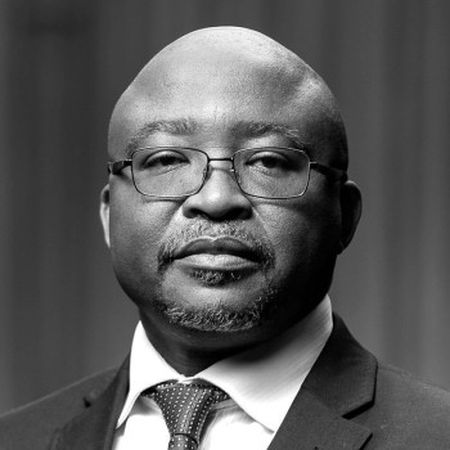
Dr Katlego Mothudi is CEO of the Board of Healthcare Funders.