



/file/dailymaverick/wp-content/uploads/2025/09/label-Opinion.jpg)
The geopolitical standoff in the Middle East, marked by soaring tensions between Iran, Israel, and the United States, is not only extremely worrying because it has the potential to create a long-term international economic and political crisis that could become a blight on the world, but also because of its utter destructive futility.
In an attempt to understand why Iran remains so stubbornly defiant in the face of Western “maximum pressure”, it may be worth looking back at the historical blueprint of another country that once believed it stood alone against the world: apartheid South Africa.
This piece is by no means a justification of anybody’s policy or ideology, but an exploration of a specific political phenomenon: how perceived external persecution and systemic isolation do not break a state, but rather harden the resolve of its ruling elite while sparking a huge burst of creativity. At the same time, a “laager” mentality is created as internal repression intensifies, both impossible to dismantle through force alone.
Perceived historical injustice
From the Anglo-Boer War at the turn of the century to the 1953 coup in Iran, the “hardline” stance of a nation is rarely born in a vacuum; it is usually forged in the fires of perceived historical injustice.
In South Africa, the psychological bedrock was the Anglo-Boer War. The British scorched-earth tactics and concentration camps created a deep-seated trauma among Afrikaners. This evolved into the “laager” mentality which, by the time the world imposed sanctions on the apartheid regime, the leadership did not see themselves as villains, but as a persecuted minority fighting for survival against a hostile world.
Iran carries a similar, deeply felt, historical grievance. The defining trauma was the 1953 coup, where the UK and US orchestrated the ousting of the democratically elected prime minister, Mohammad Mosaddegh, to protect their oil interests while reinstating the despotic Shah. These “original sins” of Western intervention convinced the Iranian collective psyche that the West would never allow a truly sovereign Iran to exist.
The 1979 revolution and the subsequent rise of religious fundamentalism weren’t just spiritual shifts. They were acts of radical reclamation against “Westoxification”, the English word for the Persian term Gharbzadegi.
Isolation and innovation
This gave rise to the isolation of sanctions which, as in South Africa, fuelled innovation on a number of fronts. The great irony of the sanctions in both countries is that instead of collapsing, these states turned inward and unleashed remarkable levels of technical and industrial creativity.
In South Africa, we witnessed the so-called “Miracle of Necessity”. Blocked from global markets, South Africa became a world leader in several critical fields:
- Energy: it developed Sasol, a state-of-the-art coal-to-liquid fuels industry, to ensure the country could never be held hostage by oil embargoes.
- Defence: Armscor became a military industrial conglomerate, producing world-class artillery, armoured vehicles and electro-optronics, and missiles that were highly sought after globally.
- Medicine and tech: exceptional educational and medical systems were built, with the world’s first heart transplant performed, and a sophisticated banking and telecommunications infrastructure emerging that remains central to the continent today.
Iran has followed a strikingly similar path. In response to decades of sanctions, it has built a “Resistance Economy”, including:
- Hi-tech and medicine: it is now a regional leader in nanotechnology and pharmaceuticals, producing more than 95% of its own medicine. Breakthroughs in stem cell research and complex surgeries.
- Asymmetric defence: Blocked from buying modern jets, Iran focused on drone technology and missile systems, creating a defensive shield that has fundamentally shifted the balance of power in the Middle East.
- When disconnected from SWIFT, Iran integrated its domestic SEPAM messaging system with Russia’s SPFS, allowing for direct bank-to-bank settlements in roubles and rials that bypass the dollar entirely.
- This financial independence is mirrored in the digital space, which birthed a “sovereign” ecosystem: despite being blocked by Microsoft and Google, Digikala has become the localised Amazon, Snapp functions as a super-app equivalent to Uber and Google Pay combined, and Cafe Bazaar serves as a domestic App Store.
Victims of ingenuity
On the other hand, critics argue with some accuracy that this architecture of the encampment eventually reaches a point of diminishing returns. The bridge between brilliance and decay is the “sanctions tax”. To bypass sanctions, the two states built shadow financial and acquisition networks. While these are feats of engineering and subversive commerce and innovation, they become inherently inefficient and create a “closed loop” where competition dies and transparency is sacrificed for security.
In South Africa, while Sasol and Armscor were engineering marvels, they were also massive economic drains requiring ongoing state life-support. The inflated cost of doing business through back channels eventually hollowed out the currency and alienated the business elite.
Iran faces the same cliff as its resistance economy has become a victim of its own ingenuity – an opaque system that enriches the Iranian Revolutionary Guard’s military-industrial complex while the infrastructure for the common citizen crumbles.
During sanctions, South Africa cooperated very closely with Israel on military hardware, a partnership that led to the establishment of nuclear capabilities in both countries. Then, in a historical first, South Africa voluntarily dismantled its nuclear arsenal as the country transitioned to democracy in the early 1990s. This was a signal to the world that an end to sanctions, security guarantees and political inclusion could be far more effective at achieving disarmament than threats of annihilation.
Religion as a shield
Another interesting parallel was the way Iran and South Africa used religion as a geopolitical shield. Both the Iranian and South African governments, in various ways, used faith to consolidate their worldviews and justify their isolation.
- In South Africa, a fundamentalist Protestant ethic, specifically within the Dutch Reformed Church, was used to provide a moral and theological framework for their position.
- In Iran, the Shia faith (often incorrectly simplified as a Sunni-Shia divide) became the lens through which they viewed their mission to lead the oppressed of the Muslim world, and to take a vigorous, outspoken stance against Israel.
Dismantling the laager culture
Crucially, in order to better understand how an “encampment” culture is finally dismantled, it is important to look at the role of leadership. The South African transition was not merely a result of economic exhaustion. It required a fundamental shift in the psyche of the ruling class.
Then president FW de Klerk played a role that remains a salutary historical lesson for today’s leaders. He was able to do what currently seems inconceivable in the Middle East: to persuade a people who feel betrayed, isolated and under existential threat that security and military force will never provide long-term safety. De Klerk realised that ensuring security alone offered only slow suicide.
It took courage to step off the precipice, a move championed and met with grace and conviction by Nelson Mandela. Together, they delivered the country from the brink of a racial conflagration. Their partnership proved that political solutions built on the recognition of the “other” are the only viable and durable answers to systemic conflict.
A haunting lesson
History offers a haunting “what if” in the figure of Yitzhak Rabin. He was the only Israeli leader with the courageous foresight to attempt a De Klerk-style pivot. Shortly after the historic Oslo Accords, when he dared to imagine a situation of peaceful coexistence, he was murdered by a right-wing Israeli extremist.
His assassination didn’t just kill a man; it killed the peace process, leaving a vacuum that has been mercilessly exploited by successive hardline Israeli governments to justify the confiscation of land and the genocide in Gaza, now also becoming increasingly visible in the West Bank.
Unlike the South African experience, where leaders sought a common future, the Israeli state has doubled down, choosing a path of “might is right” that Rabin himself warned would lead to moral and strategic ruin. Until a leader emerges in Israel with the integrity and fortitude to choose a political solution over a military one, the bloodshed will continue, proving once again that military capability without a moral compass is merely a tool for devastation.
Careful examination of history shows us that, unlike in Europe, with its pogroms and Holocaust, Jews lived in peace for centuries across Muslim countries from Morocco to Iran. Had it not been for the Zionist-inspired tactics in these countries to actively push these Jewish communities to relocate to Israel, often against their will, the situation would be markedly different today.
The ultimate irony is that to this day, one of the oldest Jewish communities outside Israel and the US actually lives in Iran, where they are consistently treated with respect and integrated into society, including with representation in parliament, and where synagogues do not require the heavy police protection now seen in the West.
Peacebuilding
The ill-conceived and illegal war on Iran has not only caused massive human devastation and global economic chaos, but it has also failed to achieve regime change. The Iranian regime’s defence capability remains intact, and it arguably holds the upper hand in negotiations.
President Trump’s bombastic anti-Iranian rhetoric serves only to validate the hardliners in Tehran. A dramatic shift in tone is needed. This could include the lifting of sanctions and integrating Iran into the global economy, including securing security guarantees.
By treating it as a rational historical actor with legitimate security concerns, rather than a caricature of evil, the West might finally find a partner for peace. The lessons of history from the Boers to the Ayatollahs teach us that isolation is a choice, and it is one that can be unmade.
Ultimately, the only durable security is found in the recognition of a common humanity and the building of a house where every neighbour from the Mediterranean to the Arabian Gulf has a seat at the table and a guarantee of peace. It is time to stop the warmongering and start the peacebuilding. DM
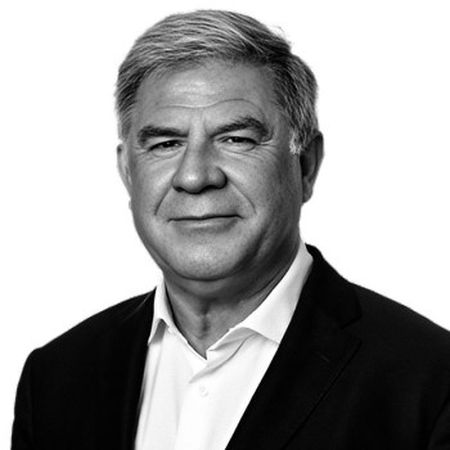
Marco Boni is a former spokesperson for the South African Ministry of Foreign Affairs during the Mandela presidency. He also served in Tunis, where the PLO was headquartered, during the period of the Oslo Accords. He has been in Dubai in leadership consulting for the past 18 years.