



/file/dailymaverick/wp-content/uploads/2025/09/label-Opinion.jpg)
As I preside over Nelson Mandela University’s graduation ceremonies for the last time at the end of March, after eight years as chancellor, I am struck by the weight and wonder of the moment.
It is both an emotional ending of an eventful period for me and simultaneously an affirmation – of lives changed, of transformation in action, of futures unlocked and of a university that continues to find its voice in a complex world.
There has been no greater privilege than witnessing students, young and old, from every walk of life, cross the graduation stage having given their all to reach this milestone at a university that bears the name of Madiba.
Each ceremony has been a powerful reminder that education remains one of the most profound instruments of human possibility.
My journey with Mandela University has been marked by many such moments of significance. Graduation ceremonies stand alongside the daily, less visible work of unlocking human potential, and the quiet determination of scholars advancing knowledge, strengthening governance and championing social justice.
It is in these spaces, in lecture halls, research centres and community engagement sessions that the true soul of the university reveals itself.
Serving as chancellor has never been a ceremonial duty alone. It has been a commitment to transformative leadership, working alongside a capable executive under the steady stewardship of Vice-Chancellor, Professor Sibongile Muthwa, and the principled governance of Council Chairperson, Justice Nambitha Dambuza.
Shared vision for an inclusive, human-centred future
Together, we have navigated complexity with purpose, cultivating an institutional culture shaped by dialogue, diversity of thought, and a shared vision for an inclusive, human-centred future.
This work demands patience and conviction.
Universities must remain spaces where ideas are tested, contested and refined. Today’s students are deeply engaged and unapologetically vocal about the world they wish to inherit. This is as it should be. Universities have always been crucibles of change and spaces where intellectual courage must be encouraged, not constrained.
My own path began in student activism during the anti-apartheid Struggle of the 1970s, driven by the belief that no child’s destiny should be determined by racial classification or social circumstance. That conviction endures.
Today’s struggles are different in form but not in substance. Students rightly challenge inequality and injustice, but student leadership in this era must extend beyond protest. It must embrace proposition, negotiation and solution-building.
Equally, protest must be anchored in principle and discipline. Institutions of learning, libraries, laboratories and classrooms must be protected as shared assets of progress. When these are compromised, it is the most vulnerable who are excluded.
Leadership, therefore, must be measured not only by the ability to mobilise, but by the capacity to guide, to safeguard and to build.
Mandela University, like many institutions in SA, is a microcosm of the continent. Its student body reflects Africa’s diversity and promise. It is imperative that structured, values-driven leadership becomes the norm across our campuses, for these students will shape the future of our societies.
Beyond student life, my tenure has been enriched by deep engagement with scholarship. I have had the privilege of interacting with exceptional academics and researchers who are confronting systemic challenges and translating ideas into action.
Critical role of knowledge in shaping governance
Collaborations with scholars such as Dr Rose Karambakuwa, and my work with the United Nations Committee of Experts on Public Administration, have reinforced the critical role of knowledge in shaping governance.
This journey culminated in the co-authorship of a chapter in Public Administration in the New Reality, where we argued that Africa is steadily redefining its public administration landscape.
No longer a passive recipient of global prescriptions, the continent is increasingly asserting itself through indigenous knowledge, digital innovation, and inclusive leadership.
To sustain this trajectory, African states must build agile, citizen-centred institutions that deliver real public value in an uncertain world.
For SA, this is an urgent imperative. Effective public administration remains the engine through which we confront poverty, inequality and underdevelopment.
Universities, and their graduates, must play a far more decisive role in strengthening governance and improving service delivery.
One of the defining highlights of my final year has been the launch of the Chancellor’s Entrepreneurship Fund. Youth unemployment in SA remains alarmingly high, particularly among those aged 15 to 24. With a student body exceeding 34,000, Mandela University has both the opportunity and the responsibility to respond decisively.
Our graduates must see themselves not only as job seekers, but as creators of opportunity, innovators and builders of new economic pathways.
The Entrepreneurship Fund, working through the Mandela University Africa Hub, seeks to support students and young entrepreneurs in establishing and scaling their enterprises. This is not an adjunct to the academic project. It is central to it.
Transformation
Transformation in higher education extends far beyond demographic change. It requires a fundamental rethinking of knowledge systems, curricula and institutional culture. Mandela University has embraced this challenge with intent, working to decolonise knowledge, foster inclusion and ensure that every student and staff member experiences a genuine sense of belonging.
This commitment is most powerfully expressed in the university’s physical and intellectual footprint. The positioning of the Medical School and the Faculty of Education’s Foundation Phase in Missionvale township is a deliberate act of social justice, an affirmation that the university exists not apart from society, but within it.
Proximity to Dora Nginza Hospital further strengthens this commitment, with newly trained doctors set to serve communities across the Eastern Cape, including its most underserved areas.
Equally significant has been the university’s support for the Beijing+30 African Women’s Movement.
This work is not symbolic. It is a sustained and strategic effort to defend and advance one of the most comprehensive frameworks for gender equality ever developed. At a time when hard-won gains in this regard are under threat globally, this collective effort represents both vigilance and resolve.
As I reflect on these eight years, I am deeply conscious that this is not a personal legacy, but a collective one shaped by students, scholars, administrators, general workers and leaders who have given meaning to the name Mandela.
The task ahead is clear. The university must continue to grow as a leading African institution anchored in excellence, responsive to technological change, and unapologetic in its commitment to African knowledge, ethical leadership and social impact.
If there is a single enduring lesson from this journey, it is this: institutions matter most when they remain true to their purpose.
And Mandela University, at its best, is not merely a place of learning. It is a force for dignity, justice and human possibility.
That is not an ending. It is a mandate for what comes next. DM
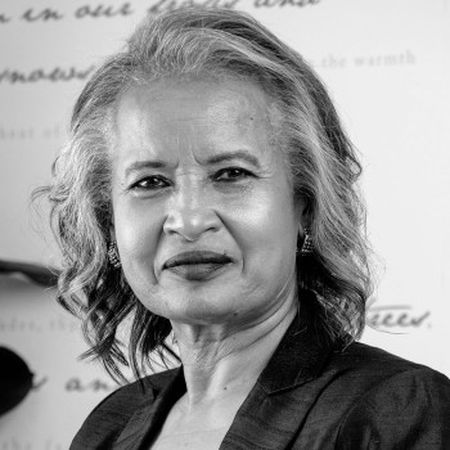
Geraldine Fraser-Moleketi is the outgoing Chancellor of Nelson Mandela University, having served two terms. She is succeeded by Dr Naledi Pandor, whose tenure begins on 1 April 2026.