



/file/dailymaverick/wp-content/uploads/2025/09/label-Opinion.jpg)
Graça Machel, the global stateswoman and humanitarian, recently reminded us that “leadership is about service, not position”. This simple but demanding truth captures the posture this moment of global polarisation requires – action rooted in responsibility, courage embodied with care and leadership that is not measured by authority, but by service and positive impact.
In this context, leadership can no longer be deferred, symbolic or performative. It must be exercised in the present tense: grounded, ethical, relational and collective.
In a live conversation with The Mandela Rhodes Foundation Podcast (available on all major platforms, including Apple Podcasts, Spotify and YouTube), Machel offered a deeply human lens on this moment in world history. She reminded us that much of today’s leadership discourse has drifted away from people and towards power, markets and control. When societies begin to view populations as “markets” rather than communities, leadership loses its moral centre. Development becomes detached from dignity, and policy becomes disconnected from reality.
Her insistence on a people-first worldview reframes leadership not just as influence over systems, but equally as responsibility to human lives.
This rethinking of leadership is not merely philosophical: it has structural implications. To insist on a more humane, service-oriented leadership challenges how institutions define success, governments design policy, economies measure growth and leaders understand their role in society. When leadership is divorced from realities, systems lose legitimacy. Decision-making becomes abstract and accountability weakens.
Machel’s reflections expose a defining tension of our time: the widening gap between leadership structures and the everyday experiences of the people those structures are meant to serve. In polarised contexts, this gap becomes fertile ground for mistrust, resentment and instability.
Collective consciousness
These insights from Machel align closely with the white paper recently published and presented by the World Economic Forum Global Future Council on Leadership during the forum’s annual meeting at Davos. Titled Next Generation Leadership for a World in Transformation: Driving Dialogue and Action, the council’s research and reflections argue that leadership for the future must be relational rather than hierarchical, collective rather than individualised, and anchored in long-term stewardship rather than short-term dominance.
This work moves leadership discourse beyond personality and power towards shared responsibility, ethical coherence and collective agency.
Machel’s experience gives human form to this idea. From liberation movements and nation-building to education reform and civil society leadership, her story is not one of individual heroism, but of collective responsibility. Over and again in the conversation, she returned to the principle of “we” over “I” – a leadership ethic rooted in shared agency, communal accountability and collective courage.
Decisions, she humbly argued, should be made together. Responsibility must be carried together. Futures must be built together.
This understanding of leadership as collective action is not idealism, but necessity. In a world defined by intersecting crises, no single institution, sector or generation can lead alone.
The Global Future Council on Leadership’s white paper underscores this reality, calling for leadership models that prioritise collaboration across sectors and generations, shared governance and distributed responsibility. Leadership becomes less about command and more about coordination. Less about control and more about coherence.
Leadership redefined
Central to both Machel’s message and the Global Future Council on Leadership’s framework is a shift in how leadership across generations is understood. Machel challenges the language of “next-generation leadership” itself, insisting instead on generations of leaders – leaders of today and tomorrow learning alongside one another, sharing responsibility rather than deferring it. Leadership, in this model, is circulated, shared and entrusted.
This reframing moves leadership away from linear succession towards intergenerational partnership, where mentorship becomes mutual learning and legacy is defined not by what is preserved, but by what is consciously co-created for the benefit of people today and tomorrow.
This aligns with another core insight from both Machel’s reflections and the Global Future Council on Leadership’s framework: that leadership must be human-centred before it is system-centred. Structures matter. Policies matter. Institutions matter. But none of them endures without human trust, human dignity and human legitimacy. Leadership that fails to centre people ultimately loses moral authority, even if it retains formal power.
In polarised contexts, this becomes even more critical. Polarisation thrives where people feel unseen, unheard and unvalued. It feeds on exclusion, inequality and disconnection. Leadership that responds with control rather than care, dominance rather than dialogue and certainty rather than humility deepens these fractures rather than healing them.
Machel’s voice offers an alternative ethic: leadership as presence, as listening, as relationship.
Ubuntu (the African philosophy of being human through and with others) is not presented as a slogan, but as a lived practice – a way of being in the world that recognises interdependence, shared humanity and collective responsibility.
This is the leadership challenge of our time: not just to lead well, but in a way that inspires a more humane embodiment of leadership. Not to accumulate influence, but rather to expand agency. And instead of dominating systems, to humanise them.
In times of deep division, leadership is a title that must not be paraded carelessly. It is a responsibility we choose and must embrace with deep respect and humility for the honour to serve others. It is a practice we cultivate. It is a lifelong learning process even at the highest level in our professions. It is a leadership that believes in a better future for all people. And it is a leadership that insists that we build that future together across generations – with our common humanity always at the forefront. DM
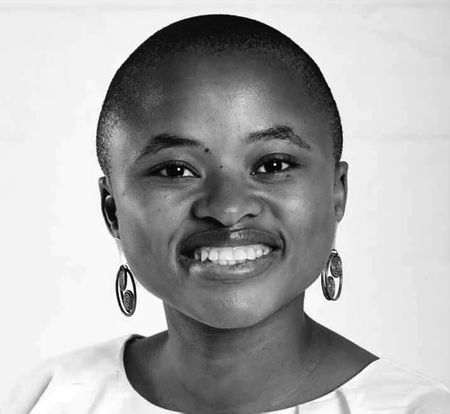
Judy Sikuza is the chief executive of The Mandela Rhodes Foundation. She is also the co-chair of the World Economic Forum Global Future Council on Leadership.
This story first appeared in our weekly DM168 newspaper, available countrywide for R35.
/file/attachments/2990/DM-27032026_537812.jpg)