



/file/dailymaverick/wp-content/uploads/2025/09/label-Opinion.jpg)
In 1996, former US president Bill Clinton walked out of a meeting with Israeli Prime Minister Benjamin Netanyahu, fuming, “Who’s the (insert expletive here) superpower here?”
One could be forgiven for asking the question again now that the US and Israel are at war with Iran, taking with them the stability of the entire Middle East as well as the world.
US President Donald Trump denies that he followed Netanyahu’s lead in this war. Wherever the truth lies, we are dealing with two men, one, Netanyahu, whose country is on trial at the International Court of Justice (ICJ) with South Africa and others asking that Israel’s military action in Gaza be declared as genocide and the other, Trump, a man so narcissistic and small that he represents a clear and present danger to the world and his own citizens.
Add to this the arcane Iranian leadership, and it’s a crisis with no easy solution.
Russia’s Putin and China’s Xi Jinping are having a field day in this world where “might is right”, and Trump is too dull-witted to understand this. Those around him are interested only in fealty to the leader. Who could take Secretary of War (sic) Pete Hegseth seriously? For Trump and those who enable him, war is a game, the presidency its means to wage it.
At the time of writing, Brent crude surged above $100 a barrel with Iran declaring that the Strait of Hormuz will be reopened to “non-hostile” ships. The situation changes almost hourly and the only thing that is certain is that no country is immune to the folly of this war.
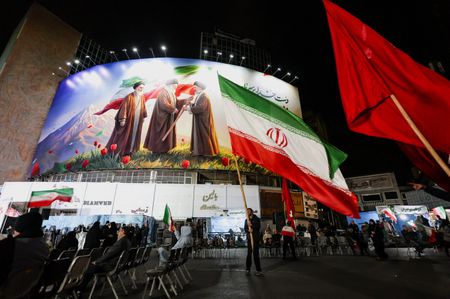
The conflict requires sober minds, but also the ability to hold two thoughts at once: that the US and Israel have started an illegal war (the UN has been bypassed and the US Congress has voluntarily given up its powers to declare war, signalling how very deep that country’s institutional dysfunction now is), which has caused global instability. But none of this means that Iran has not been a bad actor in the region, that it has not been guilty of oppressing and killing dissenting citizens and that its nuclear capability needs to be curtailed.
One of the several stated aims of this war is “regime change” in Iran, though that is looking unlikely. Yet, even if regime change does happen, after the mess of war, there will be no USAid to dispense “soft power” and assist Iranians to build a semblance of democracy (inasmuch as that is even the task of the US).
But Trump cares naught for the work of democracy or even for democracy itself. In Minneapolis, two American citizens were shot dead by Immigration and Customs Enforcement (ICE) officials, after all. It is also worth remembering that the Joint Comprehensive Plan of Action (JCPOA) – the Iran Nuclear Deal – negotiated painstakingly over two years by the Obama administration, was torn up by Trump, thus enabling this war of choice. But, no matter what the outcome, Trump will claim victory.
Fuel vigilance
South Africa, too, will not be immune to the effects of this war. Even though the panic on WhatsApp about fuel supply has not been based on fact, we will not escape the increase in fuel prices or the inevitable inflation which will follow.
We also know that in an interdependent world, contagion is very real. The Department of Mineral and Petroleum Resources (DMPR) said recently, “While prolonged geopolitical tensions may exert pressure on international oil prices, the department wishes to assure the public that there is currently no immediate risk of fuel shortages in South Africa.”
In May last year, the Portfolio Committee on Mineral and Petroleum Resources conducted an oversight visit to the Strategic Fuel Fund (SFF) in Saldanha Bay. Then the chair of the committee, Mikateko Mahlaule said, “We are not satisfied with the amount of strategic fuel reserves that the SFF is keeping in stock. As a committee, we believe it is pointless to refine if we do not have sufficient storage or if the limited storage available is not optimally utilised.”
According to Defence Web, “South Africa is heavily dependent on fuel imports; the country imports approximately 90% of its crude oil and petroleum products. Fortunately, Nigeria is the country’s largest source of crude oil, contributing 47% of crude oil imports; Saudi Arabia is the second-largest provider, accounting for 17% of imports. However, the majority of South Africa’s refined petroleum products are imported from Persian Gulf countries, which are experiencing conflict-related disruptions…”
In the moment of crisis, it goes on to say, “South Africa will likely seek to increase its diesel and petroleum imports from India and scale up domestic synthetic fuel production. However, this will still result in a steep and prolonged increase in fuel costs in the country, which will present an existential threat to numerous economic sectors, including the mining, aviation and logistics industries. The current threat of a catastrophic fuel supply shortfall has further underscored the governance failures that allowed the country’s domestic refinery capabilities to decline.”
While analysts have pointed out we are not facing an immediate “doomsday scenario” because of this war, that does not mean we should not be vigilant.
Strategic Fuel Fund shenanigans
As is true of much in South Africa, our oil reserves have been the source of controversy and allegations of corruption. This Middle East conflict and pressure on the global oil supply should give us pause to think back almost a decade.
In May 2016, there were revelations that the SFF had sold off 10.3 million barrels of our strategic oil reserves during the tenure of the now deceased former minister of energy Tina Joemat-Pettersson and then acting CFO of the SFF, Sibusiso Gamede. This sale proceeded without the approval of former finance minister (also now deceased) Pravin Gordhan.
Later, in 2017, South Africa’s then new Minister of Energy Mmamoloko Kubayi directly contradicted the statement that former minister Joemat-Pettersson made to Parliament on the sale of these strategic oil stocks. Joemat-Pettersson denied that there had been a sale, telling Parliament that it was simply a strategic rotation of unsuitable oil stock.
Kubayi, however, confirmed to Parliament that the sale was made without the approval of the Central Energy Fund (CEF) board. At the time, she asked that action be taken against those who approved the sale, though some were no longer at the CEF at that time.
There were key questions, to which there were no answers. Why did the sale of crude oil stocks (10 million barrels) at $29 a barrel in December 2015 take place at a time when the market was in “contango” – ie, when the current price of a commodity, such as oil, is lower than prices for delivery in the future? In other words, it was no time to sell.
It all had a whiff of the 1999 Arms Deal about it. The Public Finance Management Act stipulates that before a public entity concludes the “acquisition or disposal of a significant asset”, the accounting authority for the public entity must “promptly and in writing inform the relevant treasury of the transaction”. That did not happen.
The revelations remain shocking, not only because there was no sign-off from the finance minister or the CEF board, but also – especially – because the former minister specifically told Parliament that no sale had taken place. How could she not have known about the sale, given that she said at the time that nothing like this would happen without her knowledge?
In November 2016, the CEF board and management appeared before Parliament, but shrugged off the sale of oil reserves.
In 2020, five years later, the CEF, which oversees the SFF-instituted court proceedings, sought to have the sale set aside and declared unlawful. We know the oil was sold to eight companies:
- Vitol SA;
- Venus Rays Trade;
- Taleveras Oil SA;
- Glencore Energy UK;
- Contango Trading;
- Natixis SA; and
- Vesquin Trading.
The Hawks were also tasked with investigating the matter.
The lack of accountability runs like a thread through most of our decision-making processes and oversight bodies. The illegal sale of these oil reserves is a salutary reminder of this.
Lack of accountability — the consequences
We are living in serious times, and they will require preparedness for any precarious global situation, including a world at war. Accountability of those who hold the power to make decisions is key to such preparedness.
The lack of accountability in our society and government manifests itself in many tragic ways. This past week held a stark reminder of the tragic gap between the society we imagined, the one we actually are and the consequences of such a lack of accountability.
On Monday, Chinette Gallichan was murdered in cold blood outside the CCMA in central Johannesburg. Gallichan was representing mining company Sibanye-Stillwater.
Her death follows the murders of several legal officers, including insolvency practitioners Thomas and Cloete Murray, Eastern Cape prosecutor Tracy Brown, lawyer Bouwer van Niekerk and SA Revenue Service advocate Coreth Naude.
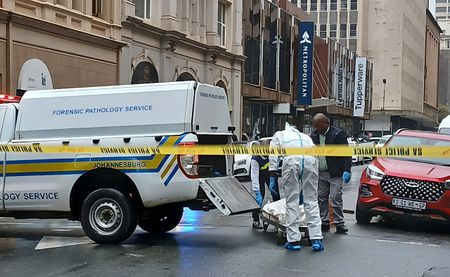
Sadly, this is not an exhaustive list. Words of outrage are not enough. What is needed is for law enforcement agencies to deal with these murders as priority crimes. They represent an attack on the rule of law and our constitutional democracy.
A society based on the rule of law requires lawyers to be able to represent clients fearlessly, without having to worry about whether fulfilling their basic professional duties would put their lives at risk. If lawyers cannot do so, the entire legal system, and therefore our entire system of government, would be under serious threat. We simply cannot allow the threat of violence to be normalised, or to be used to intimidate legal practitioners and to manipulate the legal system.
When we imagined our democracy, we imagined it differently, of course. Our Constitution holds the values of transparency, accountability and responsiveness as core to who we aspire to be. That we have strayed from these values is common cause, and the road to rebuilding what has been lost and broken is a long and painful process.
Nicholas ‘Fink’ Haysom, a great South African
Nicholas “Fink” Haysom, who played a significant role in crafting our constitutional architecture, died last week, aged 73.
It is hard to precis Haysom’s extraordinary life. His was an activist’s life. He played a critical role in the negotiations which led to the constitutional settlement of 1994. He was Nelson Mandela’s former legal adviser, founder of the law firm Cheadle Thompson and Haysom (still a leading law firm), and later Special Representative for the UN Secretary-General in South Sudan and other trouble spots around the world over the years. His was a fine and principled life and one which carries lessons not only for South Africa, but also the world during this time of war and unease.
As Herman Lategan wrote, quoting Abdul Mohammed, a senior African diplomat, mediator and political analyst who first encountered Haysom during the negotiations for the Sudan Comprehensive Peace Agreement, “He [Fink] did not dominate the room; he stabilised it. He did not rush to solutions; he cultivated them patiently. His defining quality was the discipline of listening: not as a formality, but as a moral act.” This sounds almost counter-cultural in a world of bullying and noise.
Still another of his colleagues at the UN, on hearing of his passing, quoted Haysom as saying, “We wake up every morning, leaving no stone unturned” in the search for peace.
“It’s not just the @UN that lost a leader, humanity has lost one of its truest champions.” #UNMISS colleagues pay tribute to Nicholas Haysom, Special Representative of the Secretary-General in #SouthSudan 🇸🇸. His extraordinary contributions to peace will continue to inspire us🕊️ pic.twitter.com/apwrobCjVY
— UNMISS (@unmissmedia) March 19, 2026
We have no choice but to take up this challenge: to leave no stone unturned in working for a better world.
Haysom was a great South African. RIP. DM