



/file/dailymaverick/wp-content/uploads/2025/09/label-Opinion.jpg)
The ultimate expression of sovereignty resides, to a large degree, in the power and the capacity to dictate who may live and who must die. – Achille Mbembe, 2003
The housing crisis in Cape Town is out of control. People are being displaced, priced out and removed at rapidly increasing levels. The cost of housing is rising faster than locals can keep up with. Though worsening exponentially, this crisis is not sudden. The current housing crisis is a consequence of apartheid legacies and years of spatial segregation.
Achille Mbembe puts forth the notion of necropolitics to describe the use of social and political power to assign value to human life. Translated, the word necropolitics means “the politics of death”. Mbembe uses this concept to describe the power to ascribe value to certain people and devalue others, the power to decide who is disposable and who is not.
He also uses necropolitics to describe processes behind the creation of what he refers to as death worlds, a unique form of social existence where vast populations are subjected to conditions of life that reduce them to the status of living death, vulnerable to marginalisation.
The colonisation and genocide of the Palestinian people are used by Mbembe as an example of necropolitics. The occupying force, Israel, uses the claim of sovereignty to justify mass displacement and slaughter.
Because they have the divine right to the land, they argue, they also have a right to remove the Other. The necropolitics at play here demonstrates how Israel (and the governments that support it) constantly attempt to insist that their lives are more valuable than those of Palestinians.
Necropolitics describes more than the right to kill – it describes the right to expose other people to death. Historian and philosopher Hannah Arendt states that the politics of race are ultimately linked to the politics of death.
Racial spatial segregation
In the South African context, where spatial segregation is racial, the decision to force black and coloured people to the outskirts is undoubtedly necropolitical. Different forms of necropower are employed to ensure people are vulnerable, their living situations precarious.
The power to decide where people can and cannot live is inherently the power to increase people’s chances of life, or to condemn them to death.
Those who have the power to enact spatial segregation are active participants in necropolitics. Living in Cape Town, it seems to me that the Western Cape rules with its own sovereign ability to decide who matters and who does not.
Cape Town has been seeing an increase in (white Western) tourists, flocking to experience what Time Out declared as the “most beautiful city in the world”. A common joke among locals is that if you go into the City Bowl, and along the Atlantic Seaboard, you will hear more foreign accents than South African ones.
With the city having one of the highest Airbnb densities in the world, there is a truth behind the joke. British, European and American accents seem to have taken over the city. Though many cry that tourism income benefits the city, this phenomenon has a very direct and dire consequence: pushing locals out of the city. Many of those displaced by gentrification are relocated to the outskirts, to the area known as the Cape Flats.
Colonial occupation, as described by Frantz Fanon, first and foremost entails a division of space into compartments. The creation of borders and boundaries and the declaration of who “belongs” where. Townships were designed with one of their purposes being that of control, aiming to segregate black people from urban areas.
The colonial agenda continues to be reproduced when spatial segregation persists, and historically marginalised communities are forced to the outskirts of the city.
These are the people whose labour keeps the city running, yet they are not treated as residents who deserve to enjoy and benefit from Cape Town. This, I argue, is reminiscent of dompas culture, where African men were only allowed access to white areas as labourers and workers.
Though the pass laws have long been eradicated, the practice of segregation stands strong. The message Cape Town’s spatial design sends out is clear: You don’t belong here. Only your labour does.
Behind the photographs of the mountain and the ocean, the Western Cape is one of the most dangerous places in the country. Most articles praising the beauty of Cape Town fail to acknowledge that the city is not just the City Bowl and Atlantic Seaboard. The city stretches out, with the majority of the working-class population housed far away from the city centre.
Gangsterism
According to Brett Herron, Unite for Change Leadership council member and Good party secretary-general, the Western Cape was the only province with 10 police stations in the top 30 murder stations in the country. Of the 276 gang murders in the third quarter of 2025/26, 257 occurred in the Western Cape. Herron reported that these are almost all attributed to 10 stations within the Cape Flats.
The gang violence which plagues the communities is a consequence of urban crowding, poverty and population density. Emile Durkheim, a French sociologist, theorised that deviance is often a response to a situation where goals cannot be achieved through conventional behaviour.
The historical background of Cape Town, the slavery and racism, generated a situation of “social dislocation”. The depressing lack of opportunities for young people often draws them towards gangs, in search of a sense of power and a place of belonging.
The persistent spatial segregation and neglect of working-class communities result in the cultivation of an environment where violence and drug abuse thrive. As long as the colonial root causes of gang violence are not addressed, the cycle will continue. The neglect by the state is a necropolitical choice.
Beyond the active violence which occurs in the Cape Flats, there are passive death sentences, such as the lack of access to healthcare. Some areas in Cape Town have been declared “red zones”, too dangerous for ambulances to access without following strict protocols or, in some cases, a police escort.
The delay in healthcare is dangerous and often fatal. Through a lack of efficient healthcare, and sometimes no healthcare at all, there is an external power dictating their chances of survival. The converse is also true – those who live in areas with access to (good) healthcare are more likely to have their health taken care of. I argue that, stripped down to the bone, this is a demonstration of how, through spatial segregation, there is a declaration of who “deserves” to live. And who “deserves” to die.
The ‘less worthy’
Those who have the power to choose to displace locals are, by the very nature of displacement, declaring that they believe those who are displaced are less worthy of life than the wealthy who move into those areas.
I am in no way minimising or denying the agency of the people in those communities. Every single day, people display resilience, finding ways to live within a system designed to marginalise them. This in itself is an act of passive defiance against the necropolitical powers which treat them as if they do not matter. However, the historical and present injustices inflicted on marginalised people significantly impact on their quality of life. We should aspire to a world where people are not forced, by the failures of the system, to be resilient.
Mitigating years of spatial segregation will take time and a lot of work. But it needs to happen. Those with the power to decide who lives and dies have the choice to reject the perpetuation of a system that marginalises. If we must still operate in a system that allows governments and authorities sovereignty, the capacity to decide who must live and who must die, then they must decide that everybody lives. DM
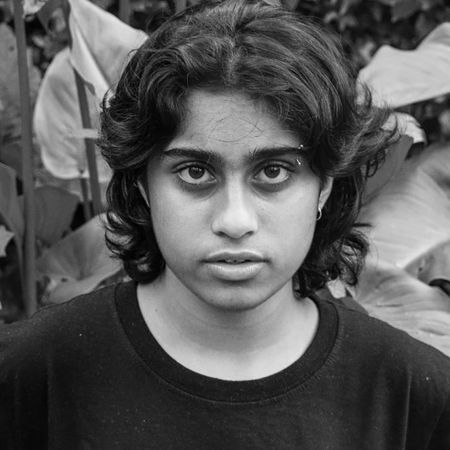
Raeesah Noor-Mahomed is a 23-year-old intersectional activist, artist and revolutionary. Currently completing their master’s, specialising in Southern Urbanism, Raeesah uses their academic knowledge and lived experience to push for decolonial and creative methods of knowledge sharing.