



/file/dailymaverick/wp-content/uploads/2025/09/label-Opinion.jpg)
South Africa’s health sector is on the brink. A decade of declining public investment, rising private-sector costs, poor governance and structural rigidity has produced a system that is unable to meet the population’s needs. The crisis now threatens the right to health.
Yet, the solutions are within reach – if the government acts decisively and coherently.
The problems
The problem is that the system is buckling at both ends, where the public sector is collapsing due to underfunding. Provincial health budgets – where more than 95% of public health spending occurs – have been cut in real terms year after year.
By 2025/26, spending per capita will fall from R5,147 (2019/20) to a projected R4,508. Departments are drowning in R21.7-billion in accruals, start each year in debt, and slash essential procurement and staffing just to stay afloat.
The result is visible everywhere. Massive shortages of doctors and nurses, even though production of doctors is high; decaying infrastructure, delayed maintenance, rising medicolegal claims and a demoralised workforce. The staffing collapse is particularly acute. While junior doctors are legally employed, posts for registrars, specialists and nurses – the backbone of quality care – remain unfilled most of the time, until complaints drown progress made elsewhere in the system.
The private sector faces runaway, unregulated prices. Medical schemes raised contributions by 8%-13% for 2025, outpacing inflation and pushing private care beyond the reach of most households. This is fuelled by the abolition of price-setting mechanisms in 2008, fee-for-service incentives that drive supplier-induced demand, and weak regulation of private hospital expansion and technology purchases.
Government subsidies – through medical tax credits and public-service medical aid contributions – further inflate private-sector consumption while draining public budgets.
Massive governance failure and policy fragmentation contribute to the crisis. Corruption, overly centralised control, weak managerial authority and performance systems detached from outcomes have eroded confidence. Hospital CEOs lack delegated powers, provincial heads often lack technical expertise and strategic purchasing (central to NHI) remains absent.
The current financing model no longer matches national needs. South Africa faces rising costs from an ageing population, non-communicable diseases, imported medical equipment, currency depreciation and medico-legal liabilities – yet health allocations continue to shrink. The country does not have a debt problem; it has a growth and investment problem. Without targeted investment, the crisis will deepen.
Proposed solutions
To solve this crisis, we need an immediate, decisive and technically sound plan.
This includes, first, resetting the public sector by clearing historical debts by writing off R21.7-billion (estimated in 2025) in accruals and requiring provinces to adopt strict spending controls and transparent monitoring. Provinces cannot run a modern health system while 10-20% of their budgets are consumed by past debts.
Second, invest aggressively in infrastructure by moving away from the slow, expensive Framework for Infrastructure Delivery and Procurement Management System and allowing health departments – not Public Works – to manage their own infrastructure and maintenance. Borrowing for health infrastructure is both justified and economically sound.
Third, fix human resources – South Africa’s largest health asset, which is poorly managed. The government must act urgently. Enforce proper rules for remunerative work outside of public service, overtime and Occupation Specific Dispensations to stop wasteful human resource spending; fully fund and fill all professional posts within approved envelopes; formalise and expand the Community Health Worker (CHW) programme to at least 120,000 CHWs, paid at dignified levels; and protect specialist training posts and stop the erosion of critical skills.
Fourth, modernise the digital backbone by accelerating the roll-out of digital information systems to link clinical services with financial data, enabling strategic purchasing, diagnosis related groups, electronic scripts, and reducing test duplication.
Fifth, remove procurement waste. South Africa pays far above market value for goods, infrastructure and services. Procurement reform – especially for NHI purchasing – must bypass rigid, ineffective tender rules and focus on fair value, accountability and efficiency.
Sixth, regulate the private sector to protect households and halt cost inflation. The government must publish the long-awaited block exemption regulations to enable the Multi-Lateral Negotiating Forum for price setting, and a Price Governing Body to oversee tariffs. This is essential during the NHI transition.
Seventh, rationalise the subsidy regime that favours the private sector. Redirect resources to public care by removing medical tax credits for earners above R750,000 (raising R5-billion); phasing out the R70-billion in annual medical scheme subsidies paid by the state; and ringfencing these funds to finance NHI and expand staffing.
Eighth, secure a targeted health sector loan. South Africa can safely borrow more to stabilise the health sector. Temporary increases in debt – if invested in infrastructure, staffing, and service quality – will boost long-term economic growth and reduce the debt:GDP ratio over time.
Coordinated action
In conclusion, South Africa’s health sector is not failing because of a lack of solutions, but because of a lack of political will to implement them. This crisis did not appear overnight; it was engineered by policy missteps, regulatory failures and insufficient investment. It can be reversed through coordinated action across public finance, governance and market regulation.
The path to recovery requires bold steps: clean the books, fund the workforce, regulate prices, invest in infrastructure, and channel public subsidies toward public good – not private profits.
If the government acts now, South Africans can have a health system that delivers on the promise of equity, quality and universal coverage. If it delays, the crisis will deepen – and the cost of rebuilding will be far greater. DM
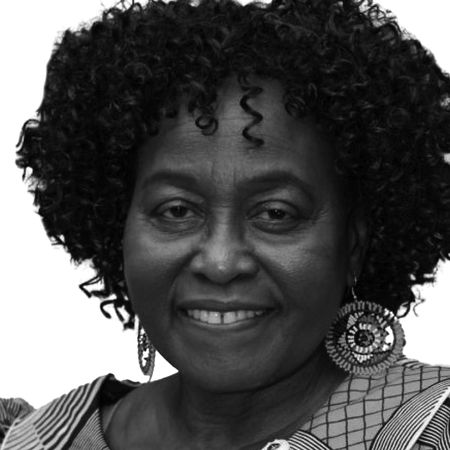
Dr Olive Shisana is an honorary professor at UCT, a former Director-General of Health, former Executive Director of the World Health Organization, former CEO of the Human Sciences Research Council, former Adviser to President Cyril Ramaphosa and CEO of EB Consulting Pty Ltd. She has received honours: the Order of the Baobab (Bronze) and the Science for Society Gold Medal from the Academy of Science of South Africa. She writes in her personal capacity.