



/file/dailymaverick/wp-content/uploads/2025/09/label-Opinion.jpg)
South Africa’s Constitution promised dignity for all. Nearly 30 years later, that promise remains out of reach for far too many women. Signed into law by Nelson Mandela on 10 December 1996, International Human Rights Day, it was a deliberate act of alignment between our democratic project and the global human rights movement. The message was clear: rights would not be symbolic. They would live. Yet today, South Africa remains one of the most unsafe places in the world to be a woman.
Her name was Shila. She was a mother of two.
In April last year, she was brutally murdered by her partner in Mzombane, a village in Mokopane, Limpopo, known for its strong sense of community.
Her death sparked outrage and renewed calls for action.
But beyond the headlines, the consequences endure. Her children were forced to leave their home and move to a distant village to live with their grandmother, disrupting their education and placing the family under severe financial strain.
Shila is not a statistic. She is a mirror. She represents too many women forced to live in fear. Her story underscores the urgent need to build a society grounded in the constitutional values of dignity, equality and freedom.
Our Constitution is not an abstract ideal; it is a binding promise of dignity that each of us has a responsibility to uphold.
As Justice Albie Sachs, one of the architects of our Constitution, reflected: “It included very strong rights against gender-based violence, not in a clause of rights for women, but under freedom in the Freedom Clause… It is, to this day, possibly the only constitution in the world that includes non-sexism as a constitutional requirement.”
Section 10 affirms that everyone has inherent dignity and the right to be respected and protected. Section 9 guarantees equality before the law, while Section 12 enshrines the right to freedom and security, including freedom from all forms of violence.
The gap between promise and reality
SA’s human-rights-centred legal framework is globally respected. But for many women, their lived reality tells a different story.
According to UN Women, a woman is murdered every three hours in SA, and the femicide rate remains five times the global average. Between July and September 2024 alone, 957 women were murdered, and more than 10,000 rapes were reported.
Behind every statistic is a life like Shila’s, someone with dreams, relationships, ambitions and loved ones whose futures are forever altered.
These statistics are not only tragic, they are also unacceptable. They reflect failures of implementation, resourcing and collective will.
From social issue to national disaster
In November 2025, at the G20 Social Summit in Johannesburg, President Cyril Ramaphosa formally classified GBVF as a national disaster.
This was more than symbolic. It marked a historical shift, recognising GBVF as a systemic crisis requiring a coordinated, multisectoral response.
The classification followed a nationwide mobilisation led by Women for Change, supported by over one million signatures and a global solidarity movement. A mobilisation that built on the many efforts of civil society to get GBVF declared a disaster.
Classifying GBVF as a national disaster activated provisions of the Disaster Management Act, enabling more efficient resource utilisation and coordination of intervention across government departments, including justice, police, social development, health and education.
As noted by Deputy Minister in the Presidency for Women, Youth and Persons with Disabilities, Mmapaseka Steve Letsike: “Patriarchy is a human crisis, not merely a women’s issue.”
This framing matters. It places the responsibility for ending GBVF on society as a whole.
GBVF is also an economic issue
GBVF is often framed as a social issue; however, it is also an economic one.
KPMG research from 2014 estimated that GBVF costs SA between R28-billion and R42-billion annually, up to 1.3% of GDP. Adjusted for inflation and the persistence of the crisis, the true cost today is probably significantly higher.
Every year this crisis persists, we lose productivity and human potential. Women who should be building businesses, contributing to the economy, and leading communities are instead navigating trauma or losing their lives.
This reality is increasingly recognised globally. Under the theme Solidarity, Equality and Sustainability, South Africa’s 2025 G20 Presidency positioned GBVF as a threat to economic stability. G20 signatories reaffirmed their commitment to the Beijing Declaration and pledged accelerated action to end violence against women and girls.
No economy can grow sustainably when half its population lives in fear.
Another reality is possible
Dr Mamphela Ramphele observed: “There is a cruel irony in having the best constitutional legal and policy framework to promote gender equality and respect for human rights, and yet to have the highest recorded gender-based violence in the world.”
Despite the scale of the crisis, SA is not starting from zero. There is a genuine reason for hope. The infrastructure for change exists and is already delivering results.
Since 2021, the GBVF Response Fund, the country’s primary private-sector-led financing mechanism for GBVF prevention and response, has mobilised more than R280-million, reached nearly one million beneficiaries, and supported over 200 community-based organisations across all nine provinces.
These organisations operate where the crisis is most acute, providing trauma counselling, legal support, prevention programmes and economic empowerment.
They show what is possible: when the government, business and civil society work together, meaningful change happens.
From People Opposing Women Abuse’s survivor support and legal services in Gauteng, to The Rainbow Circle’s economic empowerment work in KwaZulu-Natal, to school-based prevention programmes in Limpopo and initiatives like Ringa Mjita Boys Programme led by ChildLine Gauteng, the evidence is clear: partnerships work.
But no single actor can solve this crisis alone.
Why this moment matters
This progress is under severe threat. Global funding shifts have resulted in the withdrawal of key international donor support, placing frontline services at risk. Shelters, counselling centres and community programmes face potential closure.
Emergency funding can provide short-term relief, but it cannot sustain a national response.
What is needed now is long-term, locally driven investment, particularly from the private sector.
Because the logic is clear: safer women mean more stable communities. Stable communities enable economic growth. And when economies grow, all in society flourish.
What Human Rights Day calls us to do
Human Rights Day commemorates the Sharpeville Massacre of 21 March 1960, a time when ordinary South Africans demanded dignity and equality.
That courage reshaped our history.
Today, the country faces a different kind of reckoning.
The Constitution provides the blueprint. The national disaster classification created urgency. What remains is whether we have the collective will to act.
The 2026 Human Rights Day theme, “Bill of Rights at 30: Making human dignity real”, is not a reflection. It is a challenge.
Rights do not implement themselves. They require funding. Accountability. And action. But most importantly, people who refuse to look away.
Closing the gap: A shared national responsibility
As Graça Machel reminds us: “Violence is the breast milk we are feeding our young. We have to change our mindsets, our behaviours, our value system.”
Ending GBVF requires a collective, coordinated, and sustained response, and we all have a role to play.
The government must ensure that systems are properly resourced and effective. Civil society must be supported to continue its frontline work. The private sector must move beyond symbolic commitments to measurable action, supporting survivors, funding interventions, and embedding zero tolerance in workplaces. Communities must confront the norms and silence that enable violence. And individuals must refuse indifference.
Ending GBVF requires that we reject indifference and embrace our responsibility.
Because violence persists when it is ignored.
SA’s Constitution sets out a clear vision: Dignity, equality and freedom.
The question is whether we will close the gap between the promise and the reality so many women face. Shila deserved that promise. And so does every woman in our beloved country. DM
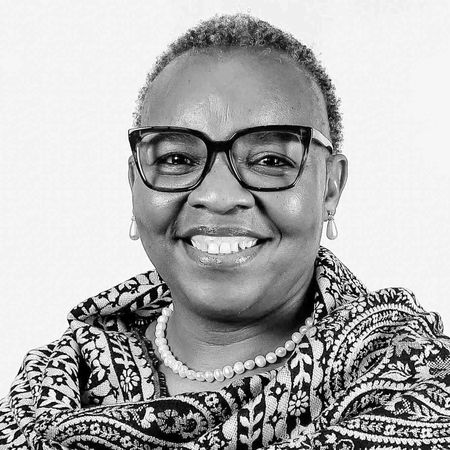
Tandi Nzimande is the newly appointed CEO of the Gender-Based Violence and Response Fund. She most recently served as Chief Executive Officer of the Solidarity Fund, leading its operations during the Covid-19 pandemic from October 2020 to July 2023. She was previously the Chief Financial Officer at Chapter One Innovation Brokerage and WDB Investment Holdings and held corporate finance responsibilities at Deutsche Securities. She sits on several boards and investment committees, and is a qualified Chartered Accountant.