




/file/dailymaverick/wp-content/uploads/2025/09/label-Opinion.jpg)
When President Cyril Ramaphosa spoke about crime in his State of the Nation Address, Cape Town residents were hoping for the deployment of a wave of new South African Police Service (SAPS) detectives to high-crime precincts.
Communities in George and Mossel Bay thought the president might reveal a new fleet of SAPS vehicles to patrol unsafe streets. Ocean View residents imagined there might be hundreds more police officers added to the Anti-Gang Unit.
Instead, the president announced a deployment of the South African National Defence Force (SANDF). Surely it would be simpler to just fix the SAPS, instead of pouring over R800-million into another SANDF deployment?
Dramatic, visible and politically convenient
Many will remember the last time the national government turned to the SANDF to support the SAPS. It was 2019. The move was dramatic, visible and politically convenient. But was it effective? Did it have a long-term impact?
The results were tepid, at best.
So far, only the Institute for Security Studies has published a report on the effectiveness of the 2019 SANDF deployment. The presence of soldiers did not reduce murders in any sustained or meaningful way. In fact, murder rates in areas where the army was deployed did not decline more than in areas where it was not.
A marginal, short-lived dip in murders occurred in the first month, July 2019, probably linked to the shock of the army’s arrival. But that effect faded almost immediately.
Seven years later, the national government has once again reached for the same playbook.
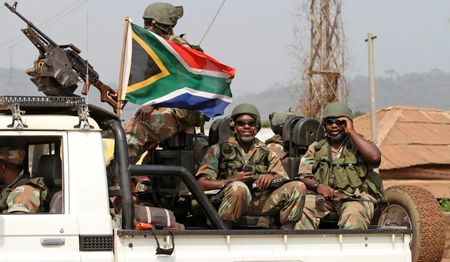
We are told that the military will be deployed to assist the SAPS in tackling gang violence in the Western Cape. But this raises an uncomfortable question: Is this an admission of the SAPS’ failure, or simply an indication that the national government has run out of ideas? Until the SAPS is fixed, everything else is smoke and mirrors.
Crime fighting is a national government competency. Only the SAPS can conduct criminal investigations. The president and acting police minister could change this by amending regulations to allow local law enforcement to conduct investigations. But politics prevents them from doing so.
Equally troubling is the lack of transparency surrounding this latest SANDF deployment. At a recent Western Cape government Cabinet meeting, SAPS leadership in the province could offer only the most basic update.
While operational secrecy is understandable, the public deserves clarity on timelines, objectives and measures of success. A simple deployment date would be a good start.
Force multiplier
To be clear, I welcome the commitment expressed by Provincial Commissioner Lieutenant-General Thembisile Patekile that the SANDF will act as a force multiplier, supporting the SAPS through coordinated, multi-agency efforts. That is the right principle.
But principles alone will not make our communities safer. We must be assured of proper command and control structures, this time round. The seemingly haphazard approach we are already seeing in the deployment in Gauteng cannot be allowed to set the tone for the rest of the country.
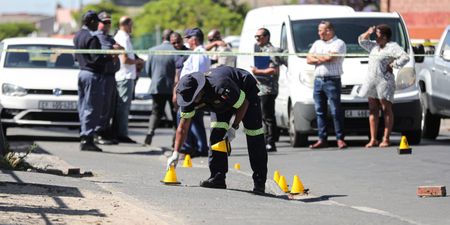
The national government cannot operate in silos, nor should there be a reliance on short-term, high-visibility interventions that fail to catch and prosecute criminals. What is needed is sustained, intelligence-driven policing, properly resourced law enforcement, and genuine collaboration across all spheres of government.
We will be a partner in this intervention. But it cannot be a repeat of 2019.
Every stakeholder must be involved, from community policing forums to neighbourhood watches, and from traffic services to private security.
Western Cape residents are asking for meaningful and sustained solutions from the national government, not another flash in the pan. DM
Alan Winde is the Western Cape Premier.