




/file/dailymaverick/wp-content/uploads/2025/09/label-Opinion.jpg)
Confidence in South Africa’s farming and agribusiness sector has weakened, according to our latest quarterly survey. The Agbiz/IDC Agribusiness Confidence Index, a sentiment indicator in the sector, fell by 18 points in the first quarter of 2026 to 49. A level below the 50-neutral mark typically indicates pessimism.
Sentiment has soured since January, and justifiably so. Emerging macro and micro challenges are expected to hinder sector growth, placing risk management at the top of the agenda for agribusiness stakeholders.
On the domestic side, the ongoing challenge of animal diseases — mainly foot-and-mouth disease (FMD) in cattle and African swine fever in the pig industry — is a key concern. Vaccination is gaining momentum in the cattle industry. Still, the challenge of securing supplies at the start of the year had a significant impact on the dairy industry in KwaZulu-Natal and value chains in the beef industry in the Free State, Gauteng and North West.
FMD has spread to all of South Africa’s provinces, so farmers are in a hurry to obtain vaccines to cushion their cattle herds.
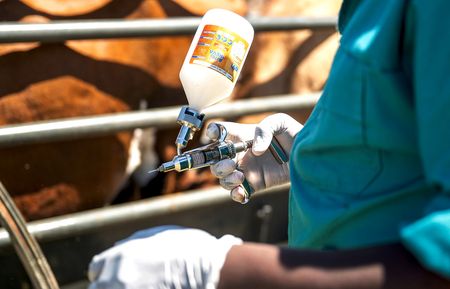
We have also observed a devastating spread in communal areas, where vaccination has been inadequate. As FMD spreads, the pig industry faces a similar challenge with the re-emergence of African swine fever, against which there is no vaccine. South Africa, along with countries like China, has in the past struggled with African swine fever, leading to heavy financial losses in the industry.
/file/attachments/orphans/ED_597165_493251.jpg "The vaccination process of cattle against foot-and-mouth disease in Fisantekraal on February 15, 2026 in Cape Town, South Africa. The process was aimed at vaccinating cattle in the informal and traditional farming sector. (Photo: Gallo Images / Die Burger / Jaco Marais)")
It is difficult to assess the financial impact at the moment. Immediate containment is critical; if the disease takes hold within local communities, it will trigger a fresh outbreak on informal pig farms. This calls for a commitment of resources to the pig industry in addition to the constrained resources already devoted to the cattle industry.
Agricultural sector
Beyond the livestock sector, South Africa’s wheat and sugar industries are struggling with suppressed prices due to an oversupply in the global market. The South African agricultural sector is interlinked with the world market, and commodity prices tend to follow what we observe globally.
The world is experiencing a record wheat harvest, and South African farmers have to contend with this. The International Grains Council forecasts 2025-26 global wheat production at a record 842 million tonnes, up 5% year-on-year. This is on the back of ample harvests in the EU, Russia, the US, Canada, Australia, Argentina, Ukraine, and Kazakhstan, among others.
It is partly these ample global supplies and lower global wheat prices that have led to calls for an increase in the domestic wheat import tariff. The wheat import tariff exists to provide protection for domestic wheat producers while ensuring that consumer welfare is not sacrificed. The key is to find a balance.
South Africa will probably have to import about 1.85 million tonnes of wheat for the current marketing year (which ends in September), the same as the previous season. We initially expected imports to be lower, but the recent downward revisions to domestic production may necessitate an increase in import volumes above our initial estimate of 1.75 million tonnes.
/file/attachments/orphans/000013481_313766.jpg "A wheat field in the Western Cape. (Photo: Media24 / Gallo Images)<br>")
The sugar industry partly faces the challenge of ample global supplies, which is driving down prices. The Food and Agriculture Organization’s global Sugar Price Index averaged 86.2 points in February 2026, down 27% from a year ago. In fact, the global Sugar Price Index is at its lowest level since October 2020. South African farmers are experiencing the effects of these supplies, in addition to domestic industry issues that also weigh on sentiment in the industry.
The difficulties in the Port of Cape Town during the table grape and other fruit export period from November 2025 through to February 2026 were another major domestic development that has added to the dampened mood in the farming sector.
Middle East conflict
As these domestic matters evolve, the conflict in the Middle East is increasingly a concern for stakeholders in the sector. South Africa’s agriculture is exposed through exports of agricultural products and, from an import perspective, mainly fuel and fertilisers.
The upcoming peak harvest for citrus and summer grains, starting in May — which is also when SA farmers start to plant winter crops — will significantly drive up fuel consumption. Higher fuel prices, combined with higher fertiliser prices, will constrain farmers’ finances.
In the case of exports, rising shipping costs and disruptions to shipping routes will weigh on shipments to the Middle East and some Asian markets. These are key regions that typically account for around 20% of South Africa’s agricultural exports, valued at $15.1-billion in 2025, according to data from the International Trade Centre Trade Map.
The weaker sentiment in the farming sectors must be framed from the perspective of these challenges. While these factors are shaping sentiment, this does not imply that all subsectors are under pressure. The field crops for the 2025-26 season are in good production condition, along with various fruit, vegetable, wool and wine harvests, among other value chains. These should support the sector’s performance in 2026. Still, until we improve our management of challenges on the domestic side, the sentiment may remain subdued in the sector for some time. DM
Wandile Sihlobo is the presidential envoy on agriculture and land. He is also the chief economist of the Agricultural Business Chamber of South Africa, and a senior research fellow in the Department of Agricultural Economics at Stellenbosch University.