



/file/dailymaverick/wp-content/uploads/2025/10/label-Op-Ed.jpg)
South Africa does not struggle to talk about race.
We struggle to see it.
Recently, I attended a leaders’ conference in Somerset West. It was a thoughtful gathering – strong teaching, serious conversations and participants from several countries. Among the delegates were a few American teenagers who had come with a group from the United States.
At dinner one evening, I slipped into a table where I did not know most of the people seated there. Several of the American students were already in conversation.
I happened to be the only black person at the table.
The students were enthusiastic. They had clearly been exploring the Western Cape and were visibly impressed by what they had seen.
Cape Town’s mountains.
The vineyards.
The orderliness of the streets.
The beauty of the coastline.
They spoke with the kind of wonder travellers often carry when they encounter a place for the first time.
But a white South African man in his early fifties sitting a few seats away seemed irritated by their admiration.
“You’re impressed because you’re in Cape Town,” he told them.
“It’s not like the rest of Africa.”
The students went quiet.
He continued.
“Cape Town is the only place with a working government. The rest of South Africa is a mess. Just like the rest of Africa.”
He said it casually. Not angrily. Almost as if he were explaining something obvious to children who had misunderstood the world.
Around the table, the students sat politely, listening the way young people often do when they are unsure how to challenge an older voice.
I had arrived late at the table, and the exchange unfolded quickly. Before anyone could challenge the remark, the bell rang, calling us back to the plenary session. Chairs moved, people stood, and the conversation dissolved as we walked back toward the conference hall.
But the comment stayed with me.
Not because it was shocking.
But because it was familiar.
I had heard versions of that sentence many times before in South Africa – sometimes spoken bluntly, sometimes disguised as concern for the country’s future.
What I had witnessed in those few minutes was not simply an opinion about governance. It was a glimpse into one of South Africa’s deepest unresolved tensions: the stories we tell about ourselves and about Africa.
In South Africa, geography often becomes a proxy for race.
Cape Town occupies a particular place in the national imagination. For many white South Africans, it represents something reassuring – a city that appears orderly, functional and European in character. A place that seems to confirm that competence and beauty still exist somewhere within the country.
But that story is rarely told in full.
Mitchells Plain is also in Cape Town.
So is Khayelitsha.
So is Gugulethu.
Some of the most violent neighbourhoods in South Africa lie only a short drive from the vineyards and coastal roads that fill travel brochures.
Tourists photograph Table Mountain.
Few drive 20 minutes further to see Khayelitsha.
Those communities rarely appear in the narrative.
They were absent from the conversation at that table, too.
Nor was there any mention of the deeper history that shaped the city the students admired – the forced removals, the spatial segregation, the labour systems that built wealth in one part of the city while concentrating poverty in another.
Cape Town today remains one of the most unequal cities in the world – a place where immense wealth and deep poverty exist within a few kilometres of each other.
When Cape Town is presented as the “exception” that proves Africa’s failure, a quiet but powerful assumption often sits beneath the statement: that order belongs to whiteness, while disorder belongs to Africa.
That assumption is older than South Africa itself.
For centuries, colonial thinking framed Europe as civilisation and Africa as chaos. Those ideas justified conquest, land dispossession and racial hierarchy. Entire intellectual systems were built on the claim that Africa was a continent permanently incapable of governing itself.
South Africa inherited those narratives.
Even 30 years after democracy, fragments of them still echo in ordinary conversations.
What struck me most in Somerset West was watching the American students absorb the exchange. Young people who had arrived curious and hopeful were suddenly being handed a familiar script: Africa as dysfunction, Cape Town as the lone exception.
It was a confident story.
But it was not an honest one.
Because South Africa’s reality is far more complex than the racial shortcuts we often reach for.
Cape Town has areas that function well.
So do Johannesburg and parts of KwaZulu-Natal and the Eastern Cape.
Cape Town also carries profound inequality.
So does the rest of the country.
South Africa’s crisis is not the failure of “Africa”.
It is the unfinished work of justice inside a society still trying to live after centuries of engineered inequality.
The infrastructure that collapses in struggling towns was not built yesterday. The spatial patterns that trap millions far from economic opportunity were deliberately designed under apartheid. The poverty that destabilises municipalities did not appear from nowhere.
History leaves structures behind.
And it leaves wounds behind, too.
None of this excuses the failures of post-apartheid governance. Corruption, incompetence and political patronage have deepened many of the country’s crises. South Africans are right to demand better leadership. But those failures unfolded inside structures that long pre-dated democracy – spatial planning, economic exclusion and inequality that still shape the country today.
But reconciliation requires something deeper than simply acknowledging the past.
It requires the courage to see one another clearly in the present.
Too often, South Africans still live inside parallel narratives.
One narrative sees the country as a failed African state sliding toward collapse.
Another narrative sees it as a nation still struggling to escape the long shadow of racial injustice.
Both narratives contain fragments of truth.
But when those fragments harden into competing certainties, they produce something dangerous: a country where people share the same territory, but inhabit different psychological maps.
At that table in Somerset West, two South Africas briefly appeared in miniature.
One South Africa saw Cape Town as proof that things can work.
The other knew that the same city contains neighbourhoods where children grow up amid violence that tourists never see.
Reconciliation cannot grow if only one of those realities is allowed into the conversation.
And reconciliation cannot deepen if entire communities remain invisible in the stories we tell foreigners about our country.
The tragedy is that South Africa is actually far more remarkable than either of these simplified narratives suggests.
Despite extraordinary inequality.
Despite political failures.
Despite the scars of apartheid that remain etched into our cities.
Millions of South Africans continue to build relationships, businesses, churches, schools and families across racial lines every day.
The country still holds together.
That fact alone defies the cynicism that so often shapes conversations about the nation.
But reconciliation demands honesty.
It requires white South Africans to confront the lingering myths that quietly place Europe as the measure of order and Africa as the symbol of decline.
And it requires black South Africans to resist the understandable temptation to retreat permanently into anger or despair.
Both responses are understandable.
Neither will heal the country.
What South Africa needs instead is something far more demanding: a shared willingness to see the whole picture.
The beauty of Cape Town.
And the pain of Khayelitsha.
The energy of Johannesburg.
And the frustrations of towns where governance has failed.
The resilience of ordinary citizens who keep the country alive despite political dysfunction.
Reconciliation begins the moment we refuse the comfort of partial stories.
Because the truth is this:
South Africa is not Europe.
It is not a failed Africa either.
It is something rarer – a fragile, unfinished experiment in building a shared future out of a divided past.
That future will not be built by pretending the country is perfect.
But it will not be built by repeating old colonial myths either.
It will be built when South Africans learn to see their country – and one another – without the blindness that still lingers at too many tables.
Even the quiet ones in Somerset West. DM
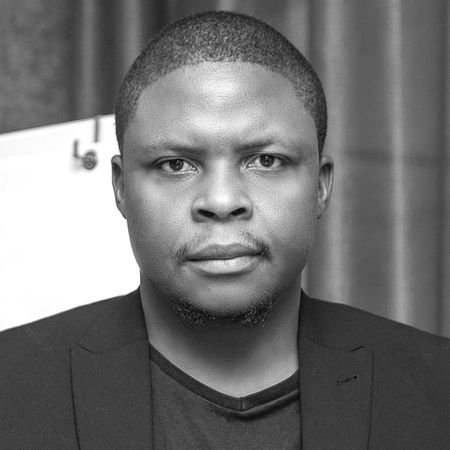
Themba Dlamini is a husband, father of four, pastor and chartered accountant who loves South Africa – warts and all. He is the author of Village Boy: A Memoir of Fatherlessness, and writes to wrestle with hard truths, stir hope and help build a country in which his children can thrive.