



/file/dailymaverick/wp-content/uploads/2025/09/label-Opinion.jpg)
The first thing war takes is sons.
Somewhere tonight a young man will kiss his mother goodbye before boarding a bus, a truck or a military transport, tightening the straps of a military pack across his shoulders. Governments will call it mobilisation. Analysts will call it strategy. Economists will calculate the cost of oil.
But history records a simpler truth.
When wars begin, young men die first.
As missiles streak across Middle Eastern skies and tensions between Iran, Israel and the US threaten to widen into a larger conflict, governments once again speak the language of deterrence and security. Yet beneath the language of states lies a far older human reality.
War has always been paid for first with the bodies of sons.
South Africa knows this pattern in its own way.
Growing up, mornings in many communities began before sunrise with the sound of taxis leaving for distant mines, construction sites and industrial towns. Fathers, uncles and older brothers climbed aboard while families remained behind.
At the time, the departures felt ordinary. It was simply how families survived.
Only later did many of us understand what that rhythm meant. Young men were routinely sent into the most dangerous work underground. Collapsing shafts, methane explosions and lung diseases like silicosis quietly shortened countless lives.
Entire communities were built around a fragile arrangement: men leaving to face danger so families could endure.
And behind every absent or fallen man was usually a woman holding the household together.
Anthropologists sometimes refer to this pattern as the “male expendability pattern” – the recurring reality that societies place young men in positions of highest physical risk. Archaeological studies of prehistoric burial sites consistently show that male skeletons between roughly 18 and 35 carry the highest rates of weapon trauma. Long before organised armies existed, it was young men who died defending territory or raiding rival groups.
Modern warfare amplified the pattern dramatically.
World War 1 killed roughly 10 million soldiers, almost all of them young men. In parts of France and Germany entire villages lost a generation of sons. World War 2 claimed more than 20 million military personnel, again overwhelmingly male. Even today, despite technological warfare and changing armies, more than 90% of combat fatalities worldwide remain men in their late teens and twenties.
War still takes the sons first.
Yet the story of male death is never only about men.
It is also about the women who live with the consequences.
None of this diminishes the suffering women experience in war – through displacement, sexual violence, exploitation and the loss of loved ones. In many conflicts women carry some of the deepest scars. But the demographic pattern remains strikingly consistent: the overwhelming majority of those sent to the front lines are young men.
When they die, the social consequences ripple outward through families and communities.
One of the most haunting descriptions of this reality appears in an ancient story recorded in the Gospel of Luke. A funeral procession leaves the small town of Nain, in the hills of the ancient Middle East – not far from landscapes that still appear in today’s war headlines. A widow walks behind the bier carrying the body of her only son. Her husband has already died.
In the ancient world this meant something devastating. Without the economic and social protection male relatives often provided in that society, widows frequently faced severe poverty and vulnerability.
The scene captures a pattern that echoes across centuries: when sons die, mothers inherit the burden of survival. The weapons of war have changed across the centuries, but the procession behind the coffin has not.
History confirms it repeatedly.
After World War 1 millions of European women became widows almost overnight. In Rwanda after the 1994 genocide, women made up the majority of the surviving population and became the backbone of national reconstruction. In parts of South Sudan today, decades of conflict have produced communities where women carry the economic and social load left by absent or dead men.
When men die young, women often carry the long shadow of the loss.
Yet this uncomfortable reality raises a question modern societies increasingly struggle to answer.
How do we form the men who will inevitably face danger?
Much contemporary discussion about masculinity treats it primarily as a social problem – something associated with aggression, dominance or dysfunction. Certainly masculinity can become destructive when untethered from moral formation. History provides many examples of that.
But history also suggests something equally important.
Societies have always depended on formed men.
Not reckless men.
Not violent men.
But men shaped by discipline, courage and restraint.
The question is not whether societies will rely on male strength in moments of danger. History shows they always have. When ships sink, when buildings collapse, when wars begin and when communities face violence, it is still overwhelmingly young men who are sent toward the danger.
The real question is whether that strength will be guided by character or left to drift towards chaos.
Across cultures and centuries, communities recognised this reality and built institutions to shape boys into responsible men. Families, elders, faith traditions and rites of passage existed not merely to celebrate masculinity, but to discipline it.
Strength had to be trained.
Courage had to be guided.
Power had to learn restraint.
The aim was never simply to produce warriors.
It was to produce protectors.
In many parts of the modern world, however, boys are now growing up without fathers or male mentors who model what disciplined masculinity looks like. When the transmission of masculine formation breaks down, societies often discover too late how costly that absence can become.
Masculine strength without moral formation can become destructive. But masculine strength guided by wisdom has often been one of the quiet stabilising forces of communities.
When young men lack formation, societies frequently pay the price through violence, instability and fractured families. When they are formed well, their courage and sacrifice often become an unseen foundation beneath social order.
The deeper question facing modern societies is therefore not whether masculinity should exist.
It already does.
The question is whether boys will be formed into men capable of carrying responsibility when history once again asks it of them.
The escalating tensions in the Middle East remind us that history has not moved beyond these ancient realities.
War still sends young men first.
Behind every geopolitical crisis lies the same human pattern: families waiting, mothers worrying and communities bracing for loss.
The deeper challenge facing societies is therefore not only how to prevent war – though that must always remain the hope – but how to prepare young men for the responsibilities and dangers that societies continue to place before them.
That preparation cannot come from a culture that mocks masculinity or abandons boys to shape themselves.
It must come from a culture willing to form men with wisdom, responsibility and purpose.
Because civilisations cannot decide whether danger will exist.
History has already answered that question.
What they can decide is whether the sons they send into that danger have been formed with courage, restraint and wisdom.
When they are, their strength becomes a shield for others.
When they are not, the consequences fall elsewhere.
The widow of Nain understood that long before sociologists named it.
When sons die, mothers weep. DM
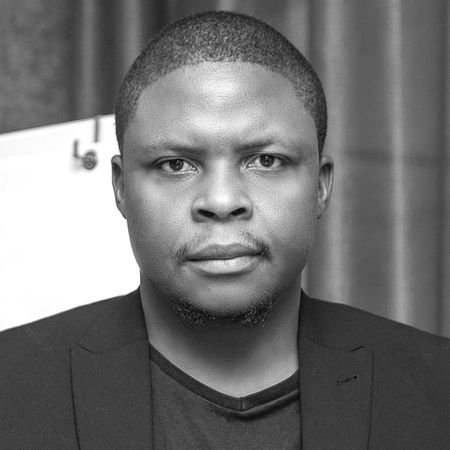
Themba Dlamini is a husband, father of four, pastor and chartered accountant who loves South Africa – warts and all. He is the author of Village Boy: A Memoir of Fatherlessness, and writes to wrestle with hard truths, stir hope and help build a country in which his children can thrive.