



On the last night of 2025, I went to a traditional midnight church service, which was not held as usual in the most dominant historic building in Genadendal, the Moravian church. Built in the 1890s, damage caused over decades had destabilised the church’s foundations.
Vital concrete injections were being applied to the foundation to extend the church’s life, so the annual service to bid the old year farewell and welcome the new one was held in the nearby preschool.
As I sat on one of the old white benches that had been removed from the old historic church that had been placed in the hall of the preschool, I was reminded, as I always am whenever I’m in the hometown of my maternal forefathers, of the essence of Genadendal.
The first indigenous people to accept the Christian faith in South Africa are from here. SA’s first teacher’s training college was established here. The list of firsts is endless. Nelson Mandela renamed the state president’s official residence in Rondebosch Genadendal in honour of the contribution of the first people to freedom.
The former regime tried to erase the history of Genadendal. In the democratic dispensation, apart from Mandela’s thoughtful intervention, Genadendal’s history and contribution to SA has been shoved aside and ignored.
Caught in a bind
A reason for this, I believe, is that the ANC as well as the champions of apartheid were caught in a bind. If they acknowledged Genadendal’s heritage, they would have had to admit that SA had a first people. And that the descendants of these First People did not disappear from the face of the earth but are walking around, weighed down by an identity slapped on them by apartheid and still applied today. That derogative identity is the word “coloured”, a term worn with pride by some who have accepted it. Others loathe it and have utterly rejected it.
Sadly, those who take pride in using this moniker are de-Africanising themselves. They are giving credence to the core of the ANC message, namely that they are not African. Therefore, they are condemned to inhabit a world of not being black enough to be African, just as they were not light enough to be white under apartheid rule.
This is the reality of “coloured” people: there is no escaping this apartheid identity even decades after apartheid officially ended. Even though that apartheid segregator of groups, the Population Registration Act, was expunged from the statute books, the term “coloured” lives on unchallenged, as far as the ANC is concerned. A destructive result of this unlawful characterisation is the intense pain of rejection, and self-rejection.
This is a poisonous combination that fuels destructive, antisocial behaviour, nihilism and hopelessness, an inability to feel part of SA, and endemic gangsterism. As gangs, more violent than the ones of my childhood, kill, rape and terrorise communities on the Cape Flats and elsewhere, there is an almost predictable chorus for the army to be sent in.
The army has been there before. When the soldiers left it was back to crime as usual. As it is now. Soldiers in the townships could not stop the resistance against apartheid. So, what makes the proponents of troops in the townships believe that their presence will end gangsterism?
This superficial remedy is not the answer. Groups of armed soldiers patrolling township streets are not a silver bullet for the deep psychological and economic issues of exclusion. For healing to begin there must be an acknowledgement of indigenous or First Nation status. And this is what’s at the core of the ANC’s conundrum. A little bit of honesty would expose lots of hypocrisy and lies about our country’s roots, occupation and conquest by Europeans and other Africans.
Meaningless words
Alas, this type of honesty will not be coming soon, if at all. In its absence, all the president’s words of a united nation are meaningless. Our nation is not united and one, it’s a deeply and fundamentally fractured one. The ANC through its deviation from its commitment to non-racialism has segregated us into groups. Victory in various international sports competitions, such as the Rugby World Cup, are insufficient. At best these trophies when brought home foster a short period of euphoria and a shared sense of national pride in being South African. Afterwards it’s back to normal – the ANC’s new normal of Africans first in a hierarchy of different race groups in a disunited, broken SA.
Our country’s cornerstone is unsound. Just like the foundation of the Moravian church in Genadendal it should be fixed, starting with recognising who the original indigenous people are. This is a task for all of us.
We should not leave it to any political party to define what an African is. We should take the initiative. We should remind those ANC politicians who’ve allowed apartheid propaganda to capture their minds that not all Africans are black.
Irrespective of whether we embrace our African identity, we’re all Africans: black (as in the Black Consciousness view that all people who in the old SA were not regarded as white were black) and white.
All of us who own being African are stepping away from being a fractured nation. But an essential first step on this nation-building journey would be to repair the foundation of the nation by acknowledging the descendants of the indigenous people. DM
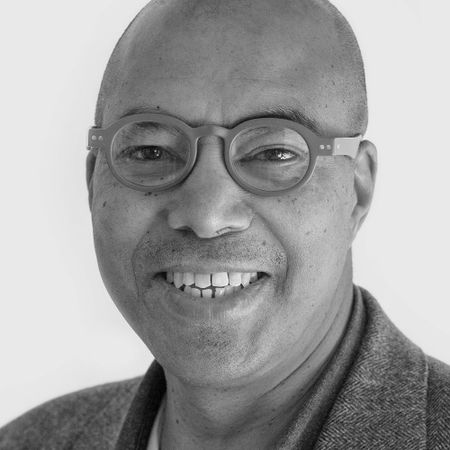
Dennis Cruywagen is a journalist and the author of Brothers in War and Peace, and The Spiritual Mandela. He is an erstwhile spokesperson for the ANC and the recipient of two fellowships at Harvard University.