




/file/dailymaverick/wp-content/uploads/2025/09/label-Opinion.jpg)
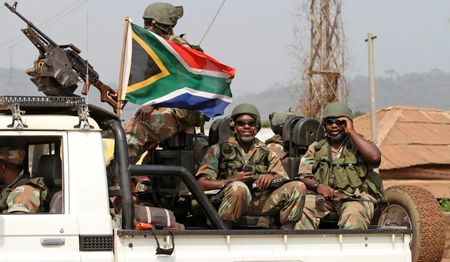
In communities across the Western Cape, especially in areas such as Manenberg, Mitchells Plain and Hanover Park, the sight of armoured vehicles and soldiers patrolling residential streets has become familiar.
The South African National Defence Force was deployed in the Cape Flats in 2019 under Operation Prosper to support the South African Police Service in combating gang violence. The deployment was authorised by President Cyril Ramaphosa in terms of section 201 of the Constitution.
At the time, government argued that extraordinary violence required extraordinary intervention. Five years later, a fundamental question must be asked. Did it work? If it did not produce a shift in crime, why should a renewed reliance on soldiers succeed now?
With soldiers once again deployed alongside the SAPS in gang-affected areas of the Western Cape, confirmed by President Ramaphosa in his 2026 State of the Nation Address (Sona) to support police in combating gang violence, we must confront serious constitutional and operational questions about the normalisation of military involvement in civilian policing.
Militarised visibility is not a substitute for investigative capacity, intelligence-driven policing and effective prosecutorial follow-through.
While armoured vehicles may project authority, they do not build dockets. They do not secure convictions; they do not dismantle criminal networks.
Mixed mandates
The mandate of the SANDF is primarily national defence. Section 200 of the Constitution states that the defence force must defend and protect the country, its territorial integrity and its people. Policing, by contrast, is governed by section 205, which mandates SAPS to prevent, combat and investigate crime, to maintain public order and to protect and secure the inhabitants of the country and their property.
The institutional design is deliberate. Defence and policing are distinct functions in a constitutional democracy.
Soldiers are trained for combat readiness and territorial defence. They are not trained as detectives. They are not community policing officers. They are not ordinarily responsible for evidence collection, witness handling or docket preparation. Their rules of engagement differ from the constitutional culture of civilian policing, which demands proportionality, procedural fairness and rights-based interaction with the public.
Yes, when deployed in cooperation with SAPS under section 201, SANDF members may exercise certain powers, including limited arrest authority, but only within the parameters of the deployment and typically under SAPS operational command. But even where lawful authority exists, military presence does not cure investigative weakness.
There is also a deeper historical resonance that cannot be ignored. South Africa has experienced soldiers in townships before. During the states of emergency in the 1980s, the apartheid government deployed the military internally to suppress unrest.
That history is not identical to the present moment and the constitutional framework today is fundamentally different. Yet the memory of military boots on residential streets still carries weight. It raises uncomfortable, but necessary questions about how a constitutional democracy responds to internal security crises and how far it should go in militarising civilian spaces.
Criminal justice system crisis
The context today is sobering. The Judicial Commission of Inquiry into Criminality, Political Interference and Corruption in the Criminal Justice System (Madlanga Commission), chaired by Justice Mbuyiseli Madlanga, has exposed serious allegations of corruption and interference within elements of the criminal justice system.
President Ramaphosa has directed that implicated senior officials face investigation and possible disciplinary processes. These developments confirm chronic organisational failure at the highest levels of law enforcement oversight.
At the close of the 2023 to 2024 financial year, the South African Police Service reported 47,818 pending civil claims, with the total amount claimed exceeding R67.4-billion. A substantial portion of these matters arises from unlawful arrest and detention.
In subsequent briefings to Parliament in 2025, the projected contingent liability associated with unlawful arrest and detention claims alone was estimated at about R56.7-billion, with nearly 49,000 such claims pending.
That exposure represents a substantial portion of the police budget and reflects repeated litigation against the state. Each successful claim signals a violation of section 12 of the Constitution, which protects the right to freedom and security of the person.
Profound failure
So we must ask clearly. What does it mean for a constitutional democracy when its police service requires military reinforcement to perform core policing functions?
If the SAPS cannot fulfil its mandate without soldiers on the streets, that signals a profound failure of leadership, oversight and resource allocation. If it can, then the deployment risks becoming a symbolic display of force rather than a solution to systemic weaknesses.
There is also a sustainability question. If soldiers are deployed because policing capacity is inadequate and poor, what is the long-term plan? Today, the Cape Flats. Tomorrow, which province, which township, which city? A military deployment is by definition temporary. Crime prevention is not. If the structural weaknesses within SAPS are not addressed, repeated reliance on the SANDF risks normalising an exceptional measure as routine governance.
None of this denies the reality of gang violence in the Cape Flats. Residents are entitled to immediate protection. Children deserve safe passage to school. Small businesses deserve operating environments free from extortion and gunfire. The question is whether military augmentation addresses root causes or merely treats symptoms.
Serious reform
The Madlanga Commission lay bare serious corruption and political interference within segments of law enforcement. That reality demands serious reform within SAPS. It cannot be deferred. Deploying the SANDF without simultaneously restoring investigative capacity, enforcing internal discipline and strengthening prosecutorial coordination does not address the crisis. It obscures it.
South Africans deserve more than reactive deployments. They deserve a police service capable of constitutional and effective policing, free from corruption, adequately trained and accountable to the communities it serves. Soldiers may stabilise a flashpoint. They cannot rebuild trust; they cannot substitute for sustainable, lawful, effective policing, regardless of any supportive or supplementary role they might play.
The question is not whether communities need safety. They obviously do. The real question is whether the state will confront the ineffectiveness of the police and why soldiers are being asked to perform duties that the Constitution assigns to the police.
Until that happens, deployments in the Cape Flats may project strength while leaving the deeper crisis unresolved. But how sustainable is this response? Reform in SAPS is not optional, but urgent. DM
Mpho Makhubela is an activist, communications officer at Lawyers for Human Rights, a member of the Media Working Group of Kopanang Africa Against Xenophobia and a Tshwane Urban Activist.