



/file/dailymaverick/wp-content/uploads/2025/09/label-Opinion.jpg)
When crises multiply, the gravest danger is not only conflict or economic strain, but the slow erosion of imagination and energy. Justice movements endure dark times through moral endurance – the discipline that keeps political possibility alive.
When the world feels unstable
Dark times do not only test governments, markets or institutions. They test whether people committed to justice can sustain the imagination, discipline and organisation required to keep political possibility alive.
History shows that periods of uncertainty often produce something quieter but equally dangerous: political fatigue. When crises accumulate, people begin to doubt that change is possible at all.
The erosion of political energy rarely announces itself dramatically. It arrives slowly, through exhaustion, distraction and the creeping belief that injustice is simply how the world works now.
This year began under a heavy atmosphere.
Trump-era tariffs returned to the global stage, signalling a new phase of economic confrontation. Gaza remained a site of unspeakable suffering. Murmurs of wider war moved from the margins of analysis into mainstream conversation. Across the world, governments appeared brittle or paralysed as the price of everyday life continued its relentless climb.
None of these developments existed in isolation. They accumulated, layer upon layer, producing a quiet but persistent sense that the world was entering a darker chapter.
South Africa is not insulated from this atmosphere. Here too citizens navigate a steady accumulation of strain: failing infrastructure, rising living costs, fragile coalition governments and institutions that often appear slower to act than the crises unfolding around them. The result is a similar danger: not only frustration, but the gradual erosion of political confidence.
The diagnosis of democratic strain is familiar by now. The harder question is what follows: how societies committed to justice sustain political energy when the systems around them appear to falter.
In such moments the greatest risk is not only conflict or economic strain. It is the gradual erosion of political imagination, the belief that societies can still organise themselves around justice rather than fear.
For those committed to social justice, moments like these pose a challenge that is not only analytical but practical. The real question, then, is how people remain politically alive when the world feels unstable.
In truth, justice has always depended on endurance. That endurance is not accidental. It is built over time through practices that movements have long cultivated: solidarity, imagination and organisation. These practices are not abstract ideas; they are lived through the ways people think, care and act together.
Head, heart and hands
Social justice has always demanded something of the head, the heart and the hands. The head to analyse systems of power. The heart to sustain the long struggle, the stubborn refusal to accept injustice as inevitable. And the hands to organise, build and act.
Periods of global tension and political fragmentation place pressure on all three. The head grows tired of analysing the same failures. The heart, the part that insists change is still possible, is tested most of all. And the hands grow weary of slow progress.
This fatigue is not accidental. Systems that produce injustice often rely on exhaustion: the slow wearing down of those who insist on challenging them.
Yet history suggests that surviving dark times requires something more deliberate: the cultivation of moral endurance.
Endurance as practice
Endurance is not passive. It is practice.
It is the daily rituals that keep movements alive: the meeting that still happens, the meal shared after protest, the song sung even when voices are hoarse. These small acts of care are how communities sustain struggles that would be impossible to carry alone.
In difficult political periods the temptation is withdrawal, to retreat into private survival while public life deteriorates. Endurance resists that drift.
Protest too is endurance. To march together is to refuse isolation, to keep imagination alive when despair threatens to scatter us. Its chants and banners remind us that politics is not only done in parliaments or courtrooms. It is lived among ordinary people who insist on being counted.
These rituals are not only defensive. They also generate new possibilities, quietly rebuilding political life even when formal systems falter.
Protecting the imagination
The Nigerian writer Ben Okri has often warned that one of the first casualties of dark periods is the imagination. When violence, economic anxiety and political breakdown dominate the horizon, people begin to assume that no other future is possible.
“The most authentic thing about us,” Okri wrote, “is our capacity to create, to overcome, to endure.”
When imagination shrinks, politics soon follows.
Protecting imagination, then, is not a sentimental act. It is a political discipline. Without the ability to imagine something better, the struggle for justice becomes purely defensive, a battle to slow decline rather than to build new possibilities.
Organisation as discipline
But imagination alone is not enough. Hope that is not anchored in organisation quickly dissolves into sentiment.
The American activist Stacey Abrams puts it bluntly: “Hope is not a feeling. It is a discipline.” Hope grows where people organise, where communities build institutions, cultivate leadership and create pathways for ordinary citizens to exercise power.
Against the scale of global crises, the everyday work of organising can appear small. Yet durable political change rarely begins with grand gestures. It begins with sustained acts of collective effort that slowly reshape what is politically possible.
Endurance is the discipline of continuing those acts even when the horizon is uncertain.
None of this diminishes the gravity of the present moment. The conflicts unfolding across the world are real. The economic pressures many families face are real. The fragility of democratic institutions in many countries is real.
But periods of breakdown do not only produce despair. They can also produce clarity. They force societies to confront the systems that are failing and to ask what must be rebuilt.
Dark periods in history rarely end simply because circumstances improve. They end because enough people refuse to surrender the political imagination.
The work of justice has never been easy. It tests institutions, movements and the moral courage of those who carry it.
In such moments, the task of those committed to justice is not to deny the darkness, nor to surrender to it. It is to remain steady enough to continue thinking, caring and acting.
Think clearly.
Keep the heart open.
Organise patiently.
Carry one another through.
In unsettled times, that discipline is what keeps the future open, not only for survival but for renewal. DM
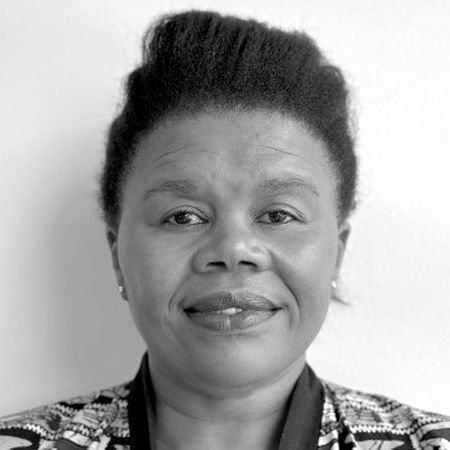
Sipho Mthathi is a writer and social justice activist with more than 23 years of experience shaping civil society work locally and internationally.