



/file/dailymaverick/wp-content/uploads/2025/09/label-Opinion.jpg)
In moments of crisis, silence from the government can be as harmful as policy failure. In South Africa’s post-school education and training (PSET) system, thousands of students navigate uncertainty every day. For many, the challenge is not a lack of ambition or ability, but the absence of timely information, clear answers and responsive institutions. It is in this context that responsiveness must be understood not as a courtesy, but as a core function of governance.
When I was appointed as a deputy minister of higher education and training in 2024, I quickly discovered that the office is not insulated from the lived realities of students. In my very first week, my inbox was flooded with emails, mostly young people seeking clarity about funding, registration, accommodation, appeals, certificates and in some cases a simple reassurance.
Behind every message was anxiety. Behind every query was a life moment hanging in the balance.
Amid the demands of a new portfolio and the weight of public responsibility, it became clear to me that responsiveness could not be optional. It had to be structured, deliberate and measurable. That is how the Deputy Minister’s Helpdesk was born. (You can contact it here.)
Since its establishment in August 2024, the DM’s Helpdesk has responded to more than 55,000 student and stakeholder queries, resolving 91% of them. Beyond these numbers lies something far more important: a signal that government can listen, can act, and can close the distance between policy and the people it is meant to serve.
Behind these numbers are not abstract cases. They are real lives in distress.
They are students seeking clarity about funding, accommodation, registration, appeals, qualifications, certificates and ultimately, their future. Many come from poor and marginalised communities. Many are first-generation entrants into post-school education and training spaces. They do not have a roadmap at home, nor anyone nearby who has navigated the system before.
Many are confronting complex bureaucratic processes for the first time, often from rural villages or under-resourced townships where connectivity itself is a struggle. When answers do not come, uncertainty deepens, anxiety rises, frustration escalates, and eventually trust in public institutions begins to erode. Responsiveness, therefore, is not a “soft” intervention.
Responsiveness is a stabilising force. It restores dignity. It reduces panic. It signals that the state is present, listening, and accountable.
Listening and coordination platform
From its inception, the Helpdesk was never intended to override institutional processes or circumvent accountability mechanisms. Rather, it was established as a listening and coordination platform to assess and direct concerns appropriately, while clarifying confusion where it arises. In doing so, it connects students to the relevant solutions across a complex higher education ecosystem that includes universities, TVET and CET colleges, the National Student Financial Aid Scheme (NSFAS), Sectoral Education and Training Authorities (Setas) and private providers.
In the process, one sobering truth became clear to me: that many crises do not escalate because there are no solutions; they instead escalate because communication fails. A delayed response can mean the difference between a student remaining enrolled or dropping out. A simple lack of clarity can trigger anxiety, misinformation, and even unrest. What begins as uncertainty can quickly turn hope into despair.
When the Helpdesk intervened in cases like that of “Palesa” (not her real name) from Atteridgeville, it was able to correct misinformation, de-escalate tensions, and restore confidence before the situation spiralled into public confrontation. Often, what students need first is not confrontation but clarity. In a democratic state, responsiveness is a measure of institutional maturity and efficacy. It signals that the government is present, attentive, and accountable not only when things go well, but especially when they do not.
The success of the Helpdesk points to a broader lesson for the post-school education and training system: access without responsiveness is incomplete. Policies, funding frameworks and institutional reforms matter, but they must be matched by human-centred engagement.
During my recent state of readiness visits to institutions across South Africa, I witnessed firsthand how quickly uncertainty can destabilise even well-prepared campuses. I saw institutions operationally ready to begin the academic year, yet students were frustrated by unanswered funding queries, accommodation anxieties, or administrative ambiguities. In many cases, what students needed was not a new policy, but timely clarity and coordination.
These engagements reaffirmed that responsiveness is not peripheral to system stability but central to it. A system that listens early prevents crises later. A system that communicates clearly strengthens trust before frustration can take root.
As South Africa grapples with youth unemployment, inequality and constrained public resources, the way the state responds to its citizens matters as much as the policies it designs. The experience of the DM’s Helpdesk demonstrates that a caring, capable state is built not only through legislation and budgets, but through attentiveness, empathy and action. In a sector as large and complex as post-school education and training, responsiveness may seem modest. But for a student seeking answers at a critical moment, it can be the difference between persistence and dropout, between hope and resignation.
Behind each of the 55,000 queries we resolved lies not merely a reference number, but a lived human story. A student trying to register. A parent waiting for clarity. A young person standing at the fragile threshold between aspiration and abandonment. Our responsibility is to ensure that, at that critical moment, the system responds with certainty, compassion and credible solutions — not silence. DM
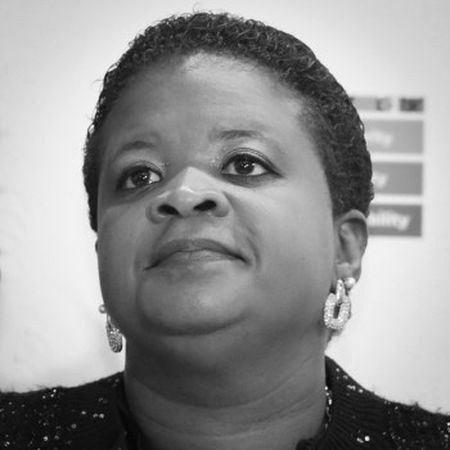
Mimmy Gondwe is the deputy minister of higher education.