



/file/dailymaverick/wp-content/uploads/2025/09/label-Opinion.jpg)
As South Africans mark 30 years since the signing of our Constitution, we find ourselves at a crossroads and epoch-defining moment in the polity.
The Constitution was not only a legal breakthrough – it was a moral contract, a collective promise that our past would not define our future. Yet today, the cracks in the social fabric remind us that the project of nation-building and social cohesion remains painfully incomplete.
The recent discussions convened by the National Planning Commission (NPC) on social cohesion could not have come at a more crucial moment.
For too long, conversations about unity, identity and justice have been overshadowed by short-term political battles, massive unemployment and exclusions, corruption, crime and the immediacies of crisis management. But if South Africa is to make meaningful progress, we must return to the fundamentals – the unspoken truths at the heart of our divisions and the possibilities at the heart of our shared destiny.
Our diversity has always been both a source of richness and a site of tension. We come from different histories, languages, faiths, and socioeconomic realities. But instead of allowing diversity to enrich us, we have allowed inequality, trauma and mistrust to erode the basis of solidarity.
The results are clear:
Growing racial resentment;
Deepening poverty and joblessness;
Fragmented communities; and
A generational cycle of trauma and disillusionment – especially among young people and women.
We often celebrate 1994 as our miracle year, but miracles require maintenance. And on this score, we have faltered.
If we are serious about nation-building, we cannot avoid the hard questions.
Land dispossession, economic exclusion and the persistent marginalisation of Africans continue to shape contemporary grievances. These are not abstract historical debates – they are lived realities that determine opportunity, identity and belonging.
Similarly, the trauma of apartheid lives on in the daily experiences of women, rural communities, migrant labourers and those who remain trapped in cycles of poverty. Until we confront how these wounds manifest themselves today – in violence, mistrust and frustration – social cohesion will remain an elusive aspiration.
Reconciliation, resistance, resentment
One of our most painful truths is that reconciliation has stalled. On one hand, privileged groups resist necessary redress; on the other, black South Africans increasingly resent the slow pace of change. The gulf between expectation and reality widens each year.
This is not a recipe for unity – it is the breeding ground for polarisation.
The growing inequalities between racial and economic groups prove that South Africa’s democracy has delivered uneven returns. Only 13% of black African-headed households were in the highest expenditure quintile. In comparison, 21% of coloured-headed households fell in the upper expenditure quintile, while 34.4% remained below the third expenditure quintile.
Indian/Asian- and white-headed households were predominantly in higher spending brackets. Nearly 77% of Indian/Asian-headed households were in the upper two expenditure quintiles, while 78.1% of white-headed households fell into the top expenditure quintile. This is according to the income and expenditure survey of 2023.
The social contract, once rooted in hope, is fraying at the edges. This is not surprising because hope alone is no substitute for strategy and policy implementation.
South Africa’s young people are expected to be the torchbearers of the future, yet the future they inherit is often bleak. High unemployment, violence, limited mobility and structural barriers undermine their ambitions.
If the youth lose hope, the nation loses its future. Supporting them requires more than policy – it demands empathy, opportunity and a commitment to dismantling the structures that entrench exclusions.
Symbols such as the Constitution, the flag, our national anthem, and our Coat of Arms were meant to anchor a shared identity. Yet their unifying power has weakened. Instead of functioning as common points of pride, they have become contested in a climate of mistrust.
Sport, culture, and language – powerful tools of unity – are often overshadowed by the very divisions they are meant to bridge.
We must reignite their meaning and place them at the centre of a renewed national consciousness.
South Africa must do something we have avoided for too long: engage in honest, difficult and sometimes uncomfortable conversations. We cannot build cohesion on silence, denial or political politeness.
But dialogue alone is not enough.
Social cohesion requires:
Effective institutions we can trust;
Strong leadership;
Accountability and the rule of law;
Quality education;
Reliable basic services;
Safer communities; and
Reduced poverty and inequality.
Trust is the currency of nation-building. Without it, democratic institutions lose legitimacy – and we already see the consequences: voter apathy, political polarisation, rising protests and growing alienation from the state.
Going back to fundamentals means recognising that social cohesion is not a luxury. It is the backbone of development, stability and shared prosperity.
The Department of Planning, Monitoring and Evaluation and the National Planning Commission are uniquely positioned to leverage the National Dialogue platform to re‑centre social cohesion.
One way of doing this is by anchoring dialogue through the National Development Plan (NDP). The NPC is custodian of the NDP, which already envisions a socially cohesive South Africa by 2030. Aligning dialogue outcomes with NDP goals will ensure that social cohesion is not treated as a side issue, but as a central pillar of national development.
We must rebuild the foundations – identity, trust, accountability and opportunity – and use them to anchor a more unified future. South Africa’s problems are daunting, but not insurmountable. What we need is not a miracle, but the courage to confront ourselves.
The President urged us to take inspiration from the weaver birds. Just as they tirelessly build and rebuild, we too must roll up our sleeves, get our hands dirty and work together. In the spirit of the weaver birds, all hands must be on deck to restore what is broken in our country.
If we commit to building a society rooted in fairness, dignity and mutual respect, the promise of 1994 can be renewed for generations to come.
The work is difficult. The conversations are uncomfortable. But the alternative – continued fragmentation – is far worse.
The time to return to the basics is now. DM
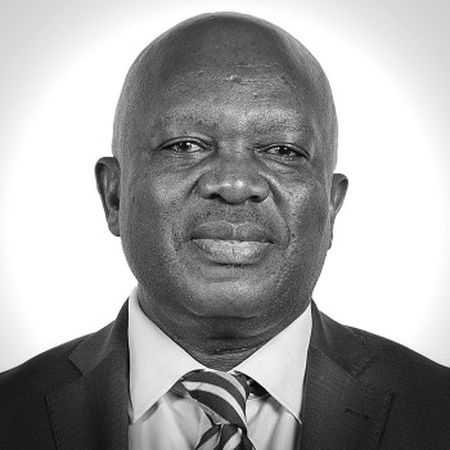
Seiso Mohai is Deputy Minister in the Presidency.