



/file/dailymaverick/wp-content/uploads/2025/09/label-Opinion.jpg)
The water crisis has different causes in different areas of the country. In some areas, such as parts of the Western Cape, the immediate cause is drought. Delays in national water resource infrastructure projects are part of the problem in some areas, as well as weaknesses in the performance of some of the water boards. However, the main cause of the crisis in most areas is the declining performance of municipal water services.
The 2023 Blue and Green Drop comprehensive assessments of municipal water services carried out by the Department of Water and Sanitation found that 105 out of the 144 municipalities that are Water Service Authorities scored “poor” or “critical” in terms of the performance of their drinking water and/or wastewater services. This means that there is widespread failure of municipal water and sanitation services (they are failing in 73% of Water Service Authorities), which is an indication that the problem is systemic.
In other words, there is something fundamentally wrong with the whole legal, financial and institutional framework governing how water services are delivered in South Africa. In this context, while interventions in particular municipalities may result in some improvements, they are not going to result in sustainable improvement unless the systemic causes of the crisis are also addressed. In addition, challenges with water services will keep cropping up elsewhere until the systemic causes are addressed.
The Constitution provides the legal framework for water services. Section 156 states that local government has executive authority in respect of, and has the right to administer, the local government matters listed in part B of schedule 4, including water services. Other sections of the Constitution provide for the national government to pass legislation to provide a framework for the provision of water services by municipalities and to provide support to municipalities, and the Water Services Act was subsequently passed by Parliament in 1997. Section 139 of the Constitution provides for the national and provincial government to intervene in local government when a municipality cannot or does not fulfil one of its obligations.
However, section 151 states that a municipality has the right to govern, on its own initiative, the local government affairs of its community, meaning that section 139 interventions can only ever be temporary – they cannot include the permanent removal of the executive authority of local government in respect of the water services function. In addition, section 41 requires the spheres of government to respect the functions of other spheres, not to assume any functions or powers not conferred on them by the Constitution, and not to encroach upon the functional integrity of other spheres. Section 151 further provides that the national or a provincial government “may not compromise or impede a municipality’s ability or right to exercise its powers or perform its functions”. The Constitutional Court has consistently struck down the conduct of other spheres of government that intrudes on the constitutionally defined powers and functions of local government.
The national fiscal framework (the Medium-Term Expenditure Framework tabled as part of the national Budget every year) provides the financial framework for water services. The national government provides water-related grants worth more than R60-billion per annum to Water Service Authorities, including a range of infrastructure grants and the portion of the equitable share with which those authorities are supposed to provide free basic water to the indigent.
Apart from these grants, municipal water services must be self-financing through revenues from the sale of water, which must cover the cost of routine maintenance and operation of water infrastructure. However, the 2023 DWS No Drop Report found that, on average, municipalities had non-revenue water of 47.4%. In addition, given their constitutional independence, municipal councils can and do vote for some of the revenues from the sale of water to be used for other purposes.
This has led to a situation where water services are in a vicious downward spiral in many municipalities, with high non-revenue water and the allocation of revenue from the sale of water to other functions leading to insufficient investment in the maintenance and development of infrastructure, which in turn leads to increasing non-revenue water and declining reliability of water services.
Institutional challenges
There are also underlying institutional challenges. Almost all Water Service Authorities have institutional arrangements which include a water and sanitation department that is responsible for technical functions, but with other functions related to managing water services located elsewhere in the municipality (for example, billing and revenue collection and supply chain management under the finance department and recruitment under the human resources department). As a result, there is no single-point accountability for the water services function.
In most Water Service Authorities, the water and sanitation department receives a budget which has no direct relationship to the amount of revenue collected from the sale of water. This means that the head of the water and sanitation department does not have an incentive to manage the function in such a way that it is financially sustainable. For example, there is no incentive for the head of water and sanitation to prioritise the maintenance and repair of water meters to ensure that revenue is optimised, because his or her annual budget is not related to the revenue collected.
The long-term solution is for Water Service Authorities to adopt an institutional model with ring-fenced departments or entities for water services, including ring-fenced revenue from the sale of water and fully ring-fenced management responsibilities for delivering water services. However, in light of the constitutional provisions summarised above, the national government cannot impose this model on municipalities.
In the short to medium term it is difficult to solve the water crisis without solving the broader local government crisis. For example, section 63 of the Water Services Act provides for the minister of water and sanitation to take over water services in a municipality as part of a section 139 intervention. However, given that key aspects of funding and delivering water services are embedded in other departments of the municipality, “taking over” the water services function would require the minister to take over the whole municipality, not just the water and sanitation department. This would be contrary to the Municipal Finance Management Act.
Given that revenues from the sale of water go into a central pot in the municipality, the problem of underbudgeting for water infrastructure and its maintenance cannot be resolved in isolation from the general budgeting and financial sustainability challenges of the whole municipality.
Some people argue that the solution to the crisis is to increase national transfers to local government. However, this would require a large increase in government borrowing, an increase in taxes or further large cuts to the already constrained budgets of national and provincial government departments. While some money could be freed up by closing national or provincial programmes that are no longer required, this would not be enough to cover the cost of funding water services from the fiscus. In addition, increasing national transfers to municipalities to fund water services would have the unintended consequence of rewarding bad behaviour and incentivising municipalities to not focus on reducing non-revenue water and to continue using revenues from the sale of water to fund other functions.
The Auditor-General of South Africa has described the financial status of local government as “dire”, and the finance minister has indicated that 63% of municipalities are in financial distress. There are questions regarding the financial viability of some municipalities, due to factors such as the low average income levels of their residents and low levels of economic activity in their jurisdictions. The review of the local government white paper which is currently under way is also looking at the professionalisation of local government, fighting corruption, improving intergovernmental coordination and managing the impact of coalition governments, among other issues.
All of these issues are broader than the provision of water services, but are major contributors to the water crisis. Hence, solutions to the water crisis cannot be considered in isolation from solutions to the local government crisis. DM
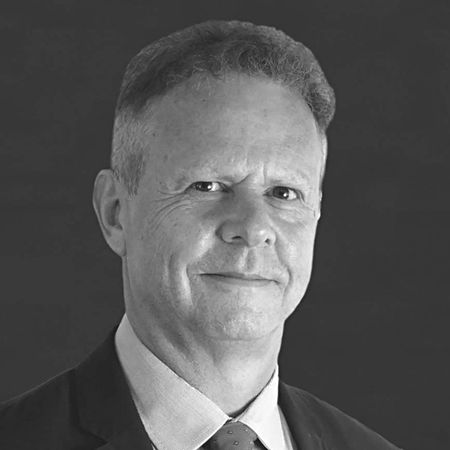
Dr Sean Phillips is director-general of the Department of Water and Sanitation.