



The sound of shattering glass does not fade. It lodges. In 2012, at the intersection of Houghton Drive and Carse O’Gowrie Road in Johannesburg, that sound split open an ordinary afternoon.
We were newly married. My wife Dennise was driving home from work when the window exploded inward. A hand came through. Then a body. The thief leaned halfway into the car, grabbing, scrambling.
Instinct took over. She drove. Not cautiously. Not strategically. She drove.
The car lurched forward while the man was still wedged through the broken window – torso inside, legs flailing outside. She does not remember deciding. She remembers survival.
By the time she reached our complex, she did not know whether he had fallen off, jumped off, or was still there. She ran inside.
I was in the shower when the bathroom door burst open and she came in screaming. We were a few months married. Eighteen years into democracy.
There was no press conference. No commission. No national reckoning. But something shifted. Traffic lights were no longer neutral. Intersections became calculations. Windows were assessed for vulnerability. Night driving required prayer.
That afternoon did not declare war. But it declared vigilance.
A country on alert
SA is not under bombardment. We are not Iran or Ukraine. We hold elections. We have courts that can still restrain power. Our Constitution remains one of the most progressive in the world. And yet our bodies move as if danger is imminent. This is the body remembering.
When a society is exposed to prolonged, unpredictable threats, the nervous system adapts. Fight or flight stops being an emergency mode and becomes a default setting. Hypervigilance becomes a lifestyle. You scan. You brace. You calculate. You rehearse exits.
The biology matters. Chronic hypervigilance is not only a feeling – it is a physiological posture. The body runs on elevated stress hormones. Sleep thins. Patience shortens. Anger becomes easier to access than calm. Attention narrows toward immediate threat. Long-horizon planning becomes harder. Survival keeps you alive by shrinking your world.
Recovery requires safety. Safety requires predictability. Predictability requires functioning systems.
When systems wobble – when policing is uneven, prosecutions are delayed, corruption corrodes credibility, inequality hardens into structure – the body compensates. It creates its own safety architecture, one household at a time.
And that is what we have done.
SA continues to record dozens of murders every day – even as recent crime statistics show roughly 60-64 murders per day on average, with thousands of lives lost each quarter. That is not an occasional spike. It is a persistent rhythm of violence, and rhythms train the nervous system.
So when we say “we are not at war” we may be speaking politically. But many of our bodies are speaking biologically.
The architecture of fear
Look at how we build. Electric fences hum above garden walls. Security estates rise behind controlled access points. Armed response boards dot suburban streets. Cameras tilt over driveways like watchful eyes. Dogs are trained. Gates are doubled. WhatsApp groups become informal intelligence units.
Private security has become a parallel public service. Safety has increasingly become a paid layer placed over a struggling public layer. Not universally shared protection. Selectively purchased protection.
When safety is privatised, trust fragments. Those who can afford protection withdraw into enclaves. Those who cannot remain exposed in geographies shaped by apartheid’s spatial inheritance – townships far from economic centres, transport routes that stretch vulnerability, neighbourhoods where the state is mostly experienced as delay.
We inherited a country designed for separation. Democracy delivered rights, but geography remained stubborn. The smash-and-grab incident at Houghton Drive does not exist outside that history. It is not “just crime”. It is proximity without equity.
In Johannesburg, inequality does not sit across oceans. It idles at the driver’s side window. It wipes windscreens. It waits at red lights. It travels the same tar, breathes the same exhaust, studies the same glass.
Proximity without justice is combustible. And cities that ignore that truth quietly train their residents to brace.
Democracy without downshift
The promise of 1994 was not only political inclusion. It was psychological relief – the hope that history’s violence would recede into memory, that public space would become less haunted.
For many, it has not. A democracy cannot flourish with citizens who are permanently braced. Because a braced citizen behaves differently. You trade participation for retreat. You trade public investment for private backup plans. You become more tolerant of force because your body craves relief.
Hypervigilance does not only shape politics. It shapes character. A braced population becomes slower to trust and quicker to suspect. Empathy narrows. Public life feels like exposure rather than shared space.
Institutions, however, are built on trust – not walls. And when trust thins, democracy becomes procedural rather than lived.
The cost of permanent alert
Chronic fight or flight is expensive. It shortens tempers. It thickens cynicism. It makes hope cautious. But here is the cost we rarely name:
hypervigilance does not only build higher walls. It builds emotional distance.
Three years after Dennise’s smash-and-grab, I was shot in a separate hijacking. I survived the surgery. I did not survive the aftermath intact. I drank heavily. I raged at traffic lights. I recoiled at knocks on my window. I carried my fear home.
One morning, my daughter looked into my eyes and shouted: “Mama! Dada is sober!” She meant I was drunk. Violence did not only wound my body. It reached for my home.
Hypervigilance seeps into parenting. It turns fathers volatile and makes mothers exhausted. It teaches children to read threat before they read tenderness. In a country already battling fatherlessness, trauma does not disappear. It mutates. It passes down.
We speak about crime as an event. We rarely speak about its afterlife.
Naming the damage
Citizens do not privatise safety because they prefer fences. They do so because institutions have failed them repeatedly. Under decades of ANC governance, policing weaknesses, uneven prosecution, municipal decay, infrastructure collapse and corruption scandals have steadily eroded public confidence. That damage must be named plainly. Responsibility follows power. Trust does not evaporate in a vacuum. It drains when systems underperform and accountability thins.
No democracy is immune to institutional decay, and no party is uniquely incapable of it. But responsibility follows power. The deeper question now is not only who failed – it is what prolonged failure is doing to us. When unpredictability becomes normal, citizens adapt. They retreat. They fortify. They narrow their expectations of the public realm. And once that adaptation sets in, even reform struggles to restore ease.
We are not only dealing with broken institutions. We are dealing with habituated vigilance.
Lowering more than crime
Reducing crime is essential. But lowering statistics alone will not restore ease. We must lower shoulders. And shoulders will not lower until consequence becomes visible again – steady, predictable and reliable.
Professional policing insulated from corruption. Faster investigations and prosecutions. Courts that deliver justice without exhausting victims. Economic inclusion that narrows combustible inequality. Safety must become a public good again. Not a subscription service.
Because the most dangerous moment for a democracy is not when it is openly attacked. It is when citizens quietly stop believing the public can hold. South Africa is not at war. But a country that cannot exhale together is not fully at peace.
At that intersection – Houghton Drive and Carse O’Gowrie – the body learned that danger can arrive in daylight and leave without consequence.
The body keeps that memory. Nations do, too.
At the next traffic light, you will see it. A luxury car idling beside a man selling fruit. Two lives sharing an intersection – one rehearsing escape, the other rehearsing survival. The light will turn green. They will move forward.
But until the public world becomes reliable enough for the body to trust it again, we will keep building higher walls – and calling it normal.
Peace is not merely the absence of gunfire. Peace is the ordinary courage to unclench. And until we can do that together, the sound of glass will remain louder than the sound of freedom. DM
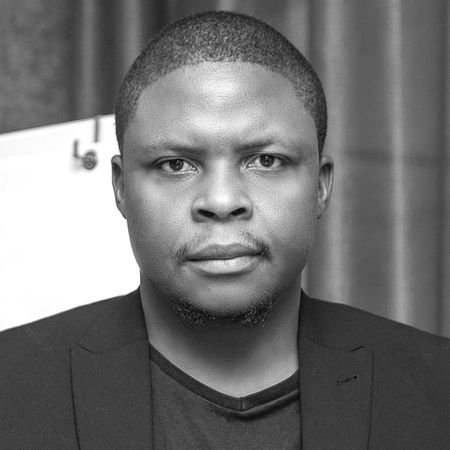
Themba Dlamini is a husband, father of four, pastor and chartered accountant who loves South Africa – warts and all. He is the author of Village Boy: A Memoir of Fatherlessness, and writes to wrestle with hard truths, stir hope and help build a country in which his children can thrive.