



Since the beginning of 2026, we have noticed media headlines on the plight South Africa’s children. The Basic Education Funda Uphumelele National Survey, as read and analysed by the 2030 Reading Panel, tells us that only 25% of our children can read for understanding in their early stages of formal schooling.
These statistics build on the recent conversations after the matric results released by minister of basic education, Siviwe Gwarube on the plight of “boy children”, who constituted only 44% of the national matric pass rate. She obviously quickly turned to a conversation about the “neglect of the boys”, given their diminished presence in the national matric results.
What was alarming in the search for solutions was the public discourse on “investment in girls and women empowerment programmes” as being one of the reasons boys were being “left behind”. At a cursory look you may be inclined to believe this convenient and binary thinking. I believe a broader conversation needs to be held about the socioeconomic environment that seeks to pit our boys against “women empowerment” programmes, and speaks of “too much investment in the girl child”.
We are a country that loves to cherry-pick to suit our arguments. Given that this binary logic being used against women is part of the global right-wing discourse and the pushback against women’s empowerment, we may need attention and nuance rather than simply talking about “leaving boys behind”.
Politician and activist Mamphela Ramphele and Francis Wilson (1989) once warned us about simplifying complex matters by referring to statistics.
“We know that a simple statistical indicator such as body temperature is useful in the early stages of an examination to indicate whether the patient is unwell or not, but is of little help in diagnosing whether the disease is measles, chicken pox, polio or the common cold,” they said.
Our children’s socioeconomic condition, their health and safety, seems to be at the core of the plight of young boys, but this has been presented simplistically.
‘Winners and losers binary’
For example, a binary approach to the plight of young boys creates the impression that women and girls are doing “far better” in terms of quality of life. This unintended, yet harmful, public discourse of “winners and losers” among children may also neglect the huge percentage of children who are unable to go back to school after a pregnancy, or the fact that the odds of any impoverished child in SA escaping crushing socioeconomic conditions after finishing school are slim.
It is sad that when society has failed to care for its children, people start pitting children against one another, to simplify the complicated position in which our children find themselves today. Child rape statistics are often summarised as “teenage pregnancy”. Adults are sleeping with underage girls and thereby limiting their chances of participating fully in the economy, especially those from poorer backgrounds.
Society tends to look for scapegoats, and sometimes the very people who stay with the children when their biological fathers have disappeared are the ones who get blamed. Year after year, we are told that we have more women leading households, we have more children living without their biological fathers, and we have more people dependent on social grants.
We hardly focus on the questions: “Which of these boys are left behind?”
“Which of these girls are outperforming others in the matric results?”
I am certain that a closer look at the statistics will tell us about the race, class and geography of the crushing poverty that dictates that so many 16- to 24-year-olds will drop out of school. Statistics SA in its annual General Household Survey tell us that we have a group of children from this age group who are not in any formal schooling system, and are not employed. Only 10.5% of 16- to 24-year-old children make it to the post-schooling system. This necessitates a broader question: Where are these children located?
There is a relatively small number who manage to access the post-schooling system, but the majority are not routed into any systematic talent absorption pool or initiative. What happens to these 16- to 24-year-olds? This is the group that is attractive to the violent syndicates that are recruiting children to gangs. There is something scary about a country that swings from one set of headlines to another regarding children’s wellbeing without paying attention to any systematic and integrated approaches to their safety and wellbeing.
When one looks closely at the 2025 General Household Survey on children’s education, family, health and post-schooling access for those aged between five and 24 years old, one can see that we lose children from the age of 16, due to financial difficulties (boys: 17% compared with 23% of girls); family responsibility (girls at 11% compared with 0.4% of boys) and difficulty with schooling (girls 23% and boys 28%).
No family support system
This survey delves into the absence of the family support system, with many children – up to 45% – living in households headed by single mothers; only 3% live with their fathers and more than 31% are in child-headed households.
This deep social neglect of our young people is scandalous. Institutions that should care for children are either under-resourced or have opted to neglect them. This includes family structures in whatever format they are in – where the presence of ooMalume (uncles) is disappearing. Sociologist Grace Khunou has theorised that for centuries ooMalume have helped raise children, particularly in the absence of their “biological” fathers.
As a country, we are still dealing with child trafficking, rape by family members, and religious institutions protecting sexual offenders instead of the young women they have targeted. We have also seen communities allowing taverns to run until early in the morning, which often leads to violence against children. And we have witnessed children being killed in packed school transport vehicles, while more than 63% of our children walk long distances to school.
We are not prepared for the social cost of these children who disappear from our system, or the pronounced violence and deep inequalities that limit opportunity.
Daily Maverick has published two pieces in the past few weeks that focus on children’s development, and on exposure to deadly unregulated pesticides that undermine the development of children’s brains. While there are laws to protect these children, they are not enforced.
We have a duty to all our children to go beyond the binaries that risk creating hateful attitudes that ultimately feed into misogynistic behaviours among young people. We must refuse the temptation to swing from one end to the other when trying to find solutions that will benefit all our children. DM
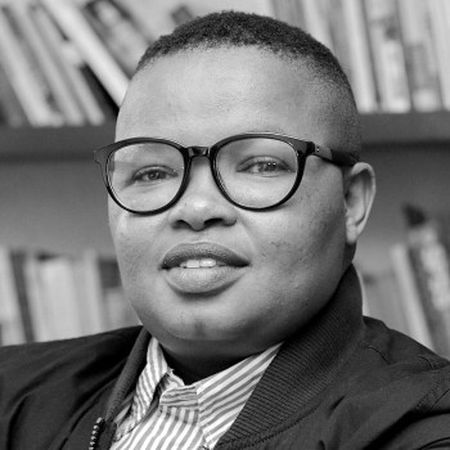
Prof Babalwa Magoqwana is the Director of the Centre for Women and Gender Studies at Nelson Mandela University and an Associate Professor in the Department of Sociology and Anthropology. Her feminist work centres gender, Indigenous Knowledge Systems, and labour in service workplaces.