



/file/dailymaverick/wp-content/uploads/2025/09/label-Opinion.jpg)
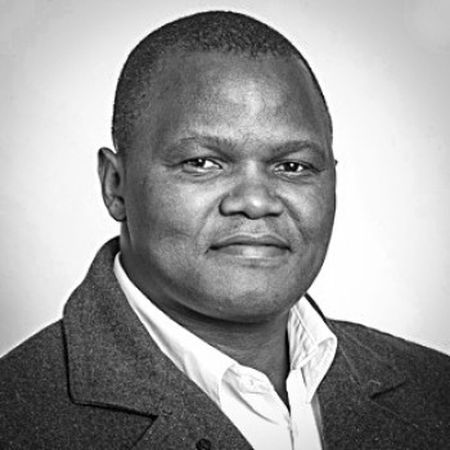
R1.8-million. That staggering figure captures the initial dramatic jump in the remuneration package of Xolile George, the secretary to Parliament. Appointed in June 2022 on a five-year contract with an advertised annual salary of approximately R2.6-million, his package was reportedly adjusted within six months to around R4.4-million, a roughly 70% increase. Subsequent adjustments have elevated his total package to between R4.9-million and R6.1-million annually, representing an overall rise exceeding 88% since his appointment.
/file/attachments/orphans/WhatsAppImage2026-02-12at123333_638080.jpeg "Xolile George during the rehearsal and final preparations at Cape Town City Hall ahead of the 2026 State of the Nation Address. (Photo: Phando Jikelo / Parliament RSA)")
These figures are concrete and meaningful. They come from investigative journalism, parliamentary records and political complaints that have dominated headlines in early 2026. They demand serious public scrutiny, especially in a country grappling with persistent service-delivery failures and fiscal constraints.
Picture the stark contrasts playing out daily across South Africa: nurses in Limpopo and the Eastern Cape making do without adequate gloves, syringes, or even basic medication stocks; schoolchildren in rural areas waiting months for textbooks or sitting in overcrowded, dilapidated classrooms; Johannesburg and Durban motorists navigating pothole-riddled roads that damage vehicles and endanger lives; municipal workers protesting at unpaid overtime while essential infrastructure crumbles. Against this backdrop, a senior administrative official sees his earnings surge far beyond what most public servants or even many private-sector professionals could expect.
This case is far from unique. In South Africa’s public sector, a clear pattern has emerged: frontline employees, teachers, nurses, police officers and social workers typically receive annual increases of 3-5%, often lagging behind inflation and barely covering rising living costs. By contrast, certain senior executive and administrative roles experience larger, sometimes double-digit “adjustments” or restructurings, frequently approved through internal processes with minimal external visibility or detailed public explanation.
South Africa maintains remuneration frameworks designed to ensure fairness. The Public Service Act, parliamentary rules and oversight mechanisms stipulate that salary increases should be modest, performance-linked and benchmarked where appropriate.
Parliament has, in the past, cited external consultancy reports arguing that the secretary to Parliament’s package was aligned with market rates for comparable high-responsibility positions and was even lower than George’s previous earnings in other roles. Proponents of such adjustments point to the demanding nature of the job: overseeing parliamentary administration, managing complex legislative processes, coordinating multiparty operations and ensuring institutional continuity amid political turbulence.
Yet the manner of implementation raises legitimate concerns. Former presiding officers Nosiviwe Mapisa-Nqakula and Amos Masondo reportedly fast-tracked and backdated George’s initial pay hike. Media reports characterised the move as a unilateral decision that bypassed standard public-service benchmarking. Little public evidence has been provided to demonstrate extraordinary performance justifying the scale of the increases in such a short timeframe.
South Africans are entitled to straightforward answers: What precise factors, performance metrics, external benchmarks, or role expansions warranted these substantial rises? Why were they executed so quietly, with limited disclosure at the time?
Formal complaints
The Democratic Alliance amplified these questions in February 2026 by lodging formal complaints with multiple bodies, including the Special Investigating Unit, the Public Protector and parliamentary committees.
The complaints sought investigations into the salary adjustments, alongside related governance matters such as alleged expenditure irregularities at the 2023 BRICS Parliamentary Forum. Public Protector Kholeka Gcaleka subsequently recused herself, citing a perceived conflict of interest stemming from reported personal links to George, a development that, while procedurally correct, has only intensified perceptions of institutional vulnerabilities.
These questions about one official’s compensation connect to something deeper. Trust in democratic institutions rarely shatters overnight. It frays incrementally through repeated instances where rules appear flexible for the well-connected, while ordinary citizens endure belt-tightening.
When frontline workers sacrifice and taxpayers fund escalating executive perks without clear justification, cynicism grows. People disengage, voter turnout dips, civic participation wanes and faith in collective effort erodes. That quiet withdrawal poses a greater long-term threat to democracy than isolated scandals.
The opportunity costs are tangible and painful. The initial R1.8-million adjustment alone could have translated into real public benefits: funding salaries for 10 to 15 community health workers for a full year, procuring thousands of school textbooks, repairing dozens of kilometres of rural roads, or training hundreds of new police recruits. These are not hypothetical luxuries; they address documented shortages that directly affect vulnerable communities. Instead, those resources flowed into one individual’s compensation package, ultimately sourced from the public purse.
Concrete reforms
None of this argues against fair pay for challenging, high-stakes roles. Effective public administration requires attracting and retaining skilled leaders. But equity demands that remuneration remain proportionate, transparent and demonstrably value-adding, especially when the rest of the public sector faces austerity.
To rebuild confidence, concrete reforms are overdue:
- Mandatory transparency: Legislate that any salary adjustment for senior officials exceeding R100,000 must be published online within 30 days, including full justification, benchmarking comparisons, performance data and approval details.
- Independent review mechanisms: Shift vetting of significant increases to multi-stakeholder panels incorporating external auditors, civil-society experts and cross-party parliamentary representatives, minimising internal or executive dominance.
- Enforceable consequences: Introduce clear provisions for independent review of questionable increases, potential clawback of unjustified amounts and mandatory parliamentary accountability for approving authorities.
South Africa stands at a crossroads. The country needs governance that rewards competence without breeding resentment, that balances institutional needs with public equity. When executive salaries escalate amid widespread hardship and service shortfalls, the debate transcends one individual’s pay; it questions the core promise of accountable, people-centred leadership.
Public funds exist to advance the common good. When spending patterns undermine that principle, the true price is paid not just in rands, but in diminished trust and a weakened social compact. Restoring faith requires openness, fairness and action before disillusionment hardens into permanent disengagement. DM
Nyaniso Qwesha holds an MBA. He has a strong interest in risk management, governance, public accountability and development, with a focus on analysing systems, decision-making and their impact on society.