



When a son refuses to bury his father, the story is never about the grave.
It is about the years before it.
A body lying in a mortuary is a moment. A relationship that never formed is a lifetime. That is why a viral story from Copesville, KZN, about a son who refused to bury his father, who allegedly abused him, should disturb us far beyond the details of one family.
It is tempting to reduce it to a moral debate — Is the son right? Is the son wrong? — but that question is too small for the weight of what we are witnessing. What we are seeing is a mirror held up to a country in which millions of boys have grown into men without the daily presence of a father.
According to Statistics South Africa, more than 60% of children in our country grow up without their biological fathers in the home. That figure alone should move this conversation from outrage to reckoning. It tells us that this is not an exception. It is a pattern.
And patterns always have histories.
The long shadow of legislated absence
Fatherlessness in South Africa did not begin with individual moral failure. It was structured.
Colonial taxation and land dispossession forced African men into migrant labour, making physical presence in the home economically impossible for many. Absence was normalised, then inherited. Over generations, provision from afar replaced formation at home. Mothers and grandmothers carried the weight of raising families under impossible conditions, but without the daily affirmation, discipline and modelling that a present father provides.
We are now living in the fourth or fifth generation of that disruption.
When we speak about crime, gender-based violence, school dropout rates and youth unemployment, we often begin with policing and economics. Those matter. But beneath them lies formation — the slow relational work of raising boys into men. Fathering may appear private, but it is part of our public architecture. When it collapses, the effects are national.
This is why the refusal to bury a father cannot be dismissed as mere anger. It is pain without a language. It is the sound of a wound that never found a safe place to heal.
What children are actually saying
The Fathers Matter research by Heartlines forces us to listen to the voices we usually talk about but rarely hear — the children themselves. Their definition of a good father is disarmingly simple: someone who is present, who listens, who guides, who loves. Not someone who is rich. Not someone who sends money from a distance. Presence, not provision, is the currency of fatherhood.
Where that presence is missing, the study found something chilling: rising anger, substance abuse, bullying, sexual harassment in schools, and boys searching for belonging in gangs. When a boy cannot find a father, he will find a structure that promises identity, even if it is violent. When a girl grows up without a father’s protection and affirmation, she is more likely to expect harm from men rather than safety.
This is how private absence becomes public danger.
Teachers spoke of classrooms filled with children carrying unprocessed anger, children who have never experienced steady male affection, children who interpret authority as threat rather than care. What we are witnessing in our streets is often the adult expression of childhood wounds that were never named.
The research also confronts us with an uncomfortable truth: a father can be physically present and still emotionally absent. Silence, distance, and disengagement reproduce the same damage as physical abandonment. Fatherhood is not a biological status. It is an active, daily practice of recognition and formation.
Identity without a mirror
A father gives more than a surname. He gives recognition. He answers the silent questions every boy carries: Do I matter? Who am I becoming? Am I seen?
When that mirror is absent, boys often construct identity through anger, hyper-independence or imitation of broken models of masculinity. Many vow never to become like their fathers, only to discover that without guidance they do not know what to become instead.
This is how fatherlessness begets fatherlessness.
It is also why moments of crisis — funerals, legal disputes, financial responsibilities — become emotionally explosive. Society suddenly demands honour and duty from sons who were never formed within the relational structures that give those duties meaning.
We are asking young men to perform rituals for relationships that never existed.
Culture, obligation, and pain
In African tradition, burial restores dignity to the lineage and affirms belonging. But culture cannot be sustained by silence about pain. When we protect tradition without protecting children, we create a system that demands loyalty without having provided nurture.
Tradition should function like a shelter — a house built to protect the family. When the roof begins to leak, we repair it so that it can protect again. We do not tell the children to keep sleeping in the rain because “this is our house”.
Honour must be paired with accountability while fathers are alive, not only invoked when they are gone.
The dangerous simplicity of blame
There is a temptation in public discourse to create villains and heroes — to say abandoned fathers should be abandoned in death, or that sons who refuse cultural duties are morally lost.
Both responses are too simple.
We do not know the full story of the father who has died — his wounds, his formation, his failures. But explanation is not justification. A man’s pain does not excuse his absence. At the same time, a son’s pain does not remove his need for healing.
Bitterness binds us to the very people we are trying to escape. When our actions are driven by unresolved anger, we suspend our own future.
The goal is not to force forgiveness as performance. It is to create pathways for healing that free sons to become the fathers they never had.
Rebuilding the architecture of fathering
If this story is a mirror, then the question is not what we think of one young man. The question is what we are building for the millions who share his experience.
We need:
- Mentorship structures for boys who lack fathers;
- Community fathering through uncles, teachers, coaches, and pastors;
- Spaces for men to process trauma and learn emotional language;
- A redefinition of masculinity from distant provision to present formation; and
- Public investment in male socialisation as a prevention strategy for violence.
We have rightly invested in protecting the girl child. But prevention of gender-based violence requires the formation of healthy boys long before they become perpetrators or victims. This is not a competition of suffering. It is an acknowledgement of causality.
A different future
The most important line I have carried for years is this: do not let the absence of your father define your presence.
A nation cannot rewrite its history overnight. The legacies of migrant labour, land dispossession, and economic inequality still shape family life. But we can interrupt the pattern.
Every present father breaks a generational chain.
Every mentor who stands in the gap alters a trajectory.
Every boy who receives affirmation learns a different language for pain.
The story from Copesville is not ultimately about a burial. It is about whether South Africa will confront the silent pandemic of fatherlessness with the same urgency we bring to other national crises.
In a recent Newzroom Afrika discussion, what struck me most was not the disagreement over culture or obligation, but the quiet recognition across the panel that we are dealing with a generational wound. Behind the headlines was a shared understanding: this is not one son’s story. It is the story of millions.
Healing sons and rebuilding fathers is not social work on the margins. It is the work of national reconstruction.
And it must begin while both are still alive. DM
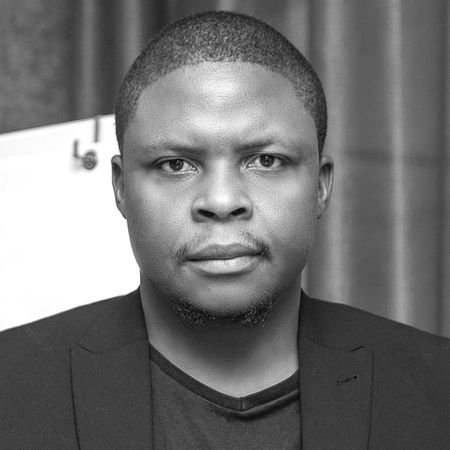
Themba Dlamini is a husband, father of four, pastor and chartered accountant who loves South Africa — warts and all. He is the author of Village Boy: A Memoir of Fatherlessness, and writes to wrestle with hard truths, stir hope and help build a country in which his children can thrive.