



/file/dailymaverick/wp-content/uploads/2025/09/label-Opinion.jpg)
Summarising President Cyril Ramaphosa’s 2026 State of the Nation Address (Sona), Rebecca Davis, writing for Daily Maverick, observes:
“Unsurprisingly, given the revelations at the Madlanga Commission, organised crime was placed top of the list as ‘the most immediate threat to our democracy’, an unprecedented framing that shifts crime from a social ill to a democratic crisis.
“The proposed approach is arguably too intelligence-led, in a country where Crime Intelligence has been deeply compromised in recent years: a new national illicit economy disruption programme targeting tobacco, fuel, alcohol and counterfeit goods; data analytics and AI to identify syndicates.
“A welcome intervention, except if it’s carried out by equally compromised state spooks: complete re-vetting of senior police management with lifestyle audits.”
There can be little doubt that organised crime and corruption are much more than a mere “social ill” given the dimensions that they have taken in South Africa since, and even before, the rise of Jacob Zuma to the leadership of the ANC in 2007 and the country in 2009.
The Madlanga Commission is, in a sense, a follow-up to the painstaking work done by the Zondo Commission over four years. The latter revealed the rot of State Capture in spades, yet it did not purport to look into the state of play in the criminal justice system itself. The “thar be dragons” principle was in play.
The revelations emerging at the Madlanga Commission certainly demonstrate that elements of the leadership of the police are thoroughly rotten at both political and operational levels.
Yet, it is the police to whom the nation must look when it comes to realising their constitutional mandate: to prevent, combat and investigate crime, to maintain public order, to protect and secure the inhabitants of South Africa and their property, and to uphold and enforce the law.
It is appropriate to dwell on what the President actually said in Sona 2026: “Organised crime is now the most immediate threat to our democracy, our society and our economic development. Our primary focus this year is on stepping up the fight against organised crime and criminal syndicates, using technology, intelligence and integrated law enforcement.”
Ramaphosa is quite right to regard organised crime as an existential threat to the democratic order so painstakingly stitched into place in the long process that led up to the National Accord and to the passing of a new supreme law, our national Constitution, to replace the old order.
The most fundamental change made was to end parliamentary sovereignty and replace it with the supremacy of the Constitution and the rule of law (thus substituting “the rule by law” of the apartheid era).
Drastic and urgent action to address the challenges posed by organised crime and corruption have been pleaded for in express terms by retired Chief Justice Raymond Zondo. He fears that the urgency of the situation might have been lost from view. The former chief justice has observed and warned that “drastic action” is urgently needed, if we are to have a country worthy of the name in future. South Africa has the skills and talent to see off the corrupt. The Scorpions of old proved this when they went after powerful politicians in the Travelgate and arms deal debacles, and even succeeded in imprisoning the chief of police, Jackie Selebi.
The existential threat posed to South Africa has been considered by the Constitutional Court in the context of serious corruption, a frequent pastime of those involved in organised crime. Long before the courts pondered a solution in 2011, Parliament itself, back in 1998, passed the Prevention of Organised Crime Act with a view to creating the machinery of state that is specifically designed to deal with organised crime in all its manifestations, including the corruption which was the focus of the court in the Glenister litigation which was fought in the wake of the 2007 decision of the ANC to disband the Scorpions, a crack anti-corruption body within the National Prosecuting Authority (NPA).
The current acting minister of police, Professor Firoz Cachalia, when giving his evidence before the ad hoc committee of Parliament, which is investigating the complaints made by Lieutenant General Nhlanhla Mkhwanazi on 6 July 2025, very fairly conceded that it was a mistake to disband the Scorpions.
Organised criminals have flourished in South Africa in the wake of the end of the prosecution-led investigation of their activities. Gangsterism is rife both on the Cape Flats and in parts of Gauteng. Corruption has seeped into the entire procurement system of the state and state-owned enterprises. International drug cartel activity (and the possible capture of elements of the criminal justice administration) prompted Mkhwanazi to make his complaint.
The time has come to correct the mistake made in 2007. “But how?” is the vital question.
The court has carefully considered this question in the Glenister litigation. It came to the conclusion that “a body outside executive control” is needed to deal with corruption effectively.
This conclusion is a radical departure from the way in which the criminal justice system has been organised and administered in the new South African constitutional order. It is nevertheless within the power of the court to direct the creation by Parliament of a body that fits the requirements it set for the new body “outside executive control”.
In an effort to promote the rule of law and to tackle organised crime, including corruption, the co-chair of the Constitutional Review Committee of the National Assembly, advocate Glynnis Breytenbach, has proposed two bills which will establish and empower a new Chapter 9 body to deal with the threat to the existence of constitutional democracy under the rule of law.
These the President has now conceded pose “the most immediate threat to our democracy, our society and our economic development”. Organised crime and corruption pose that threat; orange overalls for the perpetrators should become a national priority, if the President’s words get the traction they deserve.
In the sixth Parliament Breytenbach was shadow minister of justice for the DA. Now, in the seventh, she is no longer in opposition and instead enjoys the position of co-chair of the very body that is tasked with reviewing the Constitution. Her new position is no doubt in large part due to the fact that her party is a member of the Government of National Unity (GNU).
The 2026 Sona put Cabinet and Breytenbach on the same page when it comes to reforming the capacity of the state to deal with organised criminals and serious corruption.
The bills that deal with the establishment and enablement of the Chapter 9 body are already in the works in Parliament. The creation of a new body neatly sidesteps the reservation uttered by Rebecca Davis when she points to the rotten state of crime intelligence and to the general malaise in the leadership of the police which is being exposed by the Madlanga Commission.
The beauty of the Breytenbach-proposed reform is that it is possible to step around the minefield that re-vetting of senior police personnel will involve. An all-new body will have to recruit personnel from the private sector, the police, the NPA and the Special Investigating Unit (SIU), among others.
The SIU is not part of the criminal justice system but has, largely through better salary structures, been able to recruit some of the finest corruption investigators in the land. Those investigators who have fled to the private sector may be lured back to render service in the new Chapter 9 body.
The National Anti-Corruption Advisory Council also favours the Chapter 9 route after exhaustively studying the options available. It prefers that the prosecution work needed be left in the hands of the NPA. There are serious difficulties with this approach, not the least of which is the lack of independence of the NPA and its lack of capacity, staff and resources.
It is not a body outside executive control and the court does not contemplate anything other than a “one-stop-shop” to deal with corruption. It is so that the multi-agency approach is used elsewhere in the world, successfully so in countries in which the integrity of politics is not as compromised as it would appear to be in South Africa.
It would be preferable by far for the NPA to shed its functions in respect of organised crime and corruption, ceding them to the new body that will be able to satisfy the criteria set by the court in terms that bind government.
The directorate in the NPA which is currently responsible for anti-corruption work is vulnerable to being struck down by the courts as unconstitutional. The President was warned that this is possible when he signed the Investigating Directorate Against Corruption into law in May 2024, shortly before the election which gave birth to the GNU. Unfortunately he did not respond to the warning.
The content of the Sona suggests that the President may now be more receptive to putting in place the quality of machinery of state that is capable of ending the scourge of corruption with impunity and seeing off the threat that organised criminals pose to the country.
The Chapter 9 anti-corruption body has been a long time coming. Early in the advocacy of the body it was given the nickname “The Eagles” – an apex predator which is altogether superior to the tame Hawks in the police and the now defunct Scorpions in the NPA, both of which it will be able to replace in a constitutionally compliant fashion using the careful recruitment processes suggested by Justice Edwin Cameron in the last Glenister case in 2014.
The sooner the Eagles take wing, the better.DM
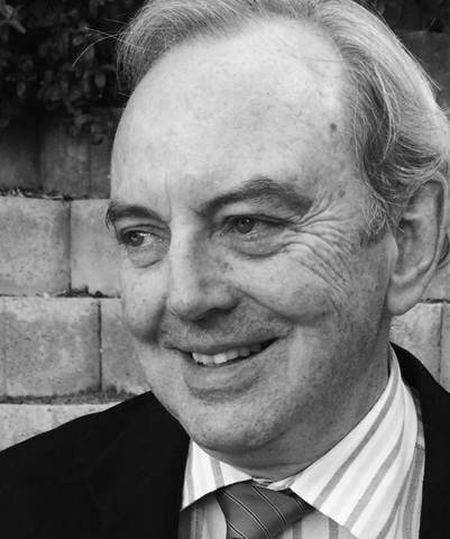
Paul Hoffman SC is a director of Accountability Now and was lead counsel in the Glenister litigation.