



/file/dailymaverick/wp-content/uploads/2025/09/label-Opinion.jpg)
The bicycle was already shaking when I realised we had made a mistake.
Gravel spat beneath the tyres. The hill was steeper than it had looked from the top. The wind roared in my ears. At the bottom of the slope, a blue bakkie crawled across the road.
We had speed.
We had power.
We had no brakes.
There is a moment when exhilaration turns into reckoning – when you understand that momentum does not negotiate. I swerved towards the edge of the road. The front tyre caught the dirt. We flew sideways and skidded to a halt inches from a barbed-wire fence.
We stood up, shaken.
The lesson stayed.
Masculine strength without formation is like that bicycle. The engine is not the danger. The absence of brakes is.
If rage begins long before violence erupts, the harder question is this: What actually interrupts it?
South Africa speaks constantly about violence prevention. We debate policing budgets, sentencing reforms, CCTV networks, visible patrols. These conversations matter, but they operate downstream.
By the time the state intervenes, strength has already been shaped – or misshaped.
A courtroom can judge an act. It cannot undo the years that rehearsed it.
Strength is never neutral
Masculinity carries power long before it carries wisdom.
A boy’s body will eventually grow strong. His voice will deepen. His presence will begin to take up space. The question is never whether power will arrive.
The question is whether anyone was present early enough to teach him what that power is for.
In many communities, the dominant image of manhood remains physical – protect, provide, endure, fight. These instincts are not inherently wrong. But they are incomplete.
Strength without guidance seeks dominance. Endurance without reflection becomes emotional silence. Provision without presence turns into distance. Strength without guidance hardens.
And here is the uncomfortable truth: presence alone does not guarantee safety. Some of the most violent men grew up with fathers in the home. Power can be transmitted badly as well.
Masculinity is always being modelled. The only question is what kind.
Presence must be positive
It is important to be clear – not all presence protects.
A man can be in the room and still cultivate fear.
Present and volatile. Present and humiliating. Present and unpredictable.
That does not interrupt violence. It rehearses it.
Positive father presence is not dominance. It is containment – the ability to remain steady when emotions surge, to correct without degrading, to absorb intensity without escalating it.
Children borrow regulation before they possess it.
A man who can regulate himself gives a child something more valuable than advice – a nervous system that learns stability.
Longitudinal research in developmental criminology – including the Dunedin Multidisciplinary Health and Development Study – shows that early self-control and emotional regulation predict later violent offending more strongly than IQ or socioeconomic status alone.
Punishment reacts. Formation prevents.
Multiply social fathers deliberately
South Africa’s history has produced widespread biological absence. But absence does not have to mean abandonment of formation.
What matters is not only whether a father is present, but whether a boy is surrounded by consistent, invested men.
Uncles. Coaches. Teachers. Pastors. Employers. Older brothers.
A boy does not need an army. He needs one or two men who stay long enough to shape him.
This cannot be accidental. It must be intentional.
Schools can design mentorship structures. Sports programmes can teach discipline alongside performance. Faith communities can build long-term male formation, not one-off events. Workplaces can treat mentoring younger men as leadership, not charity.
Governments, too, must recognise this as prevention architecture. A fraction of the resources spent responding to violence could be redirected towards strengthening early relational stability. Surveillance is visible. Formation is quieter – but far more durable.
Masculinity is always being shaped. The only question is whether we shape it deliberately – or leave it to chance.
Work with men, not only on men
Many violence-prevention conversations treat men primarily as risks to be managed.
This is shortsighted.
Men are also one of the greatest underutilised assets in prevention.
When invited into formation rather than shamed into silence, many respond with relief. They were not taught regulation either. They inherited patterns. They were handed scripts that confused dominance with dignity.
Creating spaces where men can examine inherited masculinity, confront unresolved anger and practise new responses is not soft work. It is preventative work.
Regulated men raise regulated boys.
Emotional literacy is civic infrastructure
If we are serious about reducing violence, emotional literacy must be treated as civic infrastructure.
The ability to pause. To name shame before it turns to aggression. To experience anger without converting it into harm.
These are not therapeutic luxuries. They are civic capacities.
You cannot incarcerate someone into skills they were never taught.
Prevention begins earlier – in homes, in schools, on sports fields, in churches, in mentoring relationships. Long before the first arrest.
Redefining the measure of a man
In a violent society, fists become symbols of credibility. Power becomes performance.
But fists are a poor measure of manhood.
The measure of a man is not how much fear he can generate, but how much fear he can absorb without passing it on.
Not how hard he hits – but how often he stays. Not how loudly he dominates – but how consistently he governs himself. Not how forcefully he performs strength – but how safely he holds it.
This version of masculinity is quieter. It does not trend easily. It does not intimidate.
It prevents violence precisely because it does not need to prove itself.
An unfinished task
South Africa’s violence crisis will not be solved by one law, one policy or one campaign.
But it will not be solved without men who understand that fathering – biological or social – is not private.
It is public architecture.
The state cannot raise the men it later punishes.
Every boy who learns restraint early is one less man the state must restrain later.
We do not need fewer men.
We need more men who know what their strength is for. DM
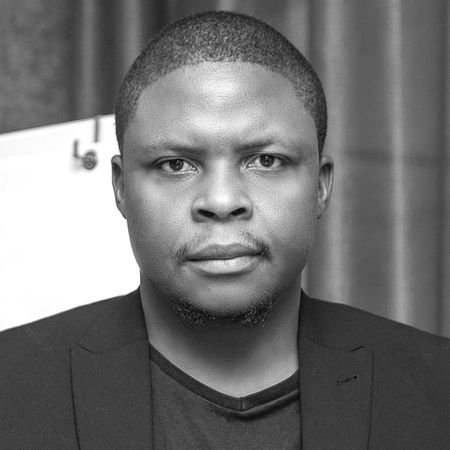
Themba Dlamini is a husband, father of four, pastor and chartered accountant who loves South Africa – warts and all. He is the author of Village Boy: A Memoir of Fatherlessness, and writes to wrestle with hard truths, stir hope and help build a country in which his children can thrive.