



/file/dailymaverick/wp-content/uploads/2025/09/label-Opinion.jpg)
Idle money, idle progress
Across South Africa, billions in conditional infrastructure grants remain untouched. Roads crumble, clinics stand unfinished and water systems falter — not because money is lacking, but because the system itself is paralysed. This is not a budgeting hiccup. It is a repeating cycle of incapacity, corruption, poor coordination and fear.
Incapacity: knowing without doing
Cadre deployment has filled key posts with loyalists rather than skilled professionals. Training and technical expertise are neglected, leaving officials who can draft plans, but cannot execute them. The gap between knowing and doing is wide, and it breeds hesitation. Municipalities often lack engineers, project managers and procurement specialists, making delivery a distant promise rather than a lived reality.
This incapacity is not just about missing skills; it is about a failure to prioritise competence. Without the right people in the right positions, even the best-funded projects stall before they begin.
Corruption: The brown envelope politics
Procurement is slowed by rent-seeking. Decisions stall while officials ask: “Who will give us a brown envelope?” Honest managers hesitate to act, fearing they’ll be implicated in corrupt networks. Corruption doesn’t just waste money — it freezes delivery.
Projects are delayed not because contractors are unavailable, but because the wrong contractor might not pay the right people. In this environment, progress is measured not by community needs, but by patronage networks, and the result is paralysis.
Poor coordination: A maze of responsibilities
Infrastructure delivery requires multiple players: provincial treasury, client departments like health or education, public works as the implementer, and municipalities as the main clients. For water projects, the web is even more tangled, involving Cogta and other provincial departments.
Responsibilities overlap, approvals stall and accountability fragments. Municipalities, already weak in capacity, are stranded in the middle, waiting for sign-offs that never come. Horizontally, departments work in silos, each with their own priorities. Vertically, municipalities depend on provincial support, but rarely get it in time. The result is a maze of responsibilities where no one takes ownership.
Fear: The glue that holds paralysis together
All of this feeds a culture of fear. Officials calculate that it is safer to do nothing than to risk criticism, exposure or blame. Incapacity makes mistakes more likely, corruption makes decisions more dangerous and poor coordination makes accountability unclear. Fear is the glue that holds the paralysis together, ensuring that money sits idle while communities wait in vain.
The logic is simple: if an official spends and something goes wrong, they face criticism or investigation. If they do nothing, frustration grows, but personal risk is minimal. Inaction becomes the rational choice.
The systemic trap
This is why quick fixes fail. More workshops won’t solve incapacity. More reporting won’t fix corruption. More frameworks won’t untangle coordination. Unless the government confronts the system — the way these problems interact — underspending will persist.
The problem is not one of isolated failures, but of a web that strangles delivery before it begins.
A way forward
What the government needs is not another compliance checklist, but a new way of thinking. Systems thinking helps us see the bigger picture: underspending is not caused by one problem, but by a cycle of interconnected failures. It forces us to look at how incapacity, corruption, poor coordination and fear reinforce one another.
Problem Driven Iterative Adaptation (PDIA) offers a practical way out. Instead of waiting for the perfect plan, PDIA says: start small, tackle real problems step by step, learn from obstacles and adapt. Progress will come not from endless frameworks, but from courageous action and continuous learning.
Together, these approaches shift the focus from paralysis to problem-solving, from fear to confidence.
Closing appeal
Communities don’t need more excuses. They need roads, clinics and water systems. Breaking the web of incapacity, corruption, poor coordination and fear will take courage — but without it, infrastructure grants will remain idle and citizens will remain underserved.
It is time to abandon quick fixes and confront the real problem: a system that strangles delivery before it begins. South Africa cannot afford a government too afraid to build. DM
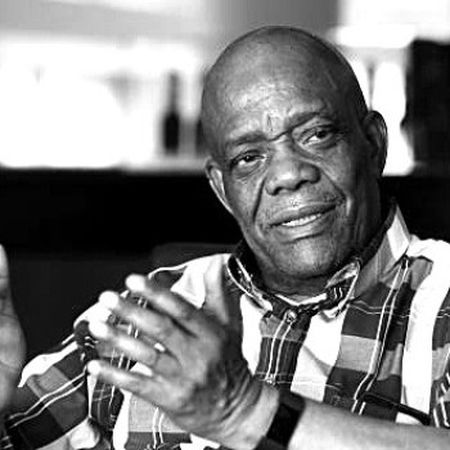
Job Mokgoro is a seasoned governance practitioner and scholar with extensive experience in South Africa’s government, including the intergovernmental relations system. Mokgoro has worked across spheres of government, civil society and academia to strengthen accountability, service delivery and citizen participation.