



/file/dailymaverick/wp-content/uploads/2025/09/label-Opinion.jpg)
South Africa’s medical aid industry has perfected a perverse science: paying for illness while starving health. It is a business model that treats the human body like a distressed asset, waiting for the inevitable crash because the salvage operation is more billable than the maintenance.
Your scheme will move mountains to authorise a R500,000 heart bypass, gruelling chemotherapy or years of life-consuming dialysis. But suggest a proactive programme for early screening or aggressive lifestyle intervention, and the silence is deafening. This is not an administrative oversight; it is an entrenched logic that prioritises high-margin curative care over the “soft” variable of long-term wellness.
This is not an abstract policy critique. It is a reality currently playing out in my own family. After a close relative was diagnosed with cancer, the medical aid authorised every round of treatment, drawing from an oncology benefit embedded in the plan. Yet that very “cure” resulted in severe bone density loss, a chronic condition that worsens daily. Medication exists to reverse this damage, serving as both a cure for current bone loss and a preventative shield against future fractures, yet the medical aid refuses to fund it from the oncology benefit with nearly R250,000 available.
In the cold mathematics of the accountants in the boardroom, they will pay for the surgery that fixes a broken body but refuse to fund the treatment that keeps it whole.
They would rather wait for a spinal fracture or a shattered hip, events that will cost 10 times the price in surgery and hospital stay, than invest in foresight today. This is the absurdity of a system that rewards the arrival of a crisis but punishes the foresight to prevent it.
While members fight for life-saving medication, the architects of this system thrive. With Discovery Health’s CEO earning more than R40-million a year and leadership at Momentum and Bonitas taking home multimillion-rand packages, the “lack of funds” argument rings hollow. They sit in glass towers and marble foyers built on the premiums of people being denied basic preventative care. They can afford executive bonuses that would pay for thousands of screenings, yet they ration health to the wealthy on “Platinum” tiers while leaving the rest on “hospital plans” that are little more than wait-and-see death warrants.
The profiteering runs deeper still through the mechanism of the medical savings account. Members pay exorbitant premiums into these accounts to cover day-to-day expenses, yet they earn zero interest on these funds. All the interest accrues to the scheme. It is legalised extraction: the medical aid profits off the “float” of your money while pocketing the returns, all while denying coverage for preventative care. It is another way of monetising sickness while starving health.
Enter the National Health Insurance (NHI). The government’s plan promises to pool resources and end this two-tiered betrayal by aligning healthcare with our constitutional values rather than corporate profit. In theory, the NHI could be the antidote, forcing a shift towards prevention. However, the gamble is existential: if the NHI inherits the curative bias entrenched by the private sector, it will not be a solution; it will be a national-scale disaster. Prevention must be the cornerstone of the NHI, or it will collapse under the weight of the very chronic diseases it fails to forestall. Without a fundamental shift, the state will simply replicate the private sector’s failures, collapsing under the weight of chronic diseases that should have been managed decades earlier.
So, what is the NHI?
The NHI is the government’s plan to create a single, publicly funded health system for all South Africans. Instead of millions paying into separate medical aids, everyone would contribute to one central fund.
- Purpose: To provide universal healthcare coverage, reduce inequality and ensure that access to care is based on need, not income;
- How it works (in theory): The NHI Fund would pool money from taxes and contributions, then pay hospitals, clinics and doctors directly for services. Private medical aids would be limited to offering “top-up” cover;
- Intended impact: End the two-tier system where the wealthy get private care and the majority rely on underfunded public facilities. Shift focus towards prevention, primary care and equity; and
- The gamble: If prevention is not embedded at its core, the NHI risks replicating the same curative bias and profiteering logic that cripple medical aids, but on a national scale.
To save South Africa’s health future we must move towards value-based healthcare (VBHC). This is not just a buzzword; it is a militant restructuring of how we value life that starts with replacing the “fee-for-service” model with outcome-based payments. Currently, doctors and hospitals are paid for how much they do, which rewards volume and sickness. Under a VBHC model, the system is rewarded only if a cancer survivor’s bone density is maintained and they avoid a fracture; if they snap a hip due to negligence, the system loses. We must incentivise schemes to keep patients out of hospitals, rewarding health outcomes rather than the number of beds filled.
This evolution requires a shift towards “whole-cycle” care bundles, where regulators mandate that preventative care, including the treatment of side-effects from chronic illness, be funded from the same pool as the primary illness. Instead of the current fragmentation that separates oncology from bone health, treatments must be funded as a single life-cycle bundle. If a treatment causes a side-effect, the cost of fixing that damage must be recognised as part of the original clinical responsibility. We can no longer tolerate a system that funds the fire but refuses the water.
Furthermore, we must demand absolute data transparency regarding “the float”. The interest earned on medical savings accounts must be legally ring-fenced and either returned to the members or reinvested specifically into mandatory preventative screenings for all members, regardless of their plan tier. This ensures that “found money” supports health rather than siphoning into executive bonuses. Finally, the Council for Medical Schemes must establish constitutional minimums by redefining prescribed minimum benefits (PMBs) to include preventative sequelae. This would mean that if a PMB treatment, such as chemotherapy, causes a secondary condition like bone loss, that secondary condition automatically becomes a funded priority.
The mathematics of neglect
South African medical schemes often justify their refusal to fund preventative medication by citing “limited resources”. However, a look at the industry’s 2025/26 financial data reveals a different story: one of extreme executive enrichment and a “sick-care” model that prioritises long-term billing over short-term prevention.
1. The cost of prevention vs the cost of crisis
In the case of post-oncology bone density treatment, the financial logic of the current model is demonstrably broken. By refusing a relatively small investment in medication today, the scheme effectively “books” a massive surgical bill for the future.
Phase of care | Current “sick-care” model | Value-based healthcare | The saving/the value |
| Initial treatment | R250,000 (authorised oncology) | R250,000 (authorized oncology) | Neutral: Primary care is essential in both |
| Secondary care | R0 (refused as “preventative”) | R18,000 (full funding of bone density med) | -R18,000: Initial investment in “the water” |
| The “event” | R180,000+ (hip/spinal surgery & ICU) | R0 (fracture averted via prevention) | +R180,000: Saving on catastrophic surgery |
| Rehabilitation | R45,000 (physio & mobility aids) | R2,500 (standard wellness checks) | +R42,500: Saving on disability-related care |
| TOTAL COST | R475,000 | R270,500 | R204,500 total saving |
2. Executive remuneration vs member care
While members are told their preventative treatments are “too expensive”, executive packages tell a different story. In the 2025 financial year, Discovery Vitality Health’s CEO received a total remuneration of about R92-million, while Discovery Group’s Hylton Kallner (CEO of South African operations) earned more than R50-million. Momentum Group’s CEO, Jeanette Marais, saw her total compensation rise to more than R60-million, an increase of more than 20%.
To put this in perspective: just 1% of the top executive bonuses at Discovery or Momentum could fund bone density medication for more than 2,500 cancer survivors for an entire year. The argument that schemes “cannot afford” prevention collapses under the weight of these numbers.
3. The ‘interest trap’ on member savings
The medical savings account is perhaps the most glaring example of legalised extraction. In 2026, schemes like Discovery and Bonitas continued to manage billions in member savings. While members believe they are building a safety net, the schemes typically keep all interest earned on the “float” of these funds. In 2024, the medical scheme industry recorded a net surplus of R3.13-billion, nearly double the previous year, driven largely by favourable investment markets. Yet none of this “member-funded” profit was channelled back into lowering the cost of preventative screenings or chronic follow-up care.
The table above proves that the “lack of funds” argument used by schemes like Discovery or Bonitas is a mathematical fiction. They aren’t saving money by denying bone density medication; they are simply deferring a much larger debt to a future budget cycle.
In a VBHC model, the medical aid would be forced to account for the R216,500 they would have lost if they let the patient’s health collapse. This is the militant financial logic that must accompany reform: prevention is not charity; it is fiscal responsibility.
Prevention or collapse
The numbers strip away the illusion. Medical aids are not saving money by denying preventative care; they are deferring debt, enriching executives and profiting from the float of member savings. This is not healthcare, it is extraction.
Section 27 of our Constitution promises the right to healthcare, not just emergency intervention at the point of collapse. Whether private or public, a system that prioritises billing for sickness over the protection of life is an insult to our democratic dignity.
The choice before us is stark: we either pivot to prevention through a rigorous value-based model, or we prepare for the total collapse of the system.
Medical aids have already been exposed as profiteers in a system that rewards illness. The NHI will either be the cure or the next casualty. And let us be clear: the glass towers, executive bonuses and interest skimmed from members’ “savings” are monuments to profiteering built on the suffering of ordinary South Africans.
We must fight for a healthcare system that protects life before it is threatened, not only after it is lost. Anything less is a betrayal of our Constitution and a surrender of our collective future. DM
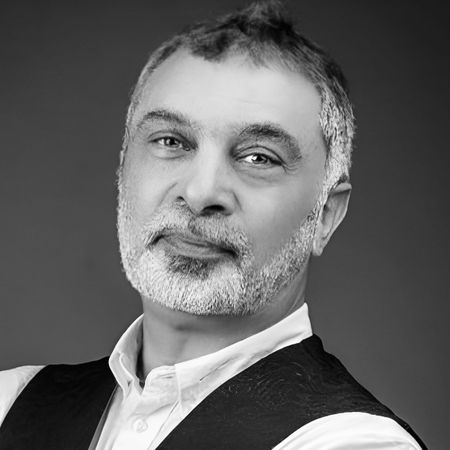
Murshid Obaray is a businessman, a lecturer in the school of commerce at a tertiary institution and a business coach. He serves on the board of an NPO called MOT, and on the Legal Practice Council’s disciplinary committee and appeals tribunal.