



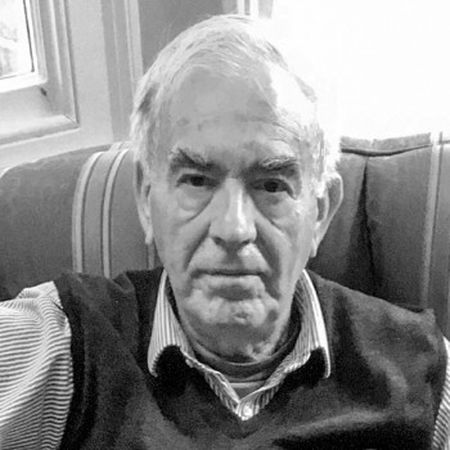
Leon Levy has died, aged 96. This is not an obituary, but a reflection prompted by his memoir, Back to the Front (Jacana, 2023).
The central chapters of a modestly brief account of a long life deal with his years in the struggle – as a Communist Party member, trade unionist, and political activist – and convey vividly the tenor and texture of left-wing politics at the time. These were the years from the late 1940s to 1963-64 at which latter point the political resistance to which Leon and many others were committed was effectively defeated: senior figures were imprisoned or exiled; the rank and file disarmed and demoralised.
Resistance politics was reshaped over the next two decades, underground, in exile and on the factory floor. But until the decisive defeat, Leon’s political trajectory illuminates many aspects of working class and popular resistance and the salience of the SACP, the ANC and the Congress Alliance in those struggles.
Leon’s parents, Mary and Mark Levy, were immigrants from Lithuania. Leon and his twin Norman were born in August 1929, the youngest of four children. His father died when Leon was six; to a heroic degree, his mother carried the family – financially, practically and emotionally – in her widowhood.
His parents were both associated with the Jewish Workers Club, and his father (the scant available evidence suggests) was a socialist. In addition to this family background, Leon’s route towards left-wing politics was shaped by four overlapping influences.
Firstly, he was an intensely bookish boy. His teenage appetite for reading saw him tackle British, French and Russian novelists and Greek tragedians; but he also devoured writings on 20th century history, and especially the Russian revolution – which in turn led him to Marx, Engels, Lenin, Stalin and Mao.
Radicalised
Secondly, deeply affected by the events of the World War and the Holocaust, Leon was radicalised in the Hashomer Hatza’ir, a left-wing Zionist youth movement (as were others, like Joe Slovo and Baruch Hirson).
Thirdly, Leon was influenced by an early exposure to Communist Party rallies and had vivid memories of hearing Hilda Watts (later Bernstein) speak at the first he ever attended. He was 17 when he joined the Communist Party and within a year became “an energetic, active and dedicated” member of the CPSA in the years immediately before the party dissolved itself in the face of the 1950 Suppression of Communism Act.
Finally, Leon insisted that his left-wing politics was also “a direct reaction to the daily racism and the economic inequalities so prominent in South Africa”.
After the banning of the CPSA – Communist Party of South Africa, the original name of today’s South African Communist Party (SACP) – Leon participated with a distinctive zeal in two quite different organisations.
One was the South African Peace Council, formed in 1950 by a group consisting largely of former CPSA members; it was linked to the World Peace Council which in turn was encouraged and supported by the Soviet Union. Leon succeeded Harold Wolpe as the body’s secretary in 1951 and remained in this post for a decade, attending and addressing countless meetings mostly attended by African men and women. This was enough to earn state surveillance and disapproval – and the Peace Council’s activities formed a sizeable part of the detailed charges against Leon, Helen Jospeh and others in the Treason Trial.
A second activity to which Leon devoted considerable time and effort was the remarkable Discussion Club. Indeed, “for many years” (he wrote), “no matter how busy I was with other activities, I regarded the Discussion Club as special”. Leon, along with two other members of the Wits University Communist Party branch, founded the club in the late 1940s and he served as secretary of its committee for nearly 10 years. (Many of us, I suspect, will know individuals who are elected or appointed as secretary because of their capacity for sheer hard slog in the pursuit of organisational goals!)
Resolutely non-sectarian
A central feature of the Discussion Club is that it was resolutely non-sectarian. It was addressed week after week, meeting on Fridays in members’ homes, by speakers who amounted to a Who’s Who of South Africa’s authors and creative artists, politicians, activists, scientists and scholars.
In May 1953 Leon became a full-time trade unionist at the age of 24. His political activism over the years had introduced him to full-time organisers and worker leaders and their example inspired him. To work in the labour movement, he explained, “became an increasingly obvious next step for me, an urgent and extremely practical way of expressing my political beliefs”.
It was a defining moment in Leon’s life, as he spent the next six decades and more working in trade unions, industrial relations and mediation. A few months before he became a trade unionist, Leon was recruited by Lionel “Rusty” Bernstein to become a member of the newly formed SACP, operating clandestinely and underground.
Leon’s first trade union position was as general secretary of the National Union of Laundering, Cleaning and Dyeing Workers. Within a year, he took on a second position, as general secretary of the Transvaal Food Canning and Allied Workers Union. Bannings under the Suppression of Communism Act had removed dozens of union leaders and officers, and Leon was one of a generation of younger activists who moved into the labour movement.
A chapter in Back to the Front is titled “My Apprenticeship: Learning on the Factory Floor”, and it tells a compelling story from within the non-racial trade unions of the time. “The class struggle is always with us, and no issue trumps it,” he writes at one point; and the details of day-to-day unionism make this concrete. There are memorable accounts of conducting union business under constant police surveillance and pressure.
A comrade and close friend of Leon’s was Lawrence Ndzanga of the Railway Workers Union (who paid the ultimate price for his work when he died in police custody in 1974). The pair used affectionate nicknames for each other: Lawrence was Zozo, and he called Leon “TsabaTsaba”, which translates as “here, there and everywhere”. Anyone reading Leon’s account of his years as a unionist will agree that the soubriquet was well earned.
In 1954 the National Party government published the first draft of what became the Industrial Conciliation Act of 1956, seeking to force separate trade unions for white, coloured and Indian workers and to exclude African workers from membership of registered unions.
A minority of trade unions set out to defy the legislation and to create the first non-racial trade union federation in South Africa. This aspiration was realised when 19 multiracial unions launched Sactu (the South African Congress of Trade Unions) in March 1955. Leon was elected national treasurer – but months later succeeded Piet Beyleveld as president of Sactu, remaining in that position for nine years.
Sactu served directly political as well as trade union purposes, identifying itself from the outset with support for national liberation and the abolition of apartheid. It took its place as one of the five organisations which formed the Congress Alliance.
Freedom Charter
As Sactu leader, Leon served on the committee which directed the activities of the Alliance; he was present at Kliptown when the Freedom Charter was adopted – and as Sactu president was one of the five original signatories of the Freedom Charter. Sactu was the precursor to Cosatu, a trade union federation linked broadly with the ANC and its allies,
Political activism of this order came at a high price. Leon Levy was served with banning orders and arrested several times; he was Accused No 4 of the 156 people arrested and charged with treason, and from November 1958 was one of the final 30 (and with Helen Joseph one of only two whites) who faced charges until the trial was finally dismissed in March 1961.
Even as the trial dragged on, Leon remained focused on his Sactu responsibilities, visiting the office before and after court sessions and at weekends. Helen Joseph provided a graphic vignette in her memoir If This Be Treason: “during the trial there were days on end when he could have heard nothing of the proceedings, for there he was, union files and cards spread out on each side of him, or on the seat of the bench in front of him making his many entries”.
He was detained for five months during the 1960 State of Emergency. In May 1963 he was the first person to be detained under the notorious General Laws Amendment Act, known as the 90-Day Act. Now banned from working for Sactu, unable to continue his political work, he took the lonely decision in his cell to go into exile.
On the day after his release from detention, in July 1963, Leon arrived at Heathrow, “unwashed, dishevelled, and completely bewildered by an atmosphere of freedom”.
He and Lorna had married on May Day – naturally! – in 1962. In Britain over the next three decades Leon studied politics, economics and industrial relations at Oxford – and then applied what he had learned in a series of positions in industrial relations. Lorna became deeply involved in Labour Party politics at local government level.
After 1994, Leon was determined to make the skills and knowledge that he had acquired available to a democratic South Africa – and he and Lorna returned to the country of their birth in 1997. In a remarkable final phase of his career, Leon took office shortly after his 70th birthday as a full-time commissioner for the Commission for Conciliation, Mediation and Arbitration – and spent the next 19 years in this capacity.
His return was a journey not only to the land of his birth, but also back to the front of labour relations and human rights that had been the focus of his political life during his years in the Struggle.
Lessons
Rereading Leon Levy’s autobiography, I wondered what lessons – if any – are offered to young activists on the South African left today by his years as a communist, trade unionist and Congress Alliance activist? Contemporary South Africa is different in many ways from the country during the early years of apartheid and increasingly authoritarian rule. But colour-coded capitalism remains intact: workers continue to be exploited; the poor remain marginalised; structural unemployment is a central reality. And perhaps there are aspects of his experiences that may be relevant to those who strive for progressive alternatives to the present social order.
Might they feel the need to match the commitment and sheer hard work involved in the Struggle: to find the will to keep going in the face of apparently intractable structures and circumstances? Will they recognise how important it is to be prepared to learn?
Leon, on his first immersion in trade union work, read and reread the minutes and archives of the unions he had joined; he sought out his predecessors in working class movements and drew deeply on their experience and insights; his day-to-day activities – negotiations, organising, recruiting members, attending meetings, interacting with employers and managers – were crucial.
He became “increasingly practised in taking a position to the limits of safety and leaving some room to avoid the consequences of defeat”. In Sactu, Leon drew deeply on international experiences elsewhere: writing his memoirs 60 years later, he recalled the lessons learned from activists who had visited Eastern Europe, Russia and China; he revisited the links Sactu forged with decolonising and Pan-African movements elsewhere; and he strove to translate his readings of the struggles within the Congress of Industrial Organisations (CIO) in America in organising workers in mining, steel and railways.
What comparable practical and theoretical political education might be necessary today? And finally, as did Leon and his comrades, today’s activists must find purpose and hope by retaining a vision of what might be and committing themselves to turning visions to victory. DM
Colin Bundy is a well known South African historian. Now formally retired, he has authored several acclaimed books on South Africa, besides having been Vice-Chancellor, Wits University; Principal of the School of Oriental and African Studies (SOAS), London University; and first Principal of Green Templeton College, Oxford University. He is also a longstanding Alternative Information and Development Centre (AIDC) Associate.