



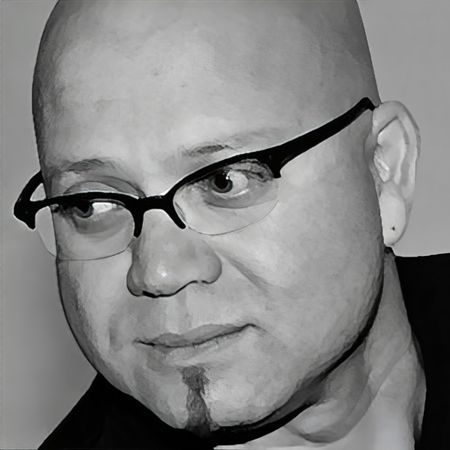
There is a great temptation to tie political movements or historical shifts to individuals or personalities. It’s easy. There is much evidence to support the idea that personality matters. It does. It can. In a limited way, though.
“Character” is a better way to describe political behaviour. It helps explain how ethical or moral choices are formed over time and place. If, however, we look at the arc of history, personality or character become almost ancillary. There are standout examples of personalities or characters that draw our attention. Let’s use the example of Donald Trump. (We will get back to John Steenhuisen below)
Trump has a powerful and unique personality. His character is dead dodgy, but that was developed over time and place. In this sense, Trump may be seen as an outcome of a long-run historical process of capitalism tied to particular notions of freedom — a libertarian axis where classical liberalism meets missionism and authoritarianism.
The US always presents itself as being on a divine mission — an idea more than a country — and such divine inspiration tends to lead to authoritarian behaviour. The divine cannot be challenged, as most religious texts would insist. Trump’s presidency is the culmination, then, of everything that the US has stood for, domestically and around the world, and which was, in places, forced into being through structural and physical violence.
To understand the “structural”, consider the long run, from the conquest of indigenous people, slavery and Jim Crow. The physical is understood this way: political order is necessarily underscored by the threat or actual deployment of military force. If you’re sufficiently impressed by The New York Times’ columnist Thomas Friedman, you might recall one of his fits of honesty, when he said (in his book The Lexus and the Olive Tree: Understanding Globalization), back in 1999, the time when everyone was smitten with consumer capitalism qua corporate-driven globalisation:
“The hidden hand of the market cannot flourish without a hidden fist … the hidden fist that keeps the world safe for Silicon Valley’s technologies to flourish is called the US Army, Air Force, Navy and Marine Corps.”
It’s almost always good to take people at their word… Friedman was simply being comfortable, without any sense of embarrassment, and was, and probably remains, a prime exemplar of class self-representation. Surely, it is still acceptable to be critical of people who have unfettered power and control over public policies or public discussions.
Friedman’s statement was an echo of the words of that one-time journalist and German thinker who explained that the way individuals self-describe depends on the material conditions of their production. I doubt that Friedman was inspired by Karl Marx. Good and evil aren’t absolute — they are shaped by the world we live in. Ultimately, history moves the needle more than any single person can. We can, now, get to John Steenhuisen.
It’s not us, John, it’s you
Steenhuisen’s announcement that he would vacate his leadership position in the Democratic Alliance is somewhat meaningless in the arc of South African politics.
In the short run, the emergence of a Government of National Unity is a greater shift in power relations than the individual. The political economic force of which Steenhuisen has been a part has been underway for decades, centuries actually.
As a personality, Steenhuisen will not be remembered in the same way as Helen Suzman; it’s still desperately disappointing that she has been beatified… Let’s leave that aside.
The historical force referred to here (we should probably feed the trolls by directing their indignation to Giambattista Vico) is an issue that has been relegated and ghettoised to apparently obscure and esoteric regions of South Africa’s intellectual landscape.
The landscape that is foregrounded is one shaped by the outcomes of what I would describe as the Codesa Compromise. The one that is in the intellectual ghettos rarely makes it into the news media. Even when it is raised, the legatees of the Codesa Compromise, blessed as they were by the sacred touch of Nelson Mandela, that “laying-on of hands” described in Mark 10:16, or Matthew 19:13–15, dismiss it as “propaganda”.
It is important to remember that ghettos were created, quite purposefully, as early as the 16th century, and by the 1800s were used to segregate Romani people from European cities. To ghettoise an intellectual tradition is, then, a form of segregation. With that as a backdrop, Steenhuisen is irrelevant in the arc of history, because of the force of the Codesa Compromise, securing settler-colonial dominance and control of the economy and finance, with black people in window seats, or as staffriders.
The Codesa Compromise means we should discuss only “the economy”, “finance” and “the markets” while waging a war on remembrance, and dismisses calls for accountability as reverse racism or oppression.
White monopoly capital
To be clear, the rhetoric of “white monopoly capital” is unhelpful and effective only as an instrument of propaganda. Significantly, the black middle class has been assimilated by the (once exclusively white) bourgeoisie, and the working class (and peasantry) are seduced by the aspirational wealth held by white settler colonists.
What I allude to is that there will be “non-white” people who join the exodus from the ANC to the “white” side of the historical divide. This “aspirational wealth” explains why poor people in the US voted for Trump — they believed they could become as wealthy as him. Or that he would make life affordable. That has soured.
A strict class analysis would suggest that poor people vote because of the redistributive policies of social democrats or socialists, but the evidence suggests that people may also vote for private benefits, and the prospect of the wealth and prosperity reflected by candidates.
It is, then, the system that spewed out John Steenhuisen; the system that was produced by the Codesa Compromise and that directs discussions back into intellectual ghettos.
What the legatees of the Compromise need is a more forceful person, not a cherubic, corpulent feller. They want a feller who can put Big Money to better use, get the ANC out of power and restore the country to the kind of society that produced stupendous wealth for a group of people who went from “fighting back” after 10 May 1994, to now wanting to “rescue South Africa”.
That is presented as a better understanding of the Dear John letter that Steenhuisen received. It should come as no surprise that the cherubic (corpulent) mayor of The Best Run City in the Country ™ has been put forward as a replacement for Dear John. We should, also, not be surprised if the DA finds and places a black face in the Eucharist that was the Last Supper.
All of the above is a mangle of imagery and metaphors, analogies and allusions. But, there is great literary and theatrical value in mimetic fracture. DM