



/file/dailymaverick/wp-content/uploads/2025/09/label-Opinion.jpg)
While the debate currently raging in the country is ostensibly about the utility of Broad-Based Black Economic Empowerment (B-BBEE), the subtext reveals broader scepticism about the necessity of affirmative action itself.
To be sure, the B-BBEE programme, in its more than 30 years of existence, is not exactly covered in glory. For instance, its model for the development of small and medium-sized enterprises, which are acknowledged creators of good jobs in communities, has been rigid and sometimes self-defeating. An example of this is the requirement that loan applicants contribute a percentage of their own funds to demonstrate their skin in the game. This is onerous to the point of forcing many aspiring entrepreneurs to give up, having failed to find the required money. Those who manage to raise the needed money often do so by surrendering a disproportionate share of equity in the prospective business. Surely there are other ways of doing this.
And then, of course, the B-BBEE programme is replete with examples of shoddy quality, which results in supposedly completed jobs having to be redone at significant cost, a blatant abuse of taxpayer money. The landscape is dotted with abandoned construction sites, housing developments, road repair works that multiply rather than close potholes, and so on. This is to say nothing about government employees who expect under-the-counter payment to facilitate the approval of a business proposal.
The plethora of these deficiencies and malfeasances notwithstanding, the DA’s proposal to scrap B-BBEE and replace it with an Economic Inclusion for All Bill whose focus is on “poverty as a proxy for disadvantage” conflates two very distinct issues.
To quote a famous proverb: “Give a man a fish, and you feed him for a day; teach a man to fish, and you feed him for a lifetime.” B-BBEE is all about creating a new economic landscape by supporting entrepreneurs through investment in enterprise skills.
Poverty alleviation programmes – as the DA should know – address an entirely different need. Not everyone who needs social support has either the desire or the potential to become an entrepreneur. And so, poverty alleviation in its own right remains a vital objective for this country.
As for the DA’s stated concern with “inclusivity”, herewith some widely available statistics: the highest levels of unemployment in the country occur among African/Black and “Coloured”/Black youths (Statistics South Africa, World Bank). Black women are the most severely affected, with an unemployment rate of 40.2%, compared with 31.0% for men. Black Africans account for 93.6% of poverty, whites less than 1%. And, about 4.1% of white South Africans live below the poverty line, compared with 64.2 % for Black South Africans. Poverty in South Africa is also displayed through food insecurity and malnutrition, limited access to quality education and job opportunities, high levels of crime and violence, etc – all of which are typical black phenomena.
There can be no gainsaying the fact that South Africa is in the present situation because of the colonial project through which British and Dutch settlers who, having dispossessed native people of their land, went on to deny them their fundamental human rights. The refrain these days is: What has the ANC government achieved in 31 years?
I offer no apologia for government failure, which has been manifest since the days of State Capture and persisted thereafter as corruption became endemic. But even at its best, the ANC’s span of years in office couldn’t have reversed the damage caused by 342 years of legislated exclusion from the country’s economic, political and social development by people whose only fault was that they were not classified as White.
The DA says it would like to see B-BBEE scrapped because it “primarily enriches a narrow group of ‘tenderpreneurs’ and politically connected individuals”. Hello! Surprise, surprise! Venality in Mzansi vigorously transcends our perplexing racial divide. Some folks have suggested that the DA deserves plaudits for showing concern for the large number of blacks who have been denied access to contracts that tenderpreneurs and their “rainbow coalition” associates hog. But others are sceptical of the party’s seeming embrace of those who labour.
They contend that the DA would rather the entire black community, tenderpreneurs et al, remained mired at the foot of the socioeconomic development ladder. Personally, I think they’re being grossly unfair. Surely they should know that the DA is a key member of the country’s governing coalition, the Government of National Unity (GNU). The problem with this shorthand, by the way, is that it tends to confuse people who are familiar with the country’s wildlife. They know of a robustly built African antelope the Khoisan have been calling a gnu since time was young. That period precedes the arrival in their land of Dutch settlers whose descendants decided that, actually, this animal is a “wildebeest”, probably unaware that the buffalo and antelopes such as the eland, oryx and greater kudu are all wildebeeste in their own right. Mind you, the Khoisan have names for all of those other “wildebeeste”.
Never mind, conquerors will always have the last word. This writer was once officially designated “a Bantu male”. That it is absurd to call an individual “a Bantu male” instead of a “muntu male”, the applicable appellation when referring to one person, is too trivial a distinction to be of concern to a “muntu” who is descended from the powerful ones. But importantly, contemptuously labelling a people “Bantu males and Bantu females” cleared the way for the powerful ones to call themselves Afrikaners, contest disbarred. But be ye not discouraged, for The Good Book and Pete Seeger tell us that “For everything there is a season, and a time for every matter under the heavens: a time to be born and a time to die…” Gone already is “a Bantu male”. Ons is maar almal Afrikaners nou, if you spell it in English.
History has bequeathed contemporary South African society the legacy of race inequality, whose social and economic impact has only been moderately addressed by the belated introduction of universal suffrage on 27 April 1994. On that date, everyone acknowledged, I would like to believe, that South Africa belongs to all who live in it, as stated in the Freedom Charter. It would, therefore, be in the best interests of all South Africans, collectively, to commit to changing the still lingering race-based socioeconomic disequilibrium. Talk about achieving victory sans casualties.
My confident assertion is that while contemporary white South Africans, taken as a group, are beneficiaries of our racist history, they are not responsible for it: not in reality and not in law. Fortunately, ubuntu/botho doesn’t subscribe to the biblical declaration in Exodus 20:5, which says, “the sins of the father are to be laid upon the children”. Abantu/batho are with Ezekiel 18:20, who counters by saying, “the son shall not bear the iniquity of the father”. Ubuntu/botho encompasses the essential human virtues of compassion and humanity, whose guiding philosophy is that “there is a need for understanding, not vengeance, ubuntu, not victimisation”.
So, vengeance is not in the equation that redresses past injustices. But requisite measures have to be taken to end the current status quo of the country of two nations, one black and one white, in order to usher in a South African nation. This affirmative redress will require a multidimensional approach that combines economic restructuring, targeted social investments and enhanced governance of the country. Should this fail, turbulence lies in wait, to put it mildly.
People who oppose race-based redress are burying their heads in the sand. South Africa requires a massive injection of resources and a restructure of our education and social services systems to address widespread poverty. Unfortunately, the DA’s latest manoeuvre invites unnecessary division. To get back on track, South Africa also needs an overhauled system for building and supporting entrepreneurs, and revamped anti-poverty measures. Anyone trying to mix up the two approaches is being disingenuous.
When, in May 2024, the electorate decided remove the mandate of governing South Africa from a single party, some of us thought the ANC, as the largest party, would invite the DA, and the Inkatha Freedom Party, its partner in a fragile coalition in KwaZulu Natal, to form a stable national working coalition that would have cut the citizens a good deal. In the national election, this trio of parties garnered a combined majority of about 67% of the total vote, more than two-thirds of the votes needed to pass certain important bills. Such an alignment would have been based on sheer pragmatism.
It would have given the DA the opportunity of a role at national government level, while the President would have revamped ANC performance in Cabinet by introducing some of the fresh, young brains who currently warm Parliament’s back benches. The ensuing performance contest in Cabinet would have brought smiles to the faces of the long-suffering Mzansi citizens who are saddled with persistently northward-bound poverty, unemployment and crime rates, including gruesome gender-based violence. Simultaneously, the horizontal gross domestic product graph would begin its long-awaited upward tick.
Instead, the nation has been given a GNU that has too many moving parts, a scenario my physics professor always counselled against, if one intended to move quickly from point A to point B. In consequence, we are treated to a spectacle Zulu speakers describe as ukubhaxulana koxamu, which translates into “monitor lizards lashing at each other with their tails (in a muddy puddle)”. Populist grandstanding constantly tells the public, “we are in charge”. Not to be outdone in this infantile tomfoolery, another set of “united” participants in the theatre of the absurd does its best to assure its hidebound supporters that it is not a puppet of its detestable partners in government. To prove the point, they try to embarrass them at the slightest instance. And then there is a moving part that is changing like a mad bull, making nonsense of the country’s foreign policy on the Israel-Palestine conflict.
South Africa is in a coalition frame for the foreseeable future. If that constitutes a crisis, heed the famous English bard, William Shakespeare’s advice: “There is a tide in the affairs of men which, taken at the flood, leads on to fortune; omitted, all the journey of their life is bound in shallows and miseries.” Whither South Africa? DM
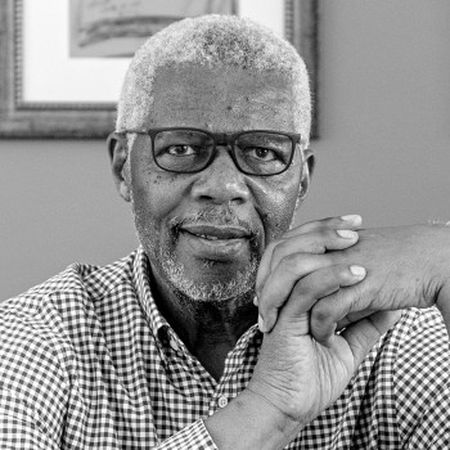
Mavuso Msimang, an MK and ANC veteran, is a co-founder of African Parks and the former CEO of SANParks.