



The trajectory of markets in 2026 was always likely to hinge on one question: how much liquidity would continue sloshing through the global financial system? Years of loose monetary policy have encouraged investors to assume that abundant central bank support is a permanent feature of the financial landscape. Last week, however, markets received their first indication that this era may be ending.
When Donald Trump announced his choice last week to succeed Jerome Powell as chair of the Federal Reserve, many on Wall Street expected a cowering dove who would cut interest rates at the behest of the White House, reigniting inflation. Instead, he nominated Kevin Warsh, a former governor with a reputation for orthodoxy and an enduring suspicion of monetary largesse. The impact was immediate and, to many investors, expensive.
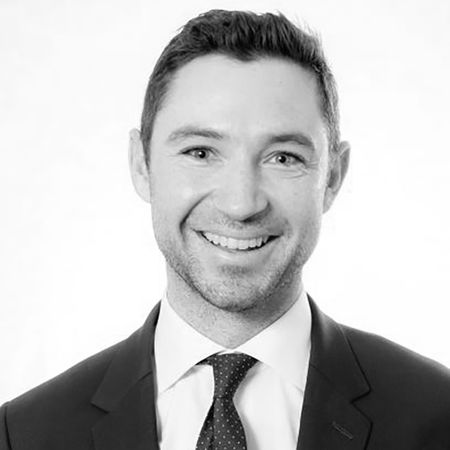
/file/attachments/orphans/AFP_20260130_94JP7ZQ_v1_HighRes_FilesUsEconomyPoliticsFinanceCentralBank_476963.jpg "Kevin Warsh, US President Donald Trump’s nominee for the next head of the Federal Reserve. (Photo: Kevprl Djansezian / Getty Images / AFP)")
Last Friday, following Bloomberg’s leak of the news, the dollar strengthened by more than 1% against a basket of currencies, a massive move for the world’s reserve currency. Gold, which had been setting record after record, crashed 13%, its worst day since 2013. Silver, which has also been an investor darling of 2026, had its worst-ever day on record, falling a jaw-dropping 31%. So-called “digital gold”, bitcoin, was also shellacked. It is now down 14% since last Wednesday and 38% since October.
The message was clear; markets had been pricing in easy money. They were suddenly forced to reconsider.
The debate over Warsh’s suitability for the job has focused on whether he is a hawk or a hypocrite. Admirers applaud his consistent hostility to quantitative easing and his insistence that central banks should return to the first principles of monetary policy. Critics accuse him of being a blatant careerist, softening his views whenever his professional advancement required it. Neither label really matters, though. What counts is whether his ideas are plausible in today’s highly leveraged and polarised political economy.
Read more: Five things to know about Kevin Warsh, nominee for next Fed chairperson
AI and the interest rate
His views, in their essence, are strikingly simple. To achieve faster growth and lower inflation, Warsh argues, the Fed should cut interest rates while shrinking its balance sheet. In most macroeconomic textbooks, this combination would be seen as contradictory; lower rates stimulate borrowing, while a central bank selling assets absorbs liquidity and restrains credit. For him, however, the two are complementary.
His reasoning rests on a wager about technology. Artificial intelligence, he argues, is about to unleash a productivity surge that official statistics have yet to capture. Output per worker, he believes, is rising invisibly, hidden by defunct measurement techniques and unmeasured diffusion of AI tools. Central bankers who wait for confirmation of this in the data will be doomed to be behind the curve, equivalent to driving forward by looking in the rear-view mirror.
“So let’s say you are a central banker… if you are looking at the [economic] data, my view is you are backward-looking; you are going to be late. You are not going to realise the country is able to have non-inflationary growth faster,” he surmises.
Like Alan Greenspan in the early days of the internet, central bankers must trust their instincts. In the 1990s, Greenspan resisted calls to tighten policy despite rapid growth, betting that productivity gains would keep inflation in check. He was largely vindicated, despite his later proclivity for the “Greenspan Put” arguably leading to the subprime crash. Warsh believes a similar effect will be forthcoming from AI.
The problem is that this amounts to what some economists call “conviction economics”, or policymaking shaped more by belief than evidence. This is the exact opposite of what Powell, and indeed most central bankers of his generation, pride themselves on: data dependency. Warsh proposes something closer to informed speculation. This could be prescient, or just reckless.
Next up: shrink the balance sheet
This belief on interest rates is paired with an equally firm conviction about the Fed’s balance sheet. He argues that asset purchases, such as the quantitative easing seen post financial crisis and during the pandemic, have inflated financial markets without having any real or meaningful effect on the real economy. They have, in this reading, exacerbated inequality and mispriced capital. Easy money on Wall Street has paradoxically tightened conditions on Main Street. It is hard to disagree.
By shrinking its $6.5-trillion portfolio of securities, the Fed could, he argues, restore discipline while freeing room for lower rates. Capital would be allocated more efficiently, in theory. Risk would be priced more honestly. Savers, long punished by artificially low returns and forced to take punts in the stock market and on crypto, would finally see some reward.
Though Warsh does not say so explicitly, this is a bet, too. No modern central bank has reduced its balance sheet on this scale without provoking bouts of market distress. Previous attempts at “quantitative tightening” in 2018 and 2019 ended abruptly when liquidity dried up and markets seized. The financial system has since become even more dependent on short-term liquidity.
Liquidity is plentiful partly because the US government issues torrents of debt to finance its chronic deficit. Something needs to mop it up. If the central bank starts selling its holdings of debt, thereby reducing the liquidity needed to fund US borrowing, it risks exposing structural fragilities in the system, which easy money has long concealed. The market ructions last week could be an early taste of what is to come.
Warsh, however, rejects this notion. He argues that it is the converse; monetary expansion has led to fiscal irresponsibility. By keeping borrowing costs artificially low, the Fed has enabled politicians to postpone difficult choices. Debt has risen because it has been made artificially cheap.
This is a coherent philosophy. It is also completely untested in practice and potentially unworkable. Few central bankers have managed to materially shrink their balance sheets, and none have done it under the glare of today’s hyper-partisan politics.
The test will come if one of these two bets goes wrong. If rates are cut despite stubborn inflation, and CPI starts spiking yet again, will he reverse course at the risk of market turmoil and anger out of the White House? Or, if balance sheet shrinking triggers liquidity shortages and the short-term funding market goes into tilt, will he relent and start printing again?
Muzzle velocity downwards
Steve Bannon, Trump’s consigliere, once spoke of “muzzle velocity”. The speed of a bullet leaving the gun, it was the pace at which Maga’s controversies and policy mayhem are meant to overwhelm opponents. For now, the only thing moving at muzzle velocity is the decline of assets inflated by the “Maga trade”. Crypto and precious metals, once hailed as protection against dollar debasement, have proved to be the most vulnerable to monetary sobriety.
This matters politically as well as financially. Many of the president’s supporters embraced these assets as symbols of independence from institutions they distrust. Their losses may translate into resentment, especially if economic growth disappoints.
The next few months will reveal whether Warsh’s theories can survive contact with reality. They may also determine the political fortunes of the president who appointed him. In an era already marked by risky economic and political experiments, the US appears poised to embark on yet another gamble.
This time, the soul of its central bank is at stake. DM