



/file/dailymaverick/wp-content/uploads/2025/09/label-Opinion.jpg)
A recent opinion piece in Daily Maverick by botanist Eugene Moll bemoans the “loss” of mature marula trees in the Kruger National Park and points a finger at elephants as the cause. It’s a powerful image: huge grey beasts pushing over large trees, stripping their bark, breaking their branches and causing their die-off. For many readers the conclusion is clear: there are too many elephants and what is needed is for elephant numbers to be reduced. It’s a widely held view (see Carnie, Pinnock) – it is also deeply misleading. The real conservation question is not whether Kruger has “too many elephants”, but whether the processes that shape its savannas are functioning.
Ecological systems are complex and when we reduce them to simple stories, we lose important insights and risk making poor decisions.
Full disclosure: in the 1980s, one of us (Dave Balfour) studied under Moll, whose teaching contributed to a lifelong love of trees, savannas and the exploration of ideas, which is the point of this piece.
Moll’s piece invites a response as it plays into a common narrative and reinforces what is known as “the elephant problem” – an oversimplified view that links the death of large trees with elephant numbers in Kruger and other protected areas. Contemporary savanna science and management allows us to craft a more nuanced view that embraces ecological complexity and leads to different conclusions.
Elephant numbers vs elephant activity
Much public debate about the elephant problem tracks the following logic: we see dead or damaged trees with signs of elephants being involved – bark stripped, branches broken or a trunk that has been pushed over – and we interpret this as evidence of too many elephants. We then conclude that their numbers need to be reduced. This intuitive response may feel right but it is poor ecology. What matters most for trees is not the number of elephants in an area, but what they are doing, and this depends on which animals are present (bulls or breeding herds), how long they are in the area and what else they are eating. Why do we say this?
Two recent scientific reviews (here and here) found weak links between elephant density (numbers) and negative consequences for biodiversity. This is not to say that elephants do not change their environment, and this can be locally dramatic, but when one assesses the overall effects, they are mostly limited and can be positive or negative. The impact of elephants on trees varies considerably depending on the context. There are no predictable or consistent outcomes, and more elephants does not automatically mean more damage to trees.
The reason is that elephant behaviour varies between bulls and breeding herds and is highly selective and patchy in nature. Elephant behaviour changes with season, rainfall and the availability of grass and water. Not all trees are equally favoured. A single bull that lingers at a marula tree can have considerably more impact than a passing breeding herd. Elephants are mixed feeders, switching their feeding between trees and grass. When grass quality is good and widely available, it is often more digestible than woody material and elephants preferentially eat grass. This means that the relative abundance of grass and trees, which is influenced by rainfall, soils and fire as well as the presence of other herbivores, is also part of the story.
Reducing this complex ecological world into a simple numbers game – that is, there are too many elephants – channels our thinking into a world of “stocking rates” and “carrying capacity”, ideas that are more suited to optimising production in an agricultural context than managing the dynamic complex world of ecology and biodiversity. At best, setting targets and managing towards a desired number of elephants for a park with the size and spatial complexity of Kruger is effectively a scientifically cloaked thumb-suck. It feels like sensible management, but it is false comfort, and certainly not sound ecological insight.
What are we managing for
So, does this mean we should not manage protected areas? Clearly not. The first step in managing is to set goals; once we have these clearly stated we can make choices about appropriate interventions. Earlier generations of managers commonly sought to manage towards a certain aesthetic – predictable scenery with open grasslands here, thickets there, big trees lining river banks. Their primary tools were structured burning plans, fencing, large mammal population control through culling and the provision of artificial waterpoints in dry areas. Parks were treated like large game farms.
Increasingly, as our understanding of the role of nature and ecosystems in human wellbeing develops, conservation objectives have shifted towards biodiversity more broadly and towards keeping ecosystems as intact and functional as possible. Doing so requires accepting complexity and change as part of the deal. It means recognising that elephants are not just “tree killers”, they are also important ecosystem engineers. For example, elephants open up thickets and create habitat mosaics that other species respond to; they constantly maintain and change savanna structure and influence ecological processes.
Using these more contemporary ideas, the questions that managers ask will change. Rather than asking “what is the right number of elephants?” we should be asking “where are elephant impacts on important species becoming detrimental and why?” Where elephant impact becomes a concern, we need to ask what the driving dynamics are and use the answer to devise a management response. This approach is very different to simply deciding that an area has too many elephants and seeking to reduce the numbers.
Is Kruger really a closed system?
Moll’s piece asserts that Kruger is a “closed system” – that is, a fenced island from which elephants and other large mammals are neither able to enter or leave. This is simply not accurate.
In the past decade satellite and GPS collaring studies have documented elephants moving between Kruger and neighbouring areas in Zimbabwe and Mozambique, reflecting an important success of the Great Limpopo Transfrontier Conservation Area (GLTFCA) which seeks to integrate ecological landscapes. Evidence that elephants are able to move regionally is also found in genetic work that demonstrates breeding links between elephants in Kruger and animals as far away as Chobe National Park in Botswana. Clearly the genes, and thus the elephants themselves, are crossing both park and political boundaries.
Kruger is not a system with no constraints on elephant movement, but neither is it closed with no movement in and out – it lies somewhere on a continuum between the two. This matters ecologically and the knowledge that this is so should influence our thinking for conservation management.
Can we judge Kruger’s health based on perceptions of one tree species
Moll’s concern is anchored on a single species, the marula. When large marula trees, especially highly visible individuals that are growing near to popular tourist roads, are impacted by elephants, it’s easy to see why some feel a form of collapse is taking place. But from a conservation ecology perspective, Kruger is embedded in a substantially larger landscape. At this scale, there is anecdotal evidence that large marulas are increasing in parts of the GLTFCA and declining in others. This pattern of local variation across a region is consistent with what we might expect ecologically.
In general, savanna trees do not regenerate in a steady manner. Rather, recruitment of young trees is an episodic process, and seedlings survive and grow in limited windows of time when sufficiently favourable conditions align. Relatively low grazing/browsing pressure, coupled with well-timed rains and less-intense or patchy fires are documented as influencing savanna tree recruitment, and commonly lead to a cohort of similar-sized individuals becoming mature trees in an area.
Like any living organism, marula trees also all die at some point. Their death is caused by many factors including fire, drought, floods, wind and yes, elephants. Having largely reached maturity as a cohort, one can reasonably expect to see many mature marulas dying over a few decades as the life of the cohort comes to an end. If elephants are present at the time, they are likely to be part of the process but blaming an entire wave of marula deaths on elephants risks mistaking coincidence for cause. It is also worth noting that Kruger’s marula trees were dying long before elephant culling began in the 1960s and continued to die during the culling era. Death alone does not equal degradation.
Kruger’s natural experiment
Kruger’s history presents a fascinating natural experiment in management choices.
From the late 1960s to mid-1990s, park authorities applied a strongly interventionist approach to management. Elephants were culled to keep their numbers to about 7,000. Buffaloes and hippos were culled to protect the grass. Fire was applied in rigidly administered block-burn patterns and artificial waterpoints were established in areas of little or no permanent water. At the time the fences were relatively intact, effectively limiting large mammal movement in and out of the park.
If the simple “too many animals damage ecosystems” narrative was true, we might expect this period of tight control over elephant numbers to have produced a thriving large mammal community and healthier biodiversity, but the opposite is true. Many large mammal populations declined, and some rare species, such as roan antelope, came close to disappearing from Kruger altogether.
From the 1990s Kruger’s management philosophy began to shift. Elephant culling was stopped and the population began to increase. The network of artificial waterpoints was reduced, re-establishing more natural dry-season water availability gradients. Fire policy shifted to patchier, more variable intensity burns that more closely mimic natural fire patterns, and about one-third of the park’s boundary became unfenced or “leaky”, improving connectivity with neighbouring areas.
What happened next? Most large mammal numbers began to increase, with the exception of black and white rhinos, which have been targeted by poachers for their horns in much of the 21st century.
In this context, tall trees are often cited as being vital as nesting and perching sites for vultures, and their fate is sometimes linked to elephants. In reality, vulture population trends are mixed. Some species have gained, while others have declined. As with rhinos, the fate of vultures appears to be less linked to ecological dynamics and more to human activity. Poisoning of carcasses remains a far greater and more direct threat to vultures than elephant feeding behaviour.
To be clear, this history does not prove that “more elephants leads to healthier ecosystems”, but it does illustrate the risk of simplistically assuming that fewer elephants will lead to better conservation outcomes.
So, what should Kruger look like?
Underlying the debate about marulas and elephants lies the widely held perspective that Kruger should look a certain way. For many, that vision matches their early experiences of the park, possibly including widely scattered, healthy looking marulas. While these memories matter emotionally, they are poor indicators of an objective ecological baseline.
Savannas do not have a single “ideal” or relatively stable “balanced” state. They shift between many natural configurations depending on rainfall, fire, herbivore use and history. At different times, the same landscape can be more wooded or more open, even flipping into different “states” which can all be valid expressions of a healthy ecosystem.
Kruger’s past is illustrative of this dynamism. Before the 1700s, elephant density may have been similar to what it is today. By the late 1800s, hunting for ivory reduced numbers to somewhere estimated to be in the low hundreds. Around the same time many large mammal species’ numbers collapsed in the wake of the rinderpest outbreak. Additionally, historic evidence suggests that tens of thousands of people were living in what later became Kruger and they were hunting, grazing livestock and cultivating crops along rivers. This was the situation when the early portions of Kruger were first proclaimed.
Jumping forward in time, all of this means that the look and feel of Kruger between the 1960s and 1980s – with its particular tree and wildlife mix – was not illustrative of a timeless African garden. It was one moment in a millennia-long trajectory that is likely to never be recreated. A 30-year view may suggest a collapsing species, the marula, but a 200-year view may suggest an ecosystem adjusting after significant disturbance and responding to restored large mammal populations, more normalised fire regimes and natural water distribution patterns as well as reconnecting landscapes. On top of that, it is also an ecosystem responding to a changing climate.
Rather than asking what Kruger should look like, ask what species and processes should Kruger sustain?
Adopting an adaptive approach with targets focused on ecological processes leads conservation management along a different decision-making trajectory. It focuses interventions on functional ecology and contributors to ecosystem resilience. These are features such as fire patterns, gene dispersal mechanisms and opportunities, naturally existing mechanisms for population density regulation, nutrient cycling, social learning and the dynamics of animals and plants across landscapes. In this framing, elephants are not simply consumers of trees but agents that shape and participants that respond to changing savanna ecosystems.
The two worldviews produce different objectives. Numbers-based management tries to keep elephants as a focus. Process-based management restores the relations and feedbacks between elephants, vegetation, fire, water and space that regulate the system from within. One worldview counts elephants and laments the loss of marulas. The other works on the processes, gradients and flows that keep the landscape alive.
They also change how we measure success. Tree counts and elephant numbers reveal symptoms. Indicators of resilience, biodiversity and dynamics reveal ecosystem function.
The decline of a cohort of old marulas is not proof of collapse. It is evidence that cohorts grow, mature and die – and that ecosystems reorganise themselves across decades and centuries. If we want a healthy Kruger, we should stop advocating for managing for postcards and start managing for processes. This is likely to be more messy, possibly less aesthetically appealing, but also more resilient. Conservation is not about freezing a vision of nature in time. It is about keeping the feedbacks alive so that nature can keep making itself.
Complexity is not our enemy
None of this should be read as a call to ignore tree losses or to dismiss people’s concerns. Big trees are important – ecologically, culturally, aesthetically. Elephants, too, are animals that inspire powerful emotions. People are right to care deeply about both.
But caring deeply does not relieve us of the responsibility to think clearly.
Conservation is challenging because it combines science, values and politics. Simplified narratives – whether they invoke a view of ecology that calls for culling in the name of “saving trees” or invoke the argument that killing elephants is problematic (see here) or that advance “welfare” of individual or small groups of animals based primarily on human sentiment (see also) in the absence of an ecological context – miss the underlying complexity of ecosystems and how they work. This may feel good but does not necessarily lead to better conservation decisions.
What we need instead, as part of the conservation decision-making mix, is ecological rigour paired with honest and informed value choices. If we want more big marulas at specific tourist sites, we should say so openly and explore the local, targeted interventions that might help. If we want functioning savanna ecosystems at landscape scale, trade-offs are inevitable, and we must accept that this may mean fewer tall trees in some places, more in others, and continuous change everywhere.
Kruger does not need rescuing from elephants. It needs us to stop trying to force it into our favourite postcard vision and to strengthen efforts to manage it as the dynamic, messy, evolving socioecological system that it is.
That means letting go of easy numbers and embracing more difficult questions. DM
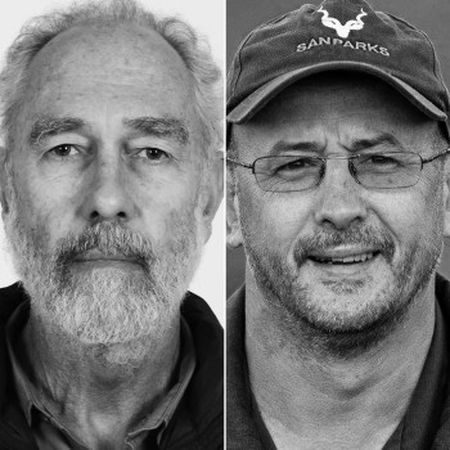
Dave Balfour is a freelance conservation ecologist who has worked in state and private sectors with established expertise in elephant and rhino conservation. Sam Ferreira is a SANParks conservation ecologist whose work on large mammals informs evidence-based management in African parks including elephants.