



/file/dailymaverick/wp-content/uploads/2025/09/label-Opinion.jpg)
South Africa has been economically stagnant for more than a decade. We create roughly 200,000 new jobs a year, absorbing just 8.7% of work-seekers annually. Young people bear the brunt of this crisis. Of the 10.3 million South Africans aged 15 to 24, 56% are still in education, only 10% are employed, and 34% are Neet — not in education, employment, or training. This year alone, nearly one million more young people will enter the labour market, with roughly 400,000 expected to join the already alarming Neet cohort of 3.4 million under 25.
While we celebrate improved matric participation, pass rates and bachelor’s passes, we cannot lose sight of the profound youth unemployment emergency unfolding beneath these achievements.
A generation eager to contribute — but locked out
Too many excluded young people feel alienated, angry and invisible. Three decades into democracy, our social fabric has frayed under the pressure of persistent inequality, an underperforming education system and staggering youth unemployment. We risk sending young people a dangerous message: that they have no place, no power, and no future.
A common narrative paints young people as apathetic, disengaged or lacking agency. But the numbers tell a different story. The National Youth Service and the Basic Education Employment Initiative (BEEI) received more than 800% more applications than available placements. Young people want to serve, to contribute, to matter. What they lack is not motivation — it’s meaningful opportunity.
South Africa’s history is filled with young people who reshaped society: Steve Biko, Nelson Mandela, the students of 16 June 1976, and the #FeesMustFall generation. The question confronting us now is simple: What are today’s young people being called to act on — and are we giving them the chance?
Purpose is powerful — and service provides it
Global research shows that Gen Z is driven by purpose, connection and impact. Local evidence supports this. Among 4,000 participants in the YearBeyond National Youth Service programme, youth reported a 57% increase in hopefulness and life satisfaction after completing their year of service. The Social Employment Fund shows similar gains.
This is not abstract sentiment. It is measurable, scalable, and transformational.
When young people serve in their communities, we strengthen a culture of active citizenship. We also build the very skills the future demands. The World Economic Forum identifies problem-solving, creativity, resilience, flexibility and social influence as essential competencies for the next decade. Service programmes develop these naturally.
YearBeyond’s 10-year impact study found that youth who participate in service are 45% more likely to remain civically active than their peers. They gain confidence, purpose and real work experience — all of which increase their odds of finding employment or building a business fourfold.
Shifting upstream: fixing problems before they break us
Government spending often focuses on crisis response rather than prevention. But youth service offers a rare upstream solution. As Dan Heath argues in Upstream: The Quest to Solve Problems Before They Happen, preventing problems is not only cheaper — it is smarter.
Service programmes directly strengthen the foundations of society. In early childhood development centres and schools, youth tutors improve literacy by nurturing a love of reading and providing consistent, caring adult support in communities. Young people support social cohesion, a love of reading and healthy futures in libraries, museums, clinics and Thusong centres.
These benefits are educational, emotional, and intergenerational.
When young people serve, communities reconnect. Children receive support, caregivers get relief, and public institutions regain trust. Service does not just transform individuals — it stitches back together a society that has grown dangerously fragmented.
This is more than a win-win. It is a win-win-win-win:
- Young people gain purpose, confidence and experience;
- Children receive vital educational and emotional support;
- Communities grow stronger and more cohesive; and
- The economy benefits from long-term resilience and human development.
A call to action: invest in what works
It is encouraging that youth service is now a pillar of the Presidential Youth Employment Initiative Phase 2, and that the government has committed to reducing Neet youth by 10%. The growing recognition of the care economy is equally promising.
But we need more than recognition — we need investment.
As South Africa enters the next medium-term expenditure framework and budget cycle, we need significantly increased funding for programmes that have proven they can shift outcomes at scale: National Youth Service, YearBeyond, the Social Employment Fund, and others across the service economy.
We must also build a stronger national community of practice around service-based youth development, drawing from local evidence and global best practice.
Our future hinges on the ability of young people to find purpose — and to lead. They are more ready than we think. The real question is whether we, as a country, are ready to trust them, back them, and walk alongside them.
As the 2026 matric cohort prepares to step into the world, let us rise to the challenge. Let us ensure they enter society not as bystanders, but as contributors — armed with hope, opportunity, and their rightful place in South Africa’s story.
Are we ready to trust young people with the future? DM
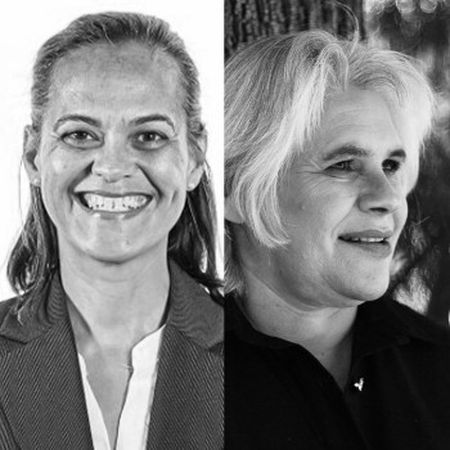
Dr Chrischar Rock is a lecturer at Stellenbosch University’s Department of Curriculum Studies and the chair of the YeBo Institute. Jacqui Boulle is the CEO of YeBo Institute.