



International law was conceived as a safeguard against imperialism, a framework to ensure that nations, whether big or small, could coexist under rules of fairness and justice.
The United Nations (UN), born out of the ashes of World War 2, was meant to embody this principle. Yet, in recent decades, the UN has been sidelined, ignored, and disregarded by power players who prefer unilateralism and hard power over multilateral consensus. From Iraq to Libya, interventions have often bypassed the UN Security Council, which exposed the fragility of international law when confronted with imperial ambition.
South Africa, once a beacon of reconciliation and democratic rebirth, now finds itself vulnerable in this shifting order. The ideals of a Rainbow Nation founded on unity, equality and justice are increasingly tested by global currents that reward military might over moral authority.
The South African National Defence Force (SANDF), once respected across the continent, is now a shadow of its former self. Years of disinvestment, budget cuts and neglect have left the military struggling in every domain.
Dwindling boots on the ground
On land, dwindling boots on the ground, with recruitment and retention undermined by poor morale and inadequate resources, has become the norm.
In the air, machinery is outdated, with aircraft grounded due to a lack of maintenance and spare parts.
At sea, naval presence is minimal, leaving vast stretches of coastline exposed.
This decline is not merely a technical issue, it is a strategic vulnerability. If SA were to be invaded today, the question of how to protect its sovereignty would be met with grim silence. The defence force lacks the capacity to repel a modern, well-equipped aggressor.
Sovereignty, in such a scenario, would rest not on military strength but on diplomacy, alliances and the resilience of our people. Sun Tzu said that: “If you know the enemy and know yourself, you need not fear the result of a hundred battles,” and that: “The supreme art of war is to subdue the enemy without fighting.”
For SA this means that an honest assessment is imperative, which should involve shoring up logistics and intelligence, and investing in asymmetric, cost‑effective capabilities (such as maritime domain awareness, coastal anti‑access, cyber- and reserve readiness) rather than symbolic parades such as the BRICS-led naval “Will for Peace” parade.
The central question we need to ask moving forward is: What becomes of a country founded on the ideals of the Rainbow Nation if it cannot defend itself? The promise of a “better life for all” risks being hollowed out if imperialist agendas prevail. The erosion of sovereignty would mean the erosion of democracy, social justice and the fragile gains of post-apartheid transformation.
SA’s moral authority
SA’s moral authority, built on its struggle against oppression, would be compromised by its inability to safeguard its independence. SA’s membership in BRICS offers both opportunity and risk.
On one hand, BRICS provides access to alternative power structures outside Western dominance such as economic partnerships, technological cooperation, and potential military collaboration.
On the other hand, BRICS is not a military alliance, it is a marriage of convenience driven by economic interests. Can BRICS help SA rebuild its dwindling military capability? The overt answer would be possibly, through technology transfers, joint exercises and financial support.
However, unless SA itself prioritises defence spending and strategic planning, BRICS will remain a symbolic shield rather than a substantive one. Sovereignty cannot be outsourced – it must be defended from within.
The rise of hard power by the US and other foreign powers signals a dangerous trajectory for global democracy. The kidnapping of a sitting president and takeover of its natural resources is a testament to the fact that global power is shifting towards the disregard of the rule of law.
Pawns on a geopolitical chessboard
If might continues to trump right, smaller nations like SA risk being pawns on a geopolitical chessboard. Democracy, once heralded as a universal aspiration, may become a privilege reserved for those who can defend it militarily.
South Africans must demand accountability from those in power. Citizens should expect leaders to balance social development with national security, to ensure that sovereignty is not sacrificed at the altar of austerity. Defence is not merely about guns and tanks – it is about safeguarding the democratic project itself.
The question of leadership is critical. Is Angie Motshekga the right minister to lead a defence force under these conditions? Her background lies in education, not defence. While she has proven herself in policy and administration, the defence portfolio requires strategic military expertise, foresight, and the ability to navigate complex geopolitical realities.
SA cannot afford symbolic appointments at a time when its sovereignty is at stake. The defence force needs a leader who understands both the art of war and the demands of peace. South Africa stands at a crossroads. The promises of the Rainbow Nation cannot survive in a world where imperialism is resurgent and military weakness is exploited.
Democracy, if left undefended, will be reshaped by the new world order into something unrecognisable. We ought to demand from our leaders a recommitment to sovereignty, a reinvestment in defence, and a vision that places democracy at the heart of our survival.
Citizens must expect courage, not complacency, from those in power. For in the age of hard power, sovereignty is not given – it is defended. DM
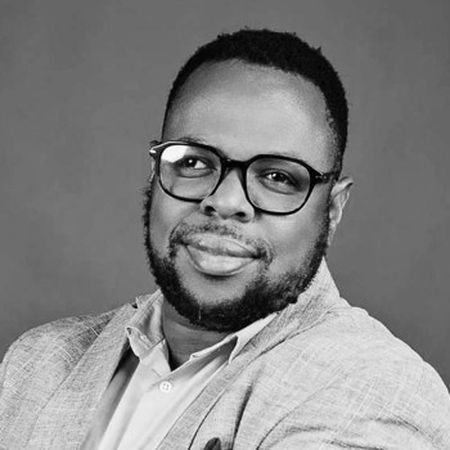
Tumelo Nkohla is a public sector governance specialist and Chief Risk Officer who writes on ethics, systems failure, geopolitics and South Africa’s future strategic trajectory.