



The announcement of the matric pass rate raised many eyebrows. Few experts predicted that the class of 2025 would improve on their predecessors’ 87.3%. You have to take your hat off to this class that was welcomed into Grade 8 during the Covid pandemic. Their passionate teachers, who refused to give up, also deserve a pat on the back.
“Are these results for real?” was the question I had to answer repeatedly in numerous radio and television interviews. My short answer: Yes. Prof Yunus Ballim and his team command respect. The Class of 2025’s pass rate of 88% is therefore a historic best.
For the longer answer, I had to conduct an in-depth study of the results.
National Development Plan 2030
The matric results are not a standalone entity. What happens in primary school determines the matric pass rate. To quote the Minister of Basic Education (DBE), Siviwe Gwarube: “Matric is not an exam; it is a journey.”
Therefore, the Director-General of the DBE, Hubert Mathanzima Mweli, emphasised that matric results were part of the National Development Plan 2030 (NDP), a strategic framework aimed at eradicating poverty and inequality by 2030. From an educational perspective, the NDP seeks to give all learners access to quality teaching and training, which will lead to improved learning and performance.
This comprehensive action plan focuses on the country’s socioeconomic development. It addresses the country’s challenges and seeks to come up with solutions for a more inclusive society. Mveli highlighted the following social justice principles by which progress in education should be measured:
- Access;
- Redress;
- Equity;
- Quality;
- Efficiency; and
- Inclusiveness.
I will now analyse this year’s matric results based on these six principles.
Access
Education is a massive operation that provides instruction to 13.7 million children in 25,400 schools with the help of 470,000 teachers. For the matric exam, 11 million exam scripts were marked by about 65,000 markers at 192 marking centres.
When one looks at the numbers, it seems as if many girls who fell pregnant returned to school, because almost 100,000 more girls than boys wrote matric. They also perform better than boys. There is growing concern about boys; so much so that President Ramaphosa has expressed his concern about the decline in the number of boys in the system.
In a country with so many inequalities, part-time candidates are a given. That this number is starting to decline (only 93,000 out of 137,776 registered showed up) is an indication that matriculants prefer the full-time system. Repeating matric ensures quality teaching and better marks, and eventually a better future.
The high dropout rate still seems to be the department’s Achilles’ heel. There will always be questions about the accessibility of education in South Africa when only 778,000 of the 1.2 million children who started in Grade 1 finish matric. What happened to the other 450,000 (47%) learners? Also, nearly 18,000 of the 764,014 full-time candidates who registered never showed up to write the exams. Were they held back to preferably write the part-time exams so that the results of certain schools and provinces would look better?
These are frustrating questions that remain unanswered.
Equity
The gap between rich and poor schools is getting smaller, and matriculants from poorer schools in Quintile 1 to Quintile 3 are catching up with the more affluent groups. Quintile 1, for example, contributed 69,000 to the total of matriculants qualifying for university admission, compared with 67,000 from Quintile 5 schools. The number of no-fee schools achieving a 100% pass rate grew to 460 versus 192 from the Quintile 5 schools; all encouraging for someone who grew up poor.
In this pursuit of equity, there are questions around the standardisation (adjustment) of results. It is common practice worldwide to standardise results to prevent excessive variation due to factors not related to learners’ ability and knowledge. Only seven of the 68 subjects were adjusted upwards, and five subjects downwards. Most subjects (80% of both the IEB and the DBE) were left unchanged, a sign that the system is beginning to stabilise.
Quality
The numbers tell a fairy tale: No district scored less than 80%. Of the 746,110 full-time matriculants who wrote exams, 596,880 passed, with an astounding 345,000 gaining a Bachelor’s pass, ie, university admission. The bad news is that universities can only accommodate 100,000 new students. All provinces achieved a pass rate of 84% or higher:
/file/attachments/orphans/Opinion-leCordeur-matricresults-table2_447835.png)
KwaZulu-Natal, the province with the most learners (171,368), tops the list of provinces with 90.6%. (Ironically, when KZN was announced as the top province, a newsflash appeared at the bottom of the TV screen: ‘...42% of KZN learners have not yet received their stationery for 2026).
Let’s also give a round of applause to the Northern Cape. This province’s 14,084 matriculants overcame great distances and limited resources to show the greatest improvement. And: Is the Basic Education minister’s omission of announcing the Western Cape’s (65,965 matriculants) fifth place a worrying sign that we should take note of?
After the Free State set the pace for years, it is second this year with 89.3%. In the past, there were questions about this province’s low throughput rate. With one exception, the Free State’s throughput rate (57%) is again the lowest this year. How do you explain that in the same province, Grade 11 learners perform 32% worse than the Grade 12 class? Significantly, both the DG and the minister pointed out that, “The policy dictates that a learner may only repeat a phase once.”
The Western Cape boasts the highest throughput rate of 71.7%.
Questions arose about why the pass rate (98%) of independent schools (IEB) is much higher than that of public schools. It would be unfair to diminish the achievements of the IEB by focusing solely on its privileged position. Despite differences in resources and facilities, you still need dedicated staff and good management to ensure that resources are used correctly.
The future of any country depends on the country’s readiness for worldwide technological development. Performance in Stem subjects (Science-Technology-Engineering-Maths) is therefore important.
Schools with technical and engineering subjects have generally performed well, and physical sciences show a slight improvement. The big disappointment, however, is mathematics.
A total of 464 schools no longer offer mathematics, of which 61 are in the Western Cape. Only 34% of matriculants took mathematics this year compared with 46% in 2011. Are learners being encouraged to take the easier mathematical literacy for “better” results? Do parents know that this subject counts for NOTHING when applying to universities?
If we are talking about quality, we need to ask the question: Has passing matric become too easy? Perhaps Musi Maimane is right: our pass requirements are too low, and an increase in our pass rate to, say, 40% could solve many problems. It is also time for everyone (especially politicians) to start rethinking the whole education system: Yes, we need doctors and teachers, but also artisans to build schools and hospitals.
Redress
A total of 24,321 learners who were promoted to Grade 11 (progressed learners) seized the opportunity and passed. Many are negative about this form of redress, but the fact that 2,811 of them passed with a Bachelor’s, and some even with distinction, indicates that they do have the potential, but are hindered by circumstances beyond their control, such as taxi strikes.
Ultimately, the country and all its citizens will benefit from the skills and knowledge of these young people, rather than them becoming involved in crime and gangs if they have not been given the opportunity. It also helps with the growing problem of youth unemployment. Also: It is not every Tom, Dick and Harry who is promoted. Most of the matriculants who passed this year were 17 and 18 years old, which means they either repeated a year only once, or not at all.
Efficiency
The effectiveness of the education system will always be questioned if such large numbers drop out along the way. There are also other aspects where efficiency comes under scrutiny, such as invigilators allowing learners to bring mobile phones into the examination room. Is this ignorance or wilfulness? If it is ignorance, the training of invigilators is not up to standard.
Despite all the security measures, exam papers are still being leaked. Meveli acknowledges that this is unacceptable.
Umalusi will need to intensify its action on this. Officials, principals, and invigilators whose children are writing exams must declare their interests and recuse themselves from the examination. Apparently, the leaking of exam papers appears to be internal...
I am grateful for the classroom support from the DOE, but how conducive are the conditions for effective teaching? It’s good to have extra classes and holiday schools, but the issues that have been hindering children’s success for decades, such as overcrowded classrooms, need to be addressed. While the number of children increases by one million each year, I still do not see a sustainable plan to build schools.
School safety is becoming a growing problem, and the necessary resources are lacking. I am not even talking about computers and tablets. Yes, that too, but I am referring to the basics like stationery, textbooks for every subject, and a qualified teacher in every class, every day.
This has led to statements (by, among others, the Federation of Governing Bodies of South African Schools) that the high pass rate is not thanks to the DBE, but in spite of the DBE. It is rather due to the hardworking learners and the dedication of teachers than the efficiency of the provincial administrations. The same principals are overloaded with administration that is actually the work of departmental officials. The DG himself mentioned that the number of teachers has not kept pace with the increase in learners.
Inclusivity
There has been an increase in the number of successful matriculants from special schools ( LSEN – Learners with Special Education Needs). A total of 10,188 (90.10%) matriculants from LSEN schools have passed. Of the more than 604,000 learners receiving welfare grants, 511,000 (80.26%) passed.
No fewer than 155 learners who are dependent on sign language were accommodated, and 90.3% passed. It is encouraging that 156 young people in prisons took the opportunity to get their lives back on track by passing the matric exam. It is also heartening that R496-million has been budgeted for rural learning, as the need here is immense.
We must also realise that not all children are academically inclined. Although no exact figure is available, available data indicate that only half of all children worldwide will meet the minimum requirements for literacy and numeracy.
As elsewhere in the world, South Africa will also need to start looking at alternative methods of assessment. We need to start thinking about what happens to young people who do not gain admission to a university. That section of the population is just as important for a developing country.
Final word
Is it really necessary to announce the results with so much fanfare? An actress to introduce the minister? That is surely the DG’s job. Can we please tone down this extravagant party…
Education often must confront the ugliest aspects of a developing country, but it also gives us the opportunity to achieve equity, making our country a better place. The National Development Plan, which strives to unlock every child’s true potential so that everyone can contribute to the country’s economy as South African citizens, may be idealistic. You don’t have to be an educationalist to know that we still have a lot of work to do before we reach those noble goals.
At least we are on our way there. As I indicated above, the matric results show that any child can succeed if they are given the opportunity. The matric results of Class 2025 confirm that progress has been made in access, redress, equity, quality, efficiency and inclusivity.
It fills us with hope. DM
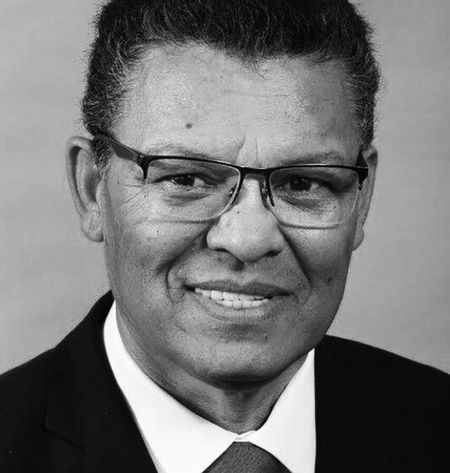
Professor Michael le Cordeur is Emeritus Professor of Education at Stellenbosch University.