



/file/dailymaverick/wp-content/uploads/2025/09/label-Opinion.jpg)
Molo qabane, kunjani?
(Greetings comrade, how are you?)
This is how we greet one another, as fellow travellers in the pursuit of social justice. But that question feels heavier these days.
It is no longer just a greeting. It has become an invitation, sometimes an uncomfortable one, to name a specific kind of injury repeating itself among social justice actors. It is a pain that does not announce itself loudly, but gathers over time, in the quiet pauses, in the conversations that trail off before anyone quite knows how to continue.
It is not simply exhaustion.
Nor despair.
Nor burnout in the conventional sense.
It is moral injury. The slow damage that sets in when one’s deepest ethical commitments are repeatedly violated by the very systems meant to uphold them.
The architecture of abandonment
We are living through a convergence of crises that strain not only our capacity to respond, but our capacity to make sense. From South Africa to the US, and across much of the world, the foundations of the global order we have known, its institutions, its norms, even its shared assumptions, are visibly crumbling.
The rules no longer hold.
The promises no longer bind.
Violence proliferates, while accountability recedes.
For those engaged in struggles for justice, this unravelling carries a particular weight. We are asked to witness mass harm, often in real time, while the mechanisms that might interrupt or redress that harm prove either unwilling or incapable. We watch institutions perform concern while practising abandonment. We invoke principles that no longer seem to compel action.
At times, it feels like psychological warfare, a slow, grinding assault on the soul. Not because those committed to justice are fragile, but because the conditions that make moral life possible are being systematically eroded. This is not an internal crisis of resilience or attitude. It is a political crisis that settles in the psyche.
When moral ground gives way
What compounds this injury is the collapse of shared moral ground. Polarisation today is not only about ideology or policy. It is about whose suffering counts, whose lives are grievable, and whose pain demands a response. We no longer agree on the basic terms of moral obligation.
In such conditions, justice work becomes disorienting.
The compass spins.
The ground shifts.
The effort required simply to remain oriented increases. When words like “human rights”, “accountability” or “never again” are spoken often but seem to move very little, meaning itself comes under pressure.
The limits of care
This is why the growing work on trauma-informed approaches matters so deeply in this moment. Across movements and organisations, people are learning how to work with care. How to reduce harm. How to recognise the ways violence lives not only in systems, but in bodies.
That work is necessary. It has helped many people remain in the work when the work itself is heavy.
And yet, trauma-informed practice cannot carry the burden alone.
When the source of harm is ongoing, when violence is structural, repeated and politically sanctioned, care cannot be reduced to individual regulation or resilience. Otherwise, we risk asking people to adapt endlessly to conditions that should never have been normalised.
Trauma-informed work is most powerful when it is paired with truth-telling. When it helps us name not only how harm feels, but where it comes from. Not only how we cope, but what must change.
The violence of forced hope
Alongside this reality there is often pressure, subtle or overt, to remain hopeful, positive, solution-oriented. To focus on wins. To avoid what gets labelled “despair”.
When hope is demanded rather than earned, it becomes another form of moral coercion. When grief is treated as a failure of mindset, injustice is quietly absolved.
False positivity does not sustain justice work. It hollows it out. It asks people to perform emotional resilience in conditions that are structurally violent. It relocates responsibility for endurance onto individuals, rather than interrogating the systems producing the harm.
In doing so, it deepens moral injury rather than relieving it.
Choosing ethical presence
The harder question before us is not how to remain optimistic in the face of collapse, but how to remain ethically alive when repair is not guaranteed.
Perhaps this requires a shift from an ethic of outcomes to an ethic of fidelity. Fidelity to principles. Fidelity to people. Fidelity to ways of being that refuse brutality, even when brutality is ascendant.
This is not resignation. It is a different stance.
It is rehearsed in smaller acts:
- In truth-telling without spectacle;
- In solidarity that does not require numbing;
- In the refusal to become cruel in order to survive; and
- In spaces that allow grief without collapsing into despair, and action without illusion.
The task may not be to carry the whole world on our shoulders, but to stop abandoning one another inside it.
Moral injury does not mean the work has failed. It may mean the work is being done honestly, in conditions that are hostile to moral life. To name this injury, without romanticising suffering or retreating into false hope, is itself a political act. It is a refusal to let the erosion of our institutions become the erosion of our humanity.
We see this refusal in many places, from the quiet, sustained work of civil society and those who put their bodies on the line to protect immigrants, to moments of public grief, such as the killing of Renée Good in Minneapolis, where people refused to let a life be reduced to a statistic.
The question, then, is not whether we are hopeful enough, but whether we can continue to choose ethical presence, together, in a time that offers few guarantees. That choice, repeated and collective, may be the only ground we have for building anything more just. DM
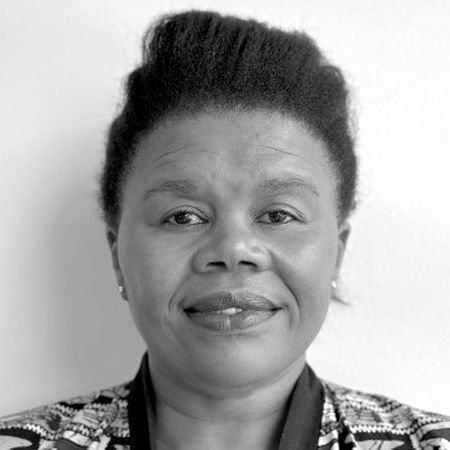
Sipho Mthathi is a writer and social justice activist with more than 23 years of experience shaping civil society work locally and internationally.