



/file/dailymaverick/wp-content/uploads/2025/09/label-Opinion.jpg)
The last flashes of colour faded from the sky over Zwelitsha, a township in King William’s Town (Qonce), leaving a haze of gunpowder smoke and the echoing cheers of my family.
“Whoever bought those,” I said to my nieces, pointing to a particularly lavish streak of gold, “had a really good year.” In that moment, the fireworks were pure metaphor: explosive hope, visible success, a shared dream for the future. We talked excitedly about what we would do to celebrate the next New Year in such a style.
That hope, however, had a hidden aftermath. The following day, as I travelled from Sweetwater to East London, through Mdantsane, and later from Cape Town’s airport to Mitchells Plain and Parklands, a grim pattern emerged along the roadsides. Not litter, but life – specifically, the lifeless bodies of dogs. One after another, lying discarded on the verges of townships and the freeways that skirt them.
The connection was immediate and chilling. We all know, vaguely, that fireworks terrify animals. But here was the brutal, quantifiable result. I remembered once seeing a dog, struck by a thrown firecracker, sprinting in a blind, disoriented panic. It wasn’t running to anything, only away from the terror. That heartbreaking vision was now multiplied in these still forms on the tarmac. Our collective celebration had, for many of man’s so-called best friends, been a catalyst for trauma and death.
This observation opened a deeper, more familiar wound: the stark inequality between the dogs of the suburbs and the dogs of the townships. A dog’s quality of life – its nutrition, healthcare, safety – is a brutal microcosm of our socioeconomic reality. The number of stray, thin, and vulnerable animals is a direct indicator of a community’s struggle. When people are straining, pets fall to the bottom of the priority list. The dead dogs were not just victims of fireworks; they were casualties of a context where survival, for both humans and animals, is perpetually precarious.
But then, a paradox emerged to complicate my grief.
A day before the fireworks, in town, my niece pointed out a snake catcher who had visited her school. Intrigued by his business model, I asked my brother, “Does he charge?”
“No,” came the reply. His service is free, probably funded by a municipality or conservation group.
And here, my mind stalled. From a pest-management perspective, it makes sense. A free, professional service prevents people from killing snakes, protects biodiversity and solves a scary, immediate problem. Yet, I struggled to reconcile this with the silent, widespread crisis of the dogs.
We have a funded system to humanely remove our biblical “arch enemy”, a creature responsible for relatively few fatalities, yet we lack a coordinated, compassionate response for the creatures we call companions – animals who suffer in vast numbers and whose bites cause more harm. Why is the feared, singular intruder dealt with more systematically than the familiar, suffering masses?
The answer, I think, lies in what we choose to see as a manageable problem. A snake in a house is a discrete, shocking event. It is an external threat that can be neatly taken away.
The suffering of stray and neglected dogs is a chronic, internal symptom. It is a mirror to our own societal failures – poverty, overcrowding, inadequate services. Addressing it requires not a simple removal, but a complex, expensive web of solutions: sterilisation, vaccination, shelters, education, and ultimately, the alleviation of human hardship. It’s a problem so big and embarrassing that we often choose to look past it, stepping over its consequences on our way home from celebrations.
This past New Year, the fireworks showed me two things: the height of our hope and the depth of our neglect. They revealed a double inequality – between affluent pets and poor ones, and between the resources we dedicate to feared symbols versus loyal, suffering realities.
As we dream of a brighter 2026, let our hopes be more inclusive. Let us aspire to a celebration whose joy isn’t built on the terror of the vulnerable, and to a society that organises itself not just to remove feared intruders, but to heal the visible, everyday brokenness right at our feet. The wellbeing of our simplest companions might just be the truest measure of the future we are building. DM
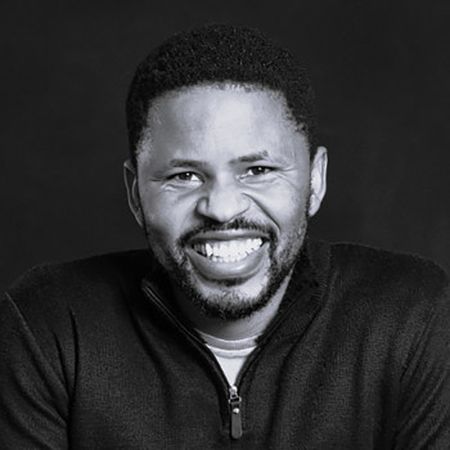
Sanele Skeyi is a development economist, lecturer and researcher. He holds a master’s in economic development, and focuses on inclusive growth, sustainable enterprise development and the economics of just transitions, particularly within the circular economy. He teaches economics and project research, bridging academia and practical development work.