



From Boikhutso to Mthatha, children across the country want love, safety, enough food and to grow up believing they can be anything because they are capable of learning new things.
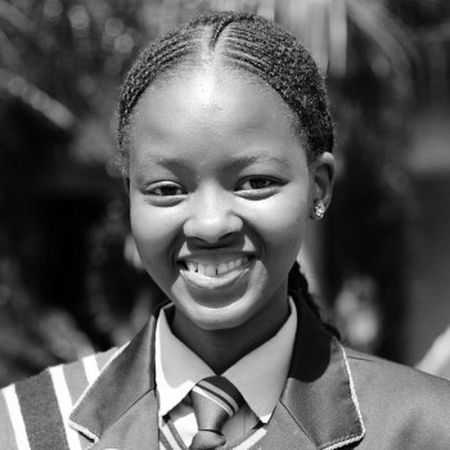
I’m one of them; an 18-year-old having just completed my final year of school, but unlike many my age, I’ve had the rare opportunity to participate in dialogues and summits that have fed into the making of a new vision for our country’s children from newborns to teens.
Make no mistake: children’s participation in matters that affect us is not a privilege, it’s a right! Our participation is not a formality to endure; instead, we deserve to participate in shaping the systems, policies, laws and decisions meant to protect us.
We want to tell decision-makers what we need: safe, inclusive schools with functioning classrooms, clean toilets and running water. We want access to the right kind of support at schools to cope with the challenges of growing up in homes and communities affected by crime, alcohol abuse and other social problems. We want to feel safe and protected everywhere, including in rural and informal areas that are often overlooked.
We need safe spaces to play sports, explore new ideas and connect with friends, both offline and online. For the youngest among us, in those first five years when everything is new and exciting, we need places to be curious, to play, sing, climb, draw and begin the journey of learning with joy and confidence.
In 2025, President Cyril Ramaphosa said that to protect South Africa’s gains since 1994 in advancing children’s rights, the government would adopt the National Strategy to Accelerate Action for Children (NSAAC), which focuses on 10 key priorities including poverty reduction, child protection and addressing malnutrition. The Cabinet has now approved this strategy – an acknowledgement that how we treat our children today will affect our nation’s future.
Unprecedented opportunities
Recently, we have been given unprecedented opportunities to have our voices heard and to contribute to meaningful change. Platforms like Children20 and the G20 Social Summit, as well as various intersectoral collaborations, have allowed us to engage directly with decision-makers and shape policies that affect our lives. We are deeply grateful for these spaces, which acknowledge that children are not just the leaders of tomorrow, but active participants today.
We hope these platforms continue to be created, properly resourced, and closely monitored to ensure that the discussions we contribute to translate into real, material impact in our communities.
Today, too many feel unsafe at home and in their communities, while nearly 8 million live in food poverty. Recent statistics show that one in four South Africans don’t have enough food to eat, so how can they feed their children? Our crisis of malnutrition is not just about a lack of food; it affects our ability to grow and develop, to focus and learn in school, and to prosper.
For far too long, we’ve spoken about children as our future while failing to show up for them in the present, authentically and consistently. Being present requires more than adopting policies and strategies; we want to feel the impact on our daily lives. We want to see broken toilets and roofs repaired in schools, and enough desks for every learner. We want to see the consistent distribution of meals through the National School Nutrition Programme, youth-friendly health services in informal settlements and remote villages, and access to care and education for children living with disabilities.
In principle, the National Strategy to Accelerate Action for Children seeks to end the longstanding contradiction between policy and practice. It acknowledges what many of us already know: South Africa has strong laws, but weak implementation. We have policies rooted in rights, but we experience violations of these rights in our everyday lives. Government departments mean well but often struggle to deliver services, especially in informal and rural areas. In practice, children, particularly the most vulnerable among us, are left behind.
No sugarcoating
Thankfully this new strategy doesn’t sugarcoat things. It doesn’t pretend everything is fine. It tells the truth: that child protection systems are fragmented, coordination is lacking, services are uneven, and that child participation is often symbolic.
In the midst of this truth-telling, it offers a way forward. It calls for integrated systems, shared data and accountability. It says: let’s work together. The government needs civil society, the private sector, development partners, the South African Representative Council of Learners, a legally recognised structure under the South African Schools Act, and other child and youth organisations to make this strategy work.
The true power of this strategy lies in what we do together. No cost is too great when weighed against the cost of inaction. No challenge is too complex when children’s lives and futures are at stake.
This strategy is our roadmap, but the journey belongs to all of us. On this journey, we must ensure that every child born today has enough love, safety, food and brain power to change our country’s future. DM
Bontle Motatsa, 18, is South Africa’s NSAAC Children and Adolescents Representative, and Representative Council of Learners President, North West (2024). She plans to pursue a career in international relations, with a focus on governance and public policy.