



Every January, South Africa rehearses its ritual of hope. Fresh starts. New commitments. Brave speeches about renewal.
But renewal does not come from optimism alone. It comes from courage – especially the courage to face this truth:
South Africa cannot become safer, kinder or more stable unless we confront the crisis inside our men.
This is not ideology. It is national survival.
Because the reality is devastatingly clear: too much of our pain is caused by men. According to Statistics South Africa, one in three women in South Africa will experience gender-based violence in their lifetime. The South African femicide rate remains five times higher than the global average, and police statistics repeatedly show men as overwhelmingly responsible for violent offences.
Women and children live with fear as a daily condition. Families fracture. Communities bleed.
So we cannot keep talking about men as if they are background characters in the national story. They are central to both the harm – and the hope.
But this conversation must never cross one line:
Talking about male healing must never replace justice, dignity and safety for women and children. Accountability is essential. Consequences must be real. Justice must remain uncompromised.
Healing men is not about excusing men. It is about preventing harm to women and children.
Safety first – with honesty
Walk with a South African woman or child into daily life and you will see the emotional cost of our crisis: checking surroundings, gripping keys tighter in parking lots, counting exits, measuring trust, hoping love will not become danger.
Before we talk about helping men, we must acknowledge this reality honestly. Women and children did not create this crisis. They must not carry its emotional burden.
So let this be clear:
- Men who harm must face consequences;
- Police and justice systems must work;
- Survivors deserve dignity, protection and belief; and
- Justice is not negotiable.
But here is the truth alongside it: justice protects the present, transformation protects the future. South Africa desperately needs both.
Boys do not become honourable men automatically
Men are not formed in a vacuum. They are shaped by powerful forces: fatherlessness, poverty and unemployment, historic humiliation, violent environments, emotional suppression.
Studies consistently link father absence to higher rates of crime, substance abuse and emotional instability. The Human Sciences Research Council has repeatedly highlighted the impact of broken male identity on social stability.
Some men carry deep trauma. Others carry entitlement. Many carry both.
And history, psychology, community wisdom and faith traditions all agree on one point: Boys do not become honourable men accidentally. Men must be formed.
At its best, masculinity has never meant ego or domination. It has meant: responsibility, self-control, strength with character, courage with restraint, protection of the vulnerable.
When that collapses, women and children suffer – and society collapses with it.
This is not about despising masculinity. It is about restoring it to its highest calling.
A real human picture
Consider a story repeated in homes across South Africa.
A child grows up without a present father. He learns toughness, not tenderness. He learns survival, not healing. He grows into a man full of pressure, shame and unprocessed anger. He becomes emotionally unavailable, then resentful, then explosive. One day – as too many court records show – that explosion is directed at a woman or a child.
Police respond. Court proceedings follow. Society reacts in horror.
But by the time we intervene, the damage has already been done.
We react when it is too late. We punish – but rarely transform.
Power must be stewarded, not feared
Let us be honest: men often hold physical strength, social influence and leadership weight in families, faith spaces, communities and society.
The question is not whether men have power. The question is how men steward power. Power without character becomes abuse. Power with character becomes protection.
The solution is not to weaken men. It is to teach men to be strong in the right way – especially for the sake of women and children.
That means:
- No to entitlement;
- No to violence disguised as strength;
- No to control disguised as leadership;
- And yes to responsibility;
- Yes to discipline; and
- Yes to moral courage.
Intersectional reality – because men are not formed equally
Masculinity in South Africa is not one experience. Race matters. Class matters. History matters. Geography matters.
Black men carry historic losses inflicted by apartheid – fractured dignity, interrupted fatherhood, economic dislocation. Working-class men face pressures different to middle-class men. Rural masculine identity differs from urban masculine identity.
Not all men are formed the same way. But all men must be formed into responsibility, accountability and honour – for the sake of women and children.
Healing men protects women and children – that is the point
Here is the strategic case:
When men are healed, emotionally literate, responsible and accountable: violence decreases, families stabilise, children thrive, communities become safer, women and children are safer.
Strong men – not abusive men, not silent men, not broken men – are crucial to a strong society.
This is not centring men. This is protecting women and children by transforming men.
So what must we do?
We need infrastructure for male transformation – not slogans.
We need:
- Serious investment in male mental health;
- Mentorship systems with real accountability;
- Healthy faith and community spaces that build character, not entitlement;
- Emotional education for boys;
- Stronger policing alongside rehabilitation; and
- Spaces where men can confront themselves honestly without collapsing.
Not softness. Strength.
Not excuses. Responsibility.
Not silence. Formation.
This is not an appeal to feel sorry for men
Let no one misunderstand this argument.
It is NOT saying: “Understand abusers.” “Be gentle with violent men.” “Women and children must carry men emotionally.”
No.
It is saying: hold men accountable, protect women and children fiercely
and fix broken men so fewer women and children are harmed.
Justice without healing repeats cycles. Healing without justice betrays victims.
We need both.
South Africa needs better men
South Africa needs empowered girls, healed women, protected children, working justice systems, ethical leadership and functioning institutions.
But South Africa also needs better men: men who see strength as service. Men who lead without dominating. Men who apologise without losing dignity. Men who restrain power instead of abusing it. Men who choose responsibility instead of excuse. Men who build instead of break.
Half this nation is male. And we cannot heal a nation while half of it is collapsing emotionally or misusing strength.
January invites renewal.
Renewal demands courage – the courage to say: women and children deserve safety, dignity and justice. Men must change, masculinity must mature.
We will not fix South Africa by ignoring men. We will fix South Africa by transforming them.
Not to overshadow women and children. But to ensure they can breathe, flourish and live safely in the nation they call home.
That is not softness. That is strategy. And that is how societies heal. DM
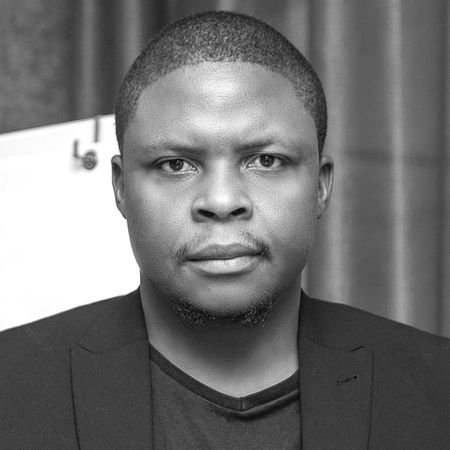
Themba Dlamini is a husband, father of four, pastor and chartered accountant who loves South Africa – warts and all. He is the author of Village Boy: A Memoir of Fatherlessness, and writes to wrestle with hard truths, stir hope and help build a country in which his children can thrive.