



/file/dailymaverick/wp-content/uploads/2025/09/label-Opinion.jpg)
Can you remember when you made the permanent switch from your landline to your cellphone? I still remember the actual trepidation-filled moment that I decided to cancel my Telkom line and go all in – fully digital.
I’d kept my landline for years because I preferred the fixed line for long calls and thought it ridiculous to walk and talk. What were telephone tables with their comfy padded seats for, after all?
Then there was the cost of it – before WhatsApp, call costs on cellphones were, to me, astronomically high, like calling internationally from landlines.
All through the ’70s and ’80s, first when my siblings were at school in what was then Swaziland, and later when my older brother was at university in the north of England, Sunday evenings were devoted to a family phone call (I say family, but it was really my mother asking questions like, are you eating enough roughage and are you changing your bed linen regularly).
Even now, I can see my dad anxiously hovering, gesturing to my mother seated in the hall, her hand gripping the phone, whose corded twirls went into the wall socket. Dad tapping his watch, opening his eyes wide as he watched minutes tick by and the international call cost rocket.
Slow to adopt
But there was more to my keeping my physically attached telephone much longer than everyone else: I have always been a late adopter, a luddite or laggard, slow to accept new technologies, preferring traditional methods and waiting until new things are proven, in the mainstream and essential.
My first brush with tech was mind-boggling and life-changing. It was the mid-1980s, and I was a junior reporter at the Sunday Times when the news editor asked me to fetch him some documents sent from Cape Town from that machine. He pointed to the fax machine in pride of place in the centre of the newsroom.
A joke? I laughed. Then this white box kicked into action and began spewing long sheets of paper on which were the court papers. Fed into this miraculous machine in Cape Town, emerging in downtown Johannesburg instantly! Inconceivable.
Cellphones were equally baffling, but I was less incredulous. And now? Artificial intelligence (AI), probably the scariest thing that we have witnessed take hold of our already scary technological world – or take over? This will be a deciding year in which I accept AI, lose my fear of it and incorporate it so that I make it work for me.
As 2025 recedes, it is time to reflect on what has been, and imagine what is to be in 2026. Everyone I know is wandering around a little bewildered by how quickly last year sped past. I know we say this at the end of every year, but it was a particularly fast year.
And so, I grudgingly have to admit that the future is here and we – humanity – have to stop “preparing” for it, choking on our hesitation about the decisions needed to fix what is wrong with our world.
Accepting AI
Transition has been the word of the decade, a term we’ve hidden behind: transition to clean energy; to AI regulation; to geopolitical realities. Lingering in the shadows of inaction and doubt has to stop in 2026. It will be our year of reckoning, of becoming. It will need decisive action to stop us from becoming spectators in our own story.
Let’s be blunt: AI is no longer a tool or a gadget – it’s a power structure, a governing force. In 2026, companies that control AI systems will wield more influence than most nation-states. I saw an eye-opening quote on Instagram that read: “Forget oil barons; the new oligarchs are algorithmic.”
Governments are scrambling to regulate AI, but they’re already behind. It is increasingly obvious that regulation will be reactive rather than proactive; the real power is held by those who own the data pipelines.
The Australian government has made a bold move: children younger than 16 are no longer allowed to have social media accounts. This world-first policy, hugely popular with many parents, is aimed at protecting young people from harmful content and risks such as cyberbullying and grooming.
This new legislation requires platforms like Facebook, Instagram, TikTok, Snapchat and X to prevent people under 16 from having accounts. Good or bad, it has certainly put the topic of the toxicity or usefulness of social media under the spotlight.
Apparently, 77% of Australians back the ban for under-16s, wanting to protect children from excessive screen time, and the addictiveness that negatively impacts mental health and attention spans. Of course, there’s been an outcry from young people.
I’m with the ban, but think the algorithms on these platforms that are designed to exploit us are the root cause of the problem.
Africa-specific questions
Would a similar ban work on our continent? Here our issues are different, and we need to focus on bridging the massive digital divide through infrastructure, skills and policy, despite challenges like high data costs, limited rural connectivity and low digital literacy.
We are told that African economies are blossoming and will see significant growth. And yet digital colonialism persists, and while Western and Chinese firms own the infrastructure, will their rise be stunted?
This will be a crucial test year, so watch this space.
The question to ask is whether AI can solve the big problems that the world – and more importantly South Africa – is facing.
Can AI, for example, come up with a way to deal with that pressing issue of prioritising our energy realities as we look to the future? Can it advance the conversation about stopping the use of fossil fuels, which has dragged on for decades?
They have been proven not to be economically defensible any more, yet South Africa’s government still subsidises fossil fuels, an amount that tripled to R118-billion at the end of 2023.
Again, that word transition… We’ve had decades of climate conferences, pledges – talk, talk, talk – as we’ve set goals for a green transition, creating tension between energy security, affordability and climate commitments. If the future is now, let’s agree that the time for excuses is over, that climate action is no longer about saving the planet but about saving people, and that those who resist will be remembered as saboteurs, not sceptics.
Would it be premature and too much to hope that, perhaps, the collective wisdom of AI might help us to find some answers and solve some of these problems?
On the prediction front, the good news is that Baba Vanga, revered Bulgarian mystic and healer, foretells that 2026 will be a year characterised by change – where the old powers fail and new powers emerge; where the global centre of power moves to Asia and China becomes the world’s leading military and economic force.
It’s going to be an interesting year. DM
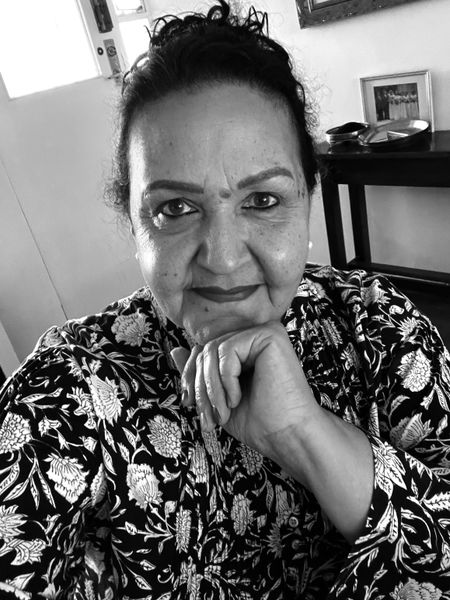
Charmain Naidoo is a journalist and media strategist.
This story first appeared in our weekly DM168 newspaper, available countrywide for R35.
/file/attachments/2986/DM-19122025-001_407439_c8ee56123400b25d4c3a51565fceafd7.jpg)