



The bull came first – a wounded, heaving mass of muscle pacing inside the kraal. You heard it before you saw it: hooves scraping, breath slicing through the dust, the air tightening with a danger no boy could outrun. I grew up understanding danger long before I could define it. And that day has never left me.
Everyone gathered at the fence. Everyone could see the danger. Everyone knew someone had to step in. But no one wanted to be the one to hold the bull still.
We whispered, we watched, we hoped – because denial felt safer than courage, even when the consequences were guaranteed.
South Africa today feels exactly like that kraal. We are circling a wounded nation, pretending the danger is not real, waiting for someone else to face the horn.
But here is what every farm boy knows: a wounded bull is at its most dangerous when you try to help it. And yet, that is exactly when help is most needed.
The comfort of delay
South Africa has perfected the art of circling the kraal. Every crisis triggers the same choreography: a panel, a task team, an inquiry, a report nobody implements, a press conference where everyone speaks but nobody decides.
It is motion without movement.
Day 1 of the parliamentary hearings into KwaZulu-Natal Police Commissioner Lieutenant-General Nhlanhla Mkhwanazi’s testimony revealed this with painful clarity. Before substance could surface, Parliament drowned itself in procedural games – objections, microphones cutting out, adjournments that solved nothing. It wasn’t incompetence; it was fear. When truth feels more threatening than collapse, delay becomes a governing strategy.
We do not suffer from a lack of insight – we suffer from a lack of courage. Committees multiply because conviction does not. The hearing is not the crisis – it is the mirror. And what it reflects is a country caught between knowledge and nerve.
History explains the wound — choice determines the healing
In a previous piece, I wrote that fatherlessness in South Africa is both history and choice – shaped by design, sustained by decision. The same is true of our democracy. Apartheid wounded the bull. Yes. But we keep choosing to circle it.
Three decades into liberation:
- South Africa remains the most unequal country in the world, according to the World Bank.
- 38 municipalities are dysfunctional, according to the Department of Cooperative Governance and Traditional Affairs.
- Whistleblowers like Babita Deokaran and Mpho Mafole have been assassinated for doing their jobs.
- Billions vanish annually through corruption wrapped in Struggle songs and liberation nostalgia.
The past opened the wound; the present refuses to clean it. Acknowledging history is maturity. Hiding behind it is cowardice. The hard choice is what separates the two.
The wound that fights back
We also learned something else about a wounded bull: it is unpredictable. It can gore the very person trying to save it. Pain confuses loyalty. Fear distorts intention. That is why stepping into the kraal was never only about bravery – it was about accepting that danger and duty often coexist.
South Africa’s wound behaves the same way. The closer you get to treating it, the more violently it can react. Ask the whistleblowers. Ask the reformers pushed out of office. Ask the journalists threatened for exposing the wrong numbers. Ask the auditors intimidated for uncovering the right ones.
And this is why the moment General Mkhwanazi walked into Parliament matters. Whether you agree with him or not, he stepped into the kraal – into a room thick with tension, denial and political fear. His testimony showed what happens when someone moves toward the wound: the wound can turn on you. He became one more example of what happens when a person tries to hold the bull still – the nation’s pain can charge at you for trying to help it.
In this country, the people who try to help are often the first to be attacked.
The ones who step into the dust are the ones who catch the horn.
But a wounded bull left alone will eventually destroy itself and everything around it.
Retreat guarantees collapse. Only courage – bruised, unpopular, costly courage – can save the nation. A wounded bull can attack, but that should never stop us from helping it. Because the wound does not heal through distance – only through proximity.
The cost of the hard choice
Every generation faces its kraal moment. For some, the cost is comfort. For others, pride. For many, power.
We talk about reconciliation – but reconciliation without truth is nostalgia. We talk about reform – but reform without sacrifice is theatre. We talk about repentance – but repentance without surrender is PR.
To heal this nation, we must abandon the versions of ourselves that thrive on division:
- Politicians who weaponise pain.
- Corporations that monetise poverty.
- Churches that spiritualise inequality.
- Citizens who outsource responsibility to “the system”.
Here is the truth we fear to say aloud: if we preserve our comfort, we will reproduce our crisis. Because healing requires stepping into the dust even when the dust fights back.
Leadership without excuses
The kraal demanded action. But boys avoided the dust. That is our leadership today – fluent in apologies, allergic to consequences; eloquent in speeches, bankrupt of integrity.
Leadership in a wounded kraal cannot be polite – it must be prophetic. Courage is not the absence of fear – it is the presence of conviction. And conviction begins in the mirror.
A nation shifts when:
- Parents choose presence over pride.
- CEOs choose justice over optics.
- Churches choose truth over popularity.
- Citizens choose integrity over convenience.
Leadership does not begin in Parliament – it begins in the places where excuses are born: the dinner table, the taxi rank, the WhatsApp group, the boardroom, the quiet moment when no one is watching.
When silence becomes complicity
There were boys who stood at the fence and said nothing. They were not neutral. Their silence strengthened the danger. South Africa is drowning in this same silence.
Scandal after scandal piles up:
- State capture.
- Hit lists for whistleblowers.
- Load shedding as engineered neglect.
- Crumbling municipalities.
- Corruption embedded in procurement.
We scroll. We sigh. We move on. But silence is not neutrality – it is permission. Every time we shrug and say “this is just South Africa”,
we tighten the fence around the kraal. A hard choice begins by refusing to be casual about collapse.
The mirror of fatherhood
A father must confront his brokenness to raise whole children. A nation must confront its brokenness to raise whole generations.
We need:
- Fathers who repent of absence.
- Leaders who repent of lies.
- Citizens who repent of cynicism.
We cannot keep blaming the past while living like its disciples. History built the kraal – apathy keeps us circling it. The man who enters the dust, holds the bull, absorbs the struggle and treats the wound – even at personal cost – is doing what South Africa must now do.
Confront the danger. Own the failure. Stop circling. Step in.
A nation at a crossroads — and watching world
South Africa stands where those boys once stood – dust rising, danger visible, wound exposed. This is not just our story. Every democracy – from Washington to New Delhi to Brasília – is confronting its own kraal moment: the tension between truth and comfort, history and responsibility, ideology and integrity.
The question is not whether we know enough – the question is whether we are willing enough. The easy path is outrage, analysis, and tribal comfort. The hard path is honesty, repentance, and rebuilding. The easy path circles the kraal. The hard path enters it.
The long road home
The wound is real. The danger is alive. And the kraal is waiting. South Africa will not be destroyed by its wounds – but by its refusal to treat them.
Our generation’s defining question is simple: Will we keep circling the kraal, or will we step inside and face the horn? Because wounds do not become scars through time – they become scars through treatment. And treatment always begins with a hard choice. DM
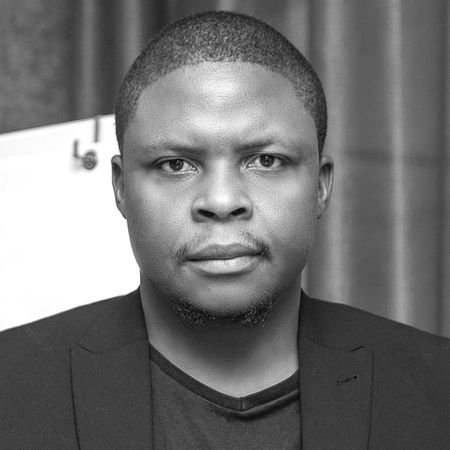
Themba Dlamini is a husband, father of four, pastor and chartered accountant who loves South Africa – warts and all. He is the author of Village Boy: A Memoir of Fatherlessness, and writes to wrestle with hard truths, stir hope and help build a country in which his children can thrive.