



So, to quote Sir Edmund Hillary after he had reached the summit of Everest, I “have knocked the bastard off”.
In my case, the Herculean achievement in question is to have finally read War and Peace – all 1,234 pages of Leo Tolstoy’s novel which was published, after five years of work, in 1869 when the legendary Russian author was 41 years old.
Well, might you ask, why would you want to do that? My answer is, to use another famous Everestian quote, “because it was there”. And has been there for most of my conscious life. It was my father’s favourite book and it is almost a cliché to hear it described as the greatest novel ever written. And it is famously about Russian wars, and we do have one of those going on right now, and about Russian peace, which seems to be in short supply. Maybe there are some lessons to be found from the distant past.
As a university student I went through the trendy ritual of pretending to enjoy the all-night arthouse cinema showing of the six-hour Russian movie of War and Peace (made in the 1960s with 10,000 Soviet soldiers as extras). In truth, I was much more taken by Woody Allen’s hysterical parody, Love and Death, which appeared in 1975.
I have consumed my fair share of Russian literature and history in the five decades since those youthful film nights, and have developed a mild obsession with Mother Russia, but could never bring myself to take on The Big One. It was an established metaphor for something way too long, and “not enough time” was always the excuse. But now I had the time, so I girded my loins. It was, as a friend commented, like taking up a new extreme sport.
The long journey did not begin well. At my local Exclusive Books I enquired at the desk whether they had a copy of War and Peace. “Do you have the author’s name?” came the nonchalant reply. Cue frothy, old-man rant in my head about the state of the world when someone working in a bookshop, for chrissakes, doesn’t know the name of the author of War and Peace!
However, I spared the hapless soul my vitriol and the Vintage Classics version translated by the husband-and-wife team of Richard Pevear and Larissa Volokhonsky, with a lovely cover and nice flaps for placeholding, was procured.
The first challenge was to hold the damn heavy thing upright while reading it in bed for months on end. (Donald Trump would claim that he brought peace to at least six wars during the time it took me to finish the book.)
The second challenge was to work out what the hell was going on. There are a reported 580 characters in the monumental story and a plethora of main figures who all have, to an Anglicised eye, confusingly similar names. My more literate sister, who had been across this terrain well before me, advised reading it with a white board handy to write out names and family links to keep track.
After a lengthy battle trying to navigate the matrix of Bezukhovs, Rostovs, Bolkonskys, Denisovs and Dolokhovs (and who was courting whom and who hated whom), I found the best approach was to give up and go with the narrative and to let it all reveal itself. Which, indeed, it did, thanks to Tolstoy’s skill.
The story is exactly what is on the tin. It is a majestic sweep of times of war and of peace as Russia engages in lengthy, intermittent conflicts with Napoleon between 1805 and 1813. Tolstoy called it a work of realism as much as fiction. His astonishing descriptions of the chaos of battle, informed by his own experience as a soldier in Crimea, are pieces of war reportage which rival Erich Maria Remarque’s All Quiet on the Western Front from World War 1, or Michael Herr’s Dispatches about Vietnam.
One powerful passage, which Vladimir Putin would do well to read, observes how Russian soldiers, who fought only passably well against Napoleon in the defeat on foreign soil in 1805 at Austerlitz (in the Austrian Empire), became utterly indomitable when defending their homeland against the same armies in 1812 at the brutal stalemate that was the Battle of Borodino not far from Moscow. There lies one explanation for why Russia’s massively superior invading forces cannot overcome the impassioned defence of the Ukrainians.
The constant stark counterpoint of the horrors of war with the minutiae of wealthy lives in the safety of Moscow or St Petersburg is deliberate and profound. And applies today as wealthy Muscovites continue to live high on the hog in spite of the mortal morass in the Donbas and sanctions.
The book was surprisingly easy to read – it was never a burdensome task – but it was not quite as rewarding as I had hoped. I usually scribble notes in margins and highlight great pieces of writing, but in this case the 1,200 pages were largely clean.
One exception was the shortest sentence among an estimated 567,000 words: “Drops dripped.” That is the start of a famous staccato scene setter: “Drops dripped. Quiet talk went on. Horses neighed and scuffled. Someone snored.”
Other exceptions were some of his snapshot characterisations of every passing person which are often illuminatingly and concisely beautiful.
Much of the work amounts to a lecture on Tolstoy’s theory of history. Having studied the subject, I am interested enough in how history is chronicled – especially as he belittles and condemns Great Men like Napoleon, Tsar Alexander I and sundry generals, and would eviscerate Putin if he were alive to do so – but it is jarring for a grand narrative flow to be constantly interrupted by, quite literally, bullet-point, didactic philosophical expositions so obviously in the voice of the author.
As he reaches his conclusion, Tolstoy is clearly drifting into the deep Christian mysticism which would inform the rest of his life. That was his right, of course, but as a final explanation for the extraordinary events which he chronicled so brilliantly, it lacked profundity for me.
Another niggle is Tolstoy’s distinctive stylistic tic of constantly repeating words within close proximity. That might have appealed to some, or made more sense in the original Russian, but it irritated the heck out of me.
For all that grumbling, I still must bend the knee to a man with such a prodigious mind and astounding literary talent. As well as the concept of history and the reality of war, Tolstoy delivers masterful observations on class, royalty, democracy, diplomacy, politics, faith, etiquette, love, caste, gender, marriage, family, natural science, language, mathematics, wealth, life and death. The breadth and depth of his work was without parallel in his age.
As James Joyce (whose impenetrable epic Ulysses might be next on my “Now That I Have The Time List”) put it, Tolstoy “is never dull, never stupid, never tired, never pedantic, never theatrical!”
Tolstoy’s failure to win the Nobel Prize for Literature, in spite of being nominated many times during his life, is “a riddle wrapped in a mystery inside an enigma”, to quote Winston Churchill on Russia in general. (Churchill did win the Literature Nobel and the six volumes of his History of the English-Speaking Peoples also loomed over me from my father’s bookshelf as a child, but I will continue to pass on them.)
Tolstoy was a man ahead of his time; pacifist, anti-colonialist, champion of the serfs, critic of all forms of royalty, vegetarian, anarchist, socialist and a nonconformist who proudly put himself on the wrong side of history. He heavily influenced, and had correspondence with, Mahatma Gandhi. His work was in parts, for its time, quite progressive on gender, although his wife Sofia, who bore him 13 children and copied out his works by hand for him, and who suffered from his misogyny, may have had a different view on that subject.
Intriguingly, for such an erudite and learned man, Tolstoy failed to complete his law and oriental languages degree at Kazan University, where teachers described him as “both unable and unwilling to learn”.
As with many great figures, Count Leo Tolstoy’s death in 1910 at the age of 82 in a remote railway stationmaster’s house 400km south of Moscow was a conflicted mess. The 2009 movie The Last Station, with Christopher Plummer as the author and Helen Mirren as his estranged wife, captures those desperate days quite well.
Tolstoy knew he was dying and wanted to experience his demise in private as a conscious act. But all around him there were other agendas being played out to deny him that wish.
The Tsarist state’s feared secret police were worried about revolutionary demonstrations at his funeral; his political followers wanted ownership of his legacy and works; a ragtag bunch of mystics wanted his soul; his family wanted his money; his wife wanted a death-bed reconciliation; and a sizeable crowd of what we would now call paparazzi flooded the tiny hamlet of Astapovo searching for the scoop on the final days of the most famous Russian of his time and the most famous author in the world.
That mournful chaos certainly resonates with me in connection with Nelson Mandela’s passing 12 years ago.
2028 will bring the 200th anniversary of Tolstoy’s birth. That landmark no doubt will spur others to scale the heights of War and Peace and Anna Karenina (which I will take a stab at after a lengthy psychological break from the oppressiveness of 19th-century Russia). And it should reaffirm Count Leo Tolstoy’s place as a heavyweight, and still relevant, part of literary history. DM
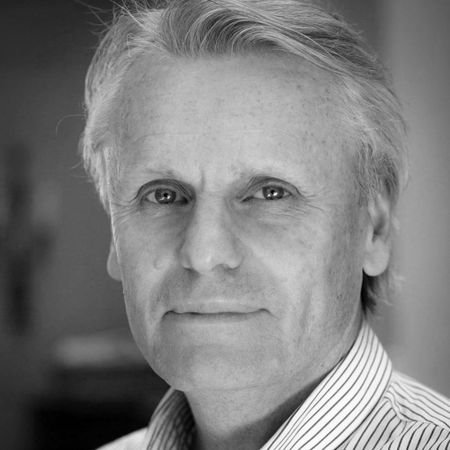
Mike Wills is a journalist and talk show host.