



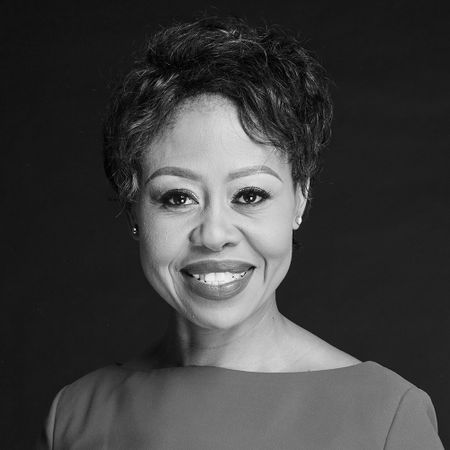
One of the riskiest decisions I made this year was agreeing to moderate the Nelson Mandela Annual Lecture in Johannesburg, delivered by UN Special Rapporteur and human rights lawyer, Francesca Albanese, in October 2025.
Risky not because it was unlawful. No law prevented me from contracting with the Nelson Mandela Foundation. Risky because we are living through vicious times – times in which power openly breaks international law and basic norms of decency, while punishing those who insist on naming it.
Albanese is sanctioned by the United States for doing precisely what she was mandated to do: document violations and speak the truth about Palestine. In addition, Albanese has just recently been removed from Georgetown University’s list of affiliated scholars for her work on Israel’s genocide in Gaza.
Read more: UN Special Rapporteur says Israel’s Gaza genocide fuelled by Western support
This essential work has been reframed as provocation. Truth itself has become sanctionable.
Many people I love advised me not to do it. They feared that as a resident of the United States, I would not be permitted back into the US if I travelled to South Africa for the task. They were motivated by care, and I am grateful.
Albanese herself worried about my safety. She threw her hands in the air when she heard I lived in the US, and said: “I wish you had told me. I am happy you are here but they will come after you. You may not be allowed back.”
I listened. And I was anxious. But there comes a moment when caution mutates into acquiescence and acquiescence into complicity.
This is the danger of this political moment.
Refusing to lie by omission
Injustice does not advance only through spectacular violence. It advances quietly, efficiently, through silence. Through people who know better but retreat into the language of “balance”, “detachment” or “complexity” when clarity is required. Through institutions that mistake neutrality for virtue.
Journalism, especially, cannot afford this luxury of detachment.
The most consequential moments in journalism were never neutral. They were principled and costly. When Daniel Ellsberg leaked the Pentagon Papers in 1971, exposing years of systematic lies about the Vietnam War, the press did not hide behind professional distance.
The New York Times and The Washington Post published in defiance of government injunctions and existential legal threats. That reporting fundamentally altered public understanding of the war and hastened its end. The lies, once exposed, proved far more expensive than the truth ever was.
The pattern repeats. Watergate was not revealed by journalists politely observing power, but by reporters who persisted until deception collapsed under evidence. The short-term disruption was uncomfortable; the long-term damage came from the lie itself, which corroded trust for generations.
Closer to home, apartheid did not fall because journalists described it as “controversial”. It fell, in part, because journalism refused euphemisms.
When Sam Nzima’s photograph of Hector Pieterson was published in 1976, it was not balanced. It was moral. That image punctured global indifference and accelerated the international isolation of the apartheid state. It proved that journalism, when grounded in fact and courage, can move history.
Activist journalism is often caricatured as reckless. In reality, it is simply journalism that refuses to lie by omission.
South Africa’s obligation
Small nations like South Africa understand the stakes of this viscerally. Power asymmetry is not abstract to us; it is a lived experience. We know how modern bullying works – not through overt coercion, but through leverage: visas denied, aid questioned, reputations smeared, markets unsettled. The pressure is rarely explicit. It arrives cloaked in the language of pragmatism: be careful, don’t jeopardise relationships, this is not the hill to die on.
But history teaches that for small and middle powers, silence does not buy safety. It merely postpones reckoning.
During apartheid, many powerful states urged restraint rather than justice, stability rather than freedom. Those who spoke out were labelled irresponsible or ideological. Yet it was precisely those voices, often far from power, that history vindicated. The “responsible” position aged badly. The radical one became moral consensus.
That legacy imposes an obligation today.
When South Africa takes a principled stand – whether at the International Court of Justice or in public discourse – it is not posturing. It is drawing from historical memory. It is asserting that international law cannot be optional for the powerful and compulsory for the weak. A rules-based order that disciplines only small states is not an order at all, but hierarchy masquerading as law.
This is precisely why journalism matters most in asymmetrical moments. When power is uneven, silence always flows upward. It benefits the strong, never the weak. Journalism that retreats into detachment under these conditions does not neutralise imbalance; it entrenches it.
The real danger, then, is not being targeted for speaking out. The real danger is becoming accustomed to injustice.
Acquiescence is not passive. It is an active force. It dulls outrage, turns moral emergencies into background noise, and teaches societies what they are expected to tolerate. Journalism was never meant to be comfortable. It was meant to be clarifying, to say: this is happening, this is wrong, this is who bears responsibility. DM
Redi Tlhabi is a South African journalist, producer, author and former radio presenter.