



This year, the lighting of the Christmas tree, next to the church in Bethlehem, marking the place where Jesus was born, is a religious and national celebration. For the past two years this popular festivity had been cancelled because of the ongoing Israeli attacks and genocide in Gaza.
Thousands of Christians and Muslims gathered once again to witness the event. People seemed determined to allow a touch of joy to revive within them, to express a glimmer of hope that life might continue. This is an act of resistance, defying the reign of death that has been imposed on Palestine by the Israeli political establishment, army and settlers. In the Holy Family Roman Catholic parish in Gaza, the target of a number of attacks of the past two years, they also decorated and lit their Christmas tree, proclaiming their resilience. The damage from the most recent Israeli tank bombardment of 17 July 2025 still mars the façade of the church.
Christ was born in Palestine. Two thousand years ago, the land was shrouded in the darkness of a Roman occupation. His father and mother desperately searched for shelter. Mary gave birth in conditions that mirror those of so many women in Palestine today, exposed to the elements. And yet, he was born and came into the world. His birth defied the powers that be. Two thousand years ago, they understood that his birth threatened their hegemony.
Ongoing horror
Let no one be fooled by the joy. Palestine is still under attack. Despite President Trump’s boastful declarations that he has brought peace, repression, occupation and genocide continue. In Gaza, the Israeli army continues to bomb and shoot, killing and destroying homes. The harsh winter cold and rains leave many without protection, trying to eke out a life in the mud, without the bare necessities. Babies die of cold, others of hunger and disease. Israel still occupies close to 60% of the Gaza Strip, regularly attacking the areas outside of its control. The regime of death and the stranglehold siege continue despite the empty claims of the powers that be. Access to the strip is forbidden, meaning that the full extent of the ongoing horror is largely hidden from the eyes of the world.
In the West Bank, the Israeli army continues to intensify its patrolling of the towns and villages, assassinating activists, arresting tens of people each week, destroying homes and infrastructure. Israeli settlers rampage through the villages, olive groves and fields of Palestinians, imposing a reign of terror, wounding randomly, killing livestock and burning property.
Checkpoints and newly built gates prevent free movement within the territory of the West Bank. In this Christmas season, Christians, like their Muslim compatriots, are restricted from visiting their relatives or making a pilgrimage to the holy sites.
In East Jerusalem, the Israeli police impose control at every corner. People live in fear of what might happen on the streets. In the Old City of Jerusalem, a microcosm where the holy places of Jews, Christians and Muslims border each other, the Israeli authorities continue trying to make the city as Jewish as possible, marginalising Palestinians, Muslims and Christians. Jewish settlers, encouraged to move into Palestinian neighbourhoods, are protected by armed guards and walk the streets, proudly exhibiting their supremacy over the local residents.
On a personal note, I have just returned from a four-month stay in South Africa. Despite the deep crises that plague South Africa, I have come back reinvigorated. Until the early 1990s, South Africa was locked into a system of apartheid that shut off horizons of hope for the vast majority of South Africans.
Lessons from South Africa
We, in Palestine/Israel, might learn from the South African experience that things do not have to be this way. Israeli leaders try to convince those at home and abroad that things have always been this way, they will always be this way and so we must simply accept the conflict and manage it as best we can – through repression, discrimination, occupation and, if need be, genocide.
In their opinion, hoping for equality, justice and peace for all is naïve and unreal. Jewish Israeli privilege must be defended to guarantee stability and calm. The South African experience shows us that systems of inequality, injustice and violence can, and must, come to an end.
Christmas is coming. We are determined to celebrate this year. We have not had Christmas for the past two years. Our attempts to be joyful and hopeful are not opium-induced escape. They are resistance and defiance in the face of death and destruction. We insist on proclaiming that the one born Prince of Peace, the one who brings good news of equality, justice, peace, pardon and reconciliation, is coming into the world, whether the powers that be like it or not!
I conclude here with the final paragraph of the second Kairos Palestine document, published just a few weeks ago. The Christian Palestine authors, who were originally inspired by the South African Kairos movement, cry out: “From the heart of pain, genocide and displacement, we raise this cry – a prophetic cry of steadfastness. We declare our commitment to work for the good of this land and of all humanity on the basis of our shared humanity until the day we live free in our land together with all the inhabitants of the land in true peace and reconciliation founded on justice and equality for all God’s creation, where mercy and truth meet, and righteousness and peace kiss each other. (Psalm 85:10).” DM
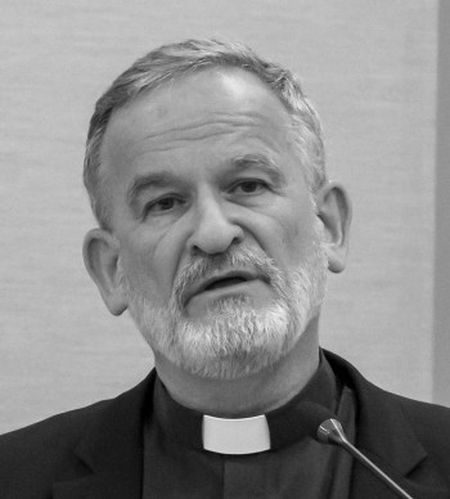
David Neuhaus SJ is a South African born Israeli Catholic priest who has lived in Palestine/Israel for more than 45 years. In November 2025, he published the book, Conquest or Leaven: Reflections of a Catholic Priest in Palestine/Israel, which is available from the Jesuit Institute South Africa.