



/file/dailymaverick/wp-content/uploads/2025/09/label-Opinion.jpg)
Many of us will be using this festive break to make our New Year’s resolutions. We all know the drill. After the clichéd mantra of “live, laugh and love”, “a new year, a new you” is a very close second. Although, if it means going to the gym three times a week, starting a new language or learning to dance the tango, we’ll probably break them by the time Valentine’s Day rolls around.
It is the rhythm of life. We all aspire to greater things and, especially, to be successful. Perhaps one of the reasons that we perennially fall off is that we don’t truly understand what that success looks like in real terms and, because of that, we can’t structure a strategy to achieve it.
Like truth in a court of law, there are different interpretations of what constitutes success: from the proud parent’s interpretation to your partner’s conception, your friend’s – and then there is your own version.
There are many permutations and they do not always intersect because, by its very nature, success is a very personal construct – like the story of the person who bemoaned their old shoes and the barefoot beggar’s hunger for that same pair. One person’s lot is often another’s triumph, and vice versa.
The personal nature of success means that the idea of it is seen as a material thing; it’s measured by the possession of stuff and the ownership of the corner office or the suburban sprawl that you go home to in your chauffeur-driven luxury car.
The inherent risk is that the acquisition of these temporal artefacts obscures the personal cost in the process. We have seen the consequences over and over for almost 20 years: self-aggrandisement segueing into self-enrichment and, ultimately, metastasising into State Capture - “it’s my turn to eat”.
The genesis of this phenomenon is easy to understand, as is the incredible difficulty of eradicating it because the two – success and self - are inextricably intertwined. In a world of gross, and increasingly grotesque inequality, it is very easy to look at others who have so much more and make that comparison the lodestone of what you define as success, irrespective of the way in which those people achieved it.
Today, the quaint era of benevolent 19th-century billionaires bequeathing their wealth to the public good, and endowing libraries and learning, has almost been overwhelmed by exceptionalism and entitlement – the tech bros and their pursuits of space, longevity and of power – bursting the last remaining frontiers of decency, empathy and taste in the mission.
Before the plutocrats, there were people such as Carnegie and Rockefeller. Here at home, Oppenheimer, Rupert and Motsepe. We know them. We remember them because – whatever the sources of their wealth – they at least turned to forging legacies that helped others. Significance is what happens when success is a byproduct of the journey, not an end in itself.
A person becomes significant when they are driven by a higher purpose, normally a mission to make a difference to the lives of those around them – whether staff, neighbours of the communities – that made them. It’s what separates political leaders from statesmen. Nelson Mandela was significant; leaders, both here and elsewhere, who have followed after may have been successful, but they have not been as significant because their legacies have either been indifferent, or even toxic.
Becoming significant means working on and caring about your character, that all-encompassing concept that includes having a moral compass, living by a set of principles to ensure that you do the right thing every time and that your word truly is your bond. Moving from success to significance is not an easy journey; it takes commitment and sacrifice. It’s uncomfortable, but what makes the burden bearable is because it is for a far greater cause than just serving yourself. And you grow more, in substance.
Significance has nothing to do with scale or scope. You don’t have to be president or a CEO to be significant; you can spend your life as a clerk at the local school making an indelible impression on generations of children; you could be the person who fashions a living doing the ordinary extraordinarily well, every single day.
If you do get the privilege of being a leader, your significance will lie in the way you serve others – not just individuals, but the whole – the dignity and grace you show under pressure, the way you step up to lift and protect those of character, the manner in which you do the right thing even though the seduction of sating your own immediate urges or needs is huge.
Significance is not performative; it is the difference that shouts loudest in the silence and shines brightest in the shadows.
Maybe you will never be recognised at the time for being significant, perhaps that only comes afterwards when your life is compared with others like you. You are recognised when others speak for you because you taught them by example great but hard truths, because you did not seek popularity, because you were strong in support for those you may not have liked but who were brave enough to act and care for the common good.
One of the uncomfortable foundations about significance is that, unlike success, it invariably involves some form of personal sacrifice and surrender of the desire for recognition. It is the cause that matters. It is that continual humbling and the personal work to remove any sense of entitlement that creates the very foundations of significance and real strength.
We all have it within ourselves to be significant. To paraphrase Barack Obama, never think there is no table where you neither belong nor can make a difference. We shouldn’t feel like imposters for actually wanting to change our worlds for the better, but to succeed we need to ensure that our sense of who we are is matched by our sense of ethos. We have to know what we stand for. We have to live that brand to be sure that what we want to create is what we mirror.
It’s a difficult journey best summed up by John F Kennedy’s exhortation 65 years ago this month when he was inaugurated as president of the USA – you have to ask what you can do for your country (or company, community or collective) rather than what your country can do for you.
That’s how you live a life that is significant – and successful. Will 2026 be the year you move from success to significance? I hope we all will. DM
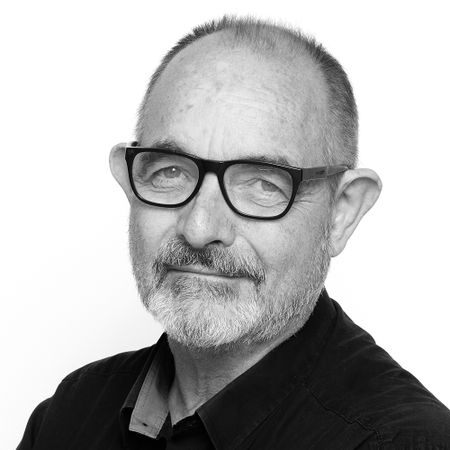
Jon Foster-Pedley is an Associate Pro-Vice Chancellor of the University of Reading UK, and Dean and Director of Henley Business School Africa.